

The Ever-Shifting Hearth: A Philosophical Journey Through the Evolution of the Family Unit
The family unit, often perceived as a timeless and immutable cornerstone of society, is in fact a dynamic construct, constantly reshaped by historical forces, philosophical ideas, and changing societal custom and convention. This article explores the profound evolution of the family across millennia, tracing its transformations from rudimentary survival groups to the diverse configurations we recognize today, all while examining the underlying philosophical currents that have challenged and redefined its very essence. From ancient communal bonds to modern chosen kinship, the story of the family is a testament to humanity's adaptability and its ongoing quest for belonging and meaning.
Unpacking the Foundations: What is "Family"?
Before delving into its history, it's crucial to acknowledge that the concept of "family" itself is not monolithic. Philosophers and sociologists alike have grappled with its definition, often revealing how deeply embedded it is in specific cultural and historical contexts. Is it a biological imperative, a social contract, an economic unit, or a spiritual bond? The answer, as we shall see, is often "all of the above," with emphasis shifting over time.
Early Human Societies: Survival and Kinship
In the earliest stages of human evolution, the family unit was primarily a pragmatic necessity for survival. Prehistoric bands likely operated on principles of communal living, with a flexible division of labor. Kinship ties, while perhaps not formalized into the rigid structures we know today, were crucial for cooperation, protection, and the raising of offspring. This era laid the groundwork for the fundamental human need for connection and collective action, driven by the stark realities of an untamed world.
The Ancient World: Ordered Households and State Foundations
With the advent of agriculture and settled civilizations, the family unit underwent significant restructuring. The concept of property, inheritance, and social hierarchy began to solidify, profoundly impacting familial custom and convention.
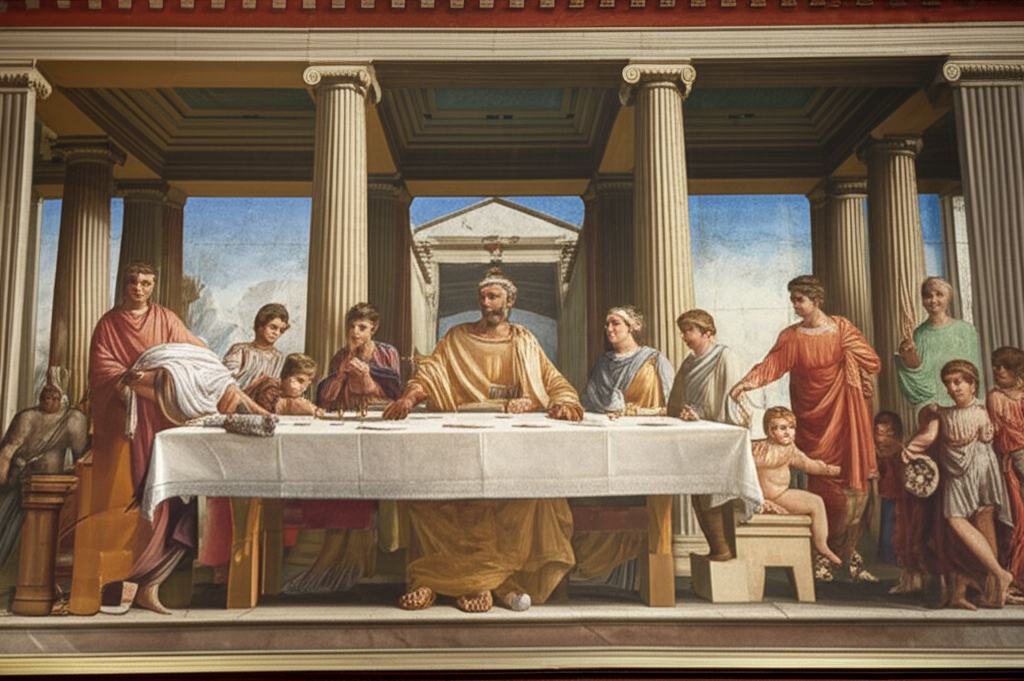
The Greco-Roman Household: Oikos and Pater Familias
In ancient Greece, the oikos (household) was far more than just a nuclear family; it encompassed all property, slaves, and dependents, serving as the fundamental economic and social unit. Aristotle, in his Politics, posited the oikos as the natural starting point for the state, arguing that the well-ordered household was a microcosm of the well-ordered city. The male head, or kyrios, held significant authority.
Similarly, in ancient Rome, the pater familias wielded immense power over his household, including his wife, children, and slaves. This power, known as patria potestas, could include the right to sell children into slavery or even execute them, though such extremes were rare and moderated by social norms. Marriage was often a strategic alliance for property or political gain, rather than purely a matter of affection.
Key Characteristics of Ancient Family Units:
- Patriarchal: Male head of household held supreme authority.
- Economic Unit: Primary function was production and property management.
- Social and Political Foundation: Served as the building block for the wider state.
- Emphasis on Lineage: Crucial for inheritance and social status.
- Limited Individual Choice: Marriages often arranged, roles highly prescribed.
Medieval and Early Modern Eras: Faith, Fealty, and the Emerging Nuclear Ideal
The fall of Rome and the rise of Christianity brought new philosophical and ethical considerations to the family. The Church began to exert significant influence, emphasizing monogamous marriage as a sacrament and condemning practices like divorce, infanticide, and polygamy. While extended kinship networks remained important, particularly among the nobility, the focus slowly shifted towards the conjugal pair and their direct offspring.
During the feudal period, land ownership and fealty played a massive role in defining family alliances and structures. Marriage often served to consolidate power or secure land. With the slow decline of feudalism and the emergence of early capitalism, the nuclear family began to solidify as a more distinct unit, though still deeply integrated into broader community life and economic production.
The Enlightenment and Industrial Revolution: Reason, Rights, and Redefinition
The Enlightenment, with its emphasis on individual reason, natural rights, and the social contract, profoundly challenged traditional custom and convention surrounding the family. Thinkers like John Locke and Jean-Jacques Rousseau explored the family's role not just as a unit of the state, but as a sphere for individual development and moral education. Rousseau, in particular, romanticized the idea of a domestic sphere, where women nurtured children into virtuous citizens.
The Industrial Revolution dramatically altered the economic landscape, separating work from home. Men increasingly left the domestic sphere to earn wages in factories, while women were often relegated to the private realm, managing the household and raising children. This gave rise to the "cult of domesticity" and the ideal of the nuclear family as a haven from the harsh realities of the industrial world. However, it also created new tensions, as the economic contributions of women and children within the home became less visible or valued. This period marked a significant shift in the evolution of the family, moving towards a more private and emotionally-focused entity.
The 20th and 21st Centuries: Diversification and Debate
The 20th century witnessed an accelerating pace of change, fueled by two world wars, economic shifts, advances in technology, and powerful social movements. The traditional nuclear family model, while still prevalent, began to diversify significantly.
Factors Driving Modern Family Evolution:
- Women's Rights Movements: Challenged traditional gender roles, allowing women greater access to education, careers, and financial independence. This led to later marriages, fewer children, and dual-income households.
- Changing Social Norms: Decreased stigma around divorce, cohabitation, and single parenthood.
- Technological Advancements: Contraception revolutionized family planning, separating sex from reproduction.
- LGBTQ+ Rights: The recognition of same-sex marriage and adoption has broadened the definition of family, challenging heteronormative custom and convention.
- Global Migration: Created transnational families and blended cultural norms.
Today, the family unit encompasses an incredible array of forms: single-parent families, blended families, same-sex parent families, chosen families (networks of support outside of biological or marital ties), and multi-generational households. This ongoing evolution reflects a philosophical shift towards individual autonomy, diversity, and the recognition that love, support, and commitment can manifest in countless configurations. The debates surrounding these new forms continue, grappling with questions of identity, societal responsibility, and the very meaning of kinship in an increasingly complex world.
An Ongoing Evolution: The Future of Custom and Convention
The evolution of the family unit is far from complete. What remains constant is humanity's fundamental need for connection, belonging, and the nurturing of new generations. As societies continue to grapple with technological disruption, environmental challenges, and shifting values, the custom and convention surrounding the family will undoubtedly continue to adapt. Understanding this rich history allows us to approach contemporary discussions about family with greater empathy, philosophical depth, and an appreciation for its remarkable resilience and adaptability. The family, in all its varied forms, remains a powerful testament to our shared human journey.
📹 Related Video: PLATO ON: The Allegory of the Cave
Video by: The School of Life
💡 Want different videos? Search YouTube for: ""Philosophical Perspectives on the Family Unit""
📹 Related Video: ARISTOTLE ON: The Nicomachean Ethics
Video by: The School of Life
💡 Want different videos? Search YouTube for: ""The History of Marriage and Family Structures Documentary""