

The Shifting Sands of Right and Wrong: Exploring the Evolution of Moral Customs
Moral customs are not static monuments but rather dynamic landscapes, constantly reshaped by the currents of human experience, reason, and societal necessity. From the earliest observations of diverse cultures to the profound philosophical inquiries into the nature of good and evil, the story of humanity is inextricably linked to the Evolution of its ethical frameworks. This article delves into how our understanding of right and wrong, of Virtue and Vice, has undergone profound Change throughout history, demonstrating that what we consider righteous today is often the culmination of centuries of shifting Custom and Convention. Drawing insights from the venerable texts of the Great Books of the Western World, we trace this fascinating journey.
The Ancient Roots of Custom and Character
Long before the systematic treatises of philosophy, early observers like Herodotus, in his Histories, provided vivid accounts of the vast differences in Custom and Convention among various peoples. He famously recounted the story of Darius asking Greeks and Indians about their funerary practices, highlighting how deeply ingrained and culturally specific moral norms could be, with each group finding the other's customs abhorrent. This early recognition of moral diversity laid the groundwork for later philosophical inquiry.
In the classical Greek world, figures like Plato and Aristotle grappled with the nature of Virtue and Vice within the context of the polis. For Aristotle, virtue was not an innate quality but a habit, a product of repeated action and societal training—a clear nod to the power of Custom and Convention. In his Nicomachean Ethics, he argues that "moral virtue comes about as a result of habit, whence also its name (ethike) is one that is formed by a slight variation from the word for habit (ethos)." This emphasizes that moral character, and thus the prevailing ethical standards of a society, are cultivated and evolve through practice and shared experience. While they sought universal principles, their application was deeply embedded in the specific customs of their time, demonstrating that even foundational ethical theories are subject to the subtle forces of Change.
From Divine Decree to Social Contract: A Moral Metamorphosis
The medieval period largely saw morality anchored in divine law, with theological doctrine dictating Virtue and Vice. Thinkers like Augustine and Aquinas synthesized classical philosophy with Christian theology, positing a universal moral order decreed by God. Yet, even within this seemingly immutable framework, interpretations evolved with changing social structures and intellectual currents. The understanding of concepts like justice, charity, and even sin underwent nuanced Change as societies navigated new challenges, from feudalism to emerging nation-states.
The Enlightenment marked a pivotal shift, moving away from purely divine command towards a morality grounded in human reason and experience. Philosophers like Thomas Hobbes, in Leviathan, posited that moral rules, or Customs and Conventions, arise from a social contract—a rational agreement among individuals to escape the brutalities of the "state of nature." John Locke, in his Two Treatises of Government, further developed ideas of natural rights, suggesting inherent moral claims that precede government, influencing the Evolution of political and ethical thought towards individual liberty. Jean-Jacques Rousseau, in The Social Contract, explored the concept of the "general will," where moral legitimacy derives from the collective good, again highlighting that morality is a product of human interaction and agreement, subject to the Change in societal needs and aspirations. This period saw a radical Evolution in the understanding of the source and justification of moral norms.
The Modern Flux: Questioning Virtue and Embracing Change
The modern era has witnessed an accelerated pace of Change in moral Customs and Conventions, driven by scientific advancement, globalization, and profound social upheaval. Friedrich Nietzsche, a towering figure in the Great Books, launched a radical critique of traditional morality in works like On the Genealogy of Morality. He argued that what we deem "good" and "evil" are not eternal truths but historical constructs, often serving the interests of particular power structures. His call for a "revaluation of all values" profoundly challenged existing notions of Virtue and Vice, forcing an examination of the very origins and purposes of our moral frameworks.
Today, we observe the rapid Evolution of moral thought on issues ranging from environmental ethics and artificial intelligence to gender identity and global justice. New technologies and unprecedented interconnectedness force us to continually re-evaluate old Customs and Conventions and forge new ones. What was once considered a Vice (e.g., certain forms of expression) might now be seen as a Virtue (e.g., authenticity), and vice-versa. This constant flux underscores that morality is not a fixed destination but an ongoing journey of collective discovery and adaptation.
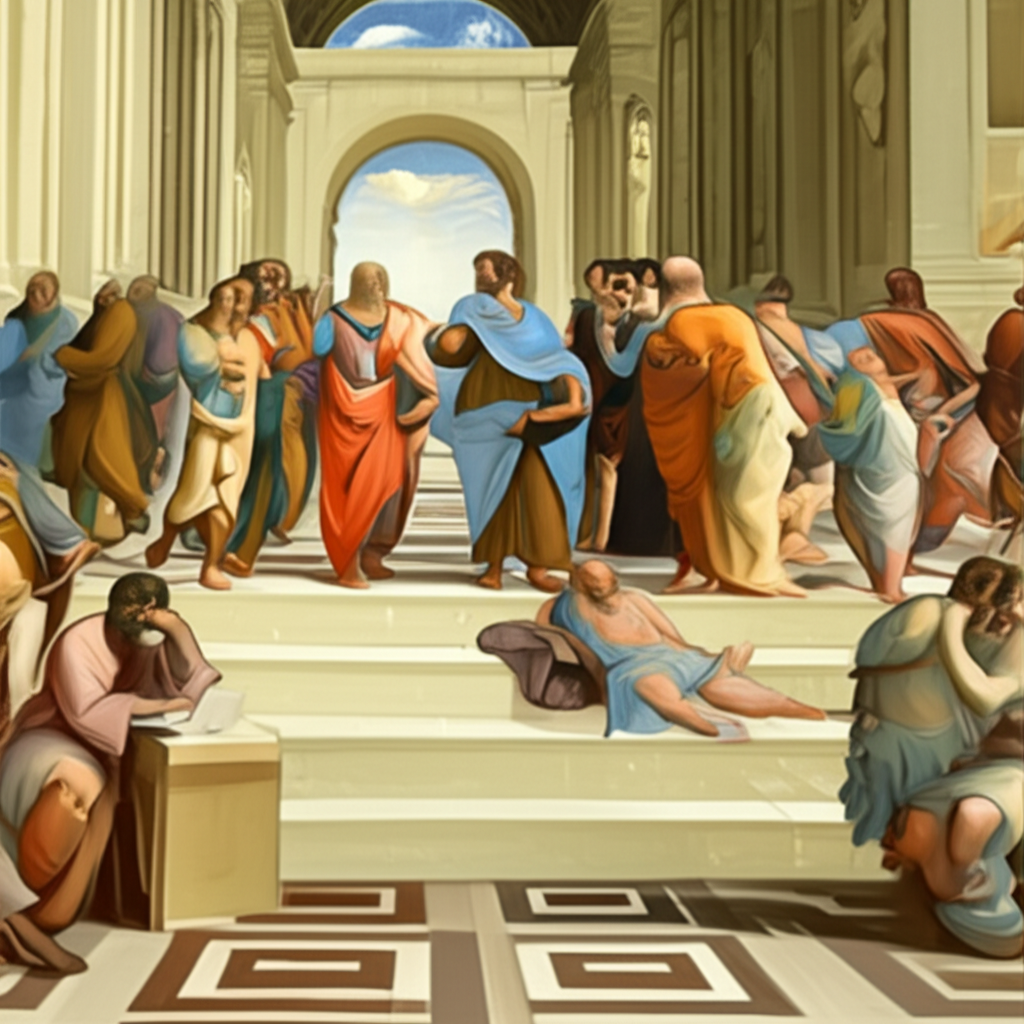
The Enduring Quest for Ethical Understanding
The Evolution of moral customs is a testament to humanity's continuous effort to define what it means to live a good life, individually and collectively. While the specific Customs and Conventions may shift, the underlying philosophical questions persist: What constitutes Virtue and Vice? Is there an objective moral truth, or is all morality relative? How do we navigate the inevitable Change in our ethical landscape?
These are not questions with easy answers, but their persistent exploration is what drives philosophical inquiry and shapes the future of our moral world. The Great Books of the Western World offer not just historical perspectives but enduring frameworks for understanding this complex and ever-changing human endeavor.
YouTube Video Suggestions:
-
📹 Related Video: ARISTOTLE ON: The Nicomachean Ethics
Video by: The School of Life
💡 Want different videos? Search YouTube for: ""Aristotle Virtue Ethics Explained""
-
📹 Related Video: ARISTOTLE ON: The Nicomachean Ethics
Video by: The School of Life
💡 Want different videos? Search YouTube for: ""Nietzsche Morality Genealogy Summary""