

The Shifting Sands of Right and Wrong: Exploring the Evolution of Moral Customs
Moral customs, those unwritten rules and shared understandings that guide human conduct, are not immutable decrees etched in stone. Rather, they are dynamic, ever-changing phenomena, evolving alongside societies and their challenges. This article delves into the fascinating evolution of these customs, examining how concepts of right and wrong, virtue and vice, have transformed over millennia. We will explore the interplay of custom and convention in shaping our ethical landscapes, drawing insights from the enduring wisdom contained within the Great Books of the Western World to understand the profound change that defines our moral journey. From ancient tribal codes to modern ethical dilemmas, the journey of moral customs is a testament to humanity's ongoing quest to define the good life.
The Genesis of Morality: From Instinct to Convention
The very notion of morality likely emerged from the practical necessities of communal living. Early human societies, driven by the need for cooperation and survival, began to establish implicit rules. These weren't codified laws, but rather emergent customs and conventions that fostered cohesion. Actions that benefited the group – sharing resources, protecting kin – were deemed good, while those that threatened it – theft, violence – were seen as bad. This rudimentary framework laid the groundwork for more complex ethical systems.
Early Philosophical Inquiries into Custom
Philosophers from ancient Greece were among the first to systematically ponder the origins and nature of these moral injunctions.
- Plato, in works like The Republic, explored the ideal state and the virtues necessary for its citizens, suggesting an objective moral truth attainable through reason, yet acknowledging the societal structures that shape individual character.
- Aristotle, particularly in his Nicomachean Ethics, delved deeply into the concept of ethos – character – which is cultivated through habituation and the observance of customs. For Aristotle, virtue was not innate but acquired through practice within a community, implying a societal shaping of moral excellence. He observed how particular actions, repeated and sanctioned by the community, become embedded as moral norms.
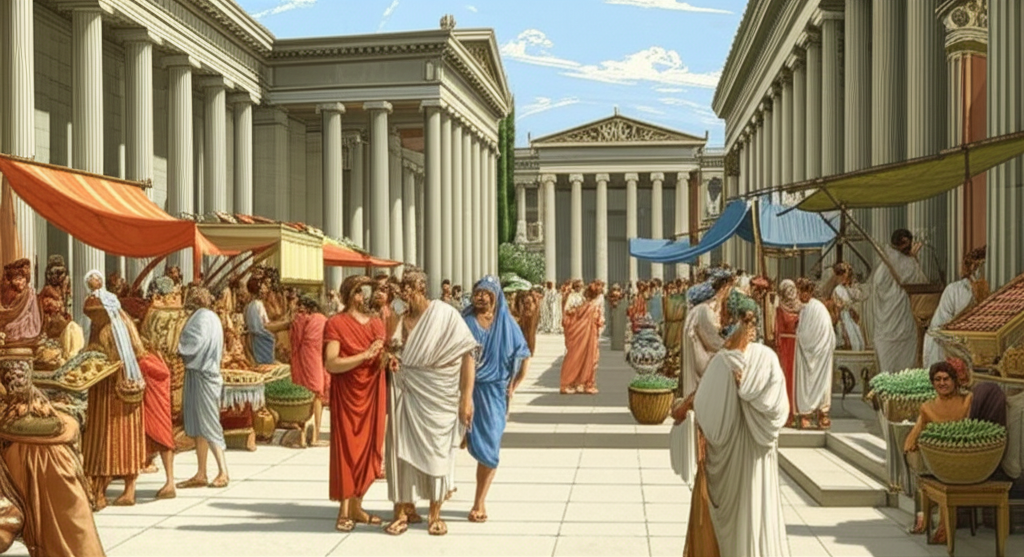
The Engine of Change: Society, Reason, and Sentiment
The evolution of moral customs is rarely a sudden rupture but a gradual process, often spurred by significant societal shifts, technological advancements, or profound intellectual movements.
Key Drivers of Moral Evolution
- Social and Political Structures: Empires rise and fall, governance changes from monarchy to republic to democracy, each bringing new demands and definitions of civic virtue and vice.
- Economic Systems: The transition from agrarian societies to industrial ones, and now to information-based economies, fundamentally alters relationships, responsibilities, and the ethics of labor and wealth.
- Religious Beliefs: Monotheistic religions, for instance, introduced universal moral codes, often seen as divinely ordained, which profoundly influenced Western custom and convention for centuries.
- Scientific and Philosophical Discoveries: New understandings of the natural world or human psychology can challenge existing moral paradigms, forcing a re-evaluation of long-held beliefs.
Philosophical Perspectives on Moral Change
The Great Books offer a rich tapestry of thought on the mechanisms and implications of moral transformation:
- David Hume, in his Treatise of Human Nature, argued that morality is rooted in sentiment and feeling rather than pure reason. This implies that as human sentiments and sympathies evolve, so too do our moral judgments, highlighting the subjective and intersubjective nature of customs.
- Jean-Jacques Rousseau, in Discourse on the Origin and Basis of Inequality Among Men, critiqued the corrupting influence of society on what he perceived as a naturally good human, suggesting that many customs and conventions are artificial constructs that lead to moral degradation rather than improvement.
- Friedrich Nietzsche, in On the Genealogy of Morality, offered a radical perspective, arguing that many of our cherished moral customs (especially those of "good" and "evil") are not timeless truths but historical constructs, born from power struggles and ressentiment. He famously explored the evolution from "master morality" to "slave morality," suggesting that our definitions of virtue and vice are deeply intertwined with historical power dynamics.
Virtue and Vice in a Changing World
The definitions of virtue and vice are perhaps the most telling indicators of moral change. What was once lauded as a virtue might, in another era, be considered a vice, and vice versa.
| Era/Philosophical Context | Exemplary Virtues (Examples) | Exemplary Vices (Examples) |
|---|---|---|
| Ancient Greece (Aristotle) | Courage, Temperance, Justice, Prudence, Magnanimity | Cowardice, Intemperance, Injustice, Folly, Pettiness |
| Medieval Europe (Christianity) | Faith, Hope, Charity, Humility, Chastity | Pride, Envy, Gluttony, Lust, Wrath, Sloth, Greed |
| Enlightenment (Kant, Locke) | Rationality, Autonomy, Individual Rights, Tolerance, Universalism | Superstition, Tyranny, Oppression, Intolerance, Dogmatism |
| Modern/Contemporary | Empathy, Sustainability, Inclusivity, Critical Thinking, Digital Citizenship | Discrimination, Environmental Degradation, Ignorance (willful), Exploitation, Misinformation |
This table illustrates how the focus shifts from individual character traits to divinely ordained principles, and then to societal and universal human rights, and finally to global and systemic concerns. The underlying customs and conventions that shape these virtues are continuously re-evaluated.
The Ongoing Evolution: Navigating Modern Moral Landscapes
Today, the evolution of moral customs continues at an unprecedented pace. Globalization, rapid technological advancement, and increasingly interconnected societies present novel ethical challenges.
- Artificial Intelligence: Raises questions about algorithmic bias, autonomous decision-making, and the nature of consciousness.
- Bioethics: Advances in genetic engineering and life extension technologies force us to re-examine the sanctity of life and human identity.
- Environmental Ethics: The climate crisis demands a fundamental shift in our customs regarding consumption, responsibility, and intergenerational justice.
- Digital Ethics: The rise of social media and virtual realities challenges our understanding of privacy, truth, and community.
These are not merely academic exercises; they are lived dilemmas that require ongoing dialogue and the re-evaluation of what constitutes virtue and vice in a complex, interconnected world. The Great Books provide not answers to these specific modern problems, but rather a framework for critical inquiry, a history of human attempts to grapple with the fundamental questions of existence and moral conduct. Understanding the historical change in moral customs equips us to better navigate the evolution yet to come.
**## 📹 Related Video: What is Philosophy?
Video by: The School of Life
💡 Want different videos? Search YouTube for: ""Nietzsche Genealogy of Morality Explained" or "Hume's Moral Philosophy: Reason vs. Emotion""**