

The Shifting Canvas: A Philosophical Journey Through the Evolution of Beauty in Art
Summary: The concept of beauty in art is far from static; it undergoes a continuous evolution, reflecting profound philosophical, cultural, and societal change. From the idealized forms of ancient Greece to the challenging abstractions of modernism, humanity's quest to define and depict beauty through art reveals a fascinating journey of shifting values, perceptions, and the very essence of human understanding. This article explores how our understanding of aesthetic appeal has transformed, drawing insights from the enduring wisdom of the Great Books of the Western World.
The Elusive Muse: What is Beauty, and How Does Art Capture It?
For millennia, philosophers and artists alike have grappled with the enigmatic nature of beauty. Is it an objective truth, an inherent quality of certain forms, or a subjective experience residing solely "in the eye of the beholder"? The answer, as revealed through the evolution of art, seems to be a complex interplay of both, constantly redefined by the prevailing intellectual currents of each era. The history of art is, in essence, a chronicle of humanity’s changing relationship with this powerful, yet often indefinable, force.
Ancient Ideals: Harmony, Proportion, and the Divine Spark
In the classical world, particularly ancient Greece, beauty was often inextricably linked to truth, goodness, and mathematical precision. Philosophers like Plato, whose dialogues are cornerstones of the Great Books, posited that true beauty resided in the eternal, unchanging Forms, of which earthly manifestations were mere imperfect copies. Art, therefore, strived for mimesis – an imitation not just of nature, but of ideal nature.
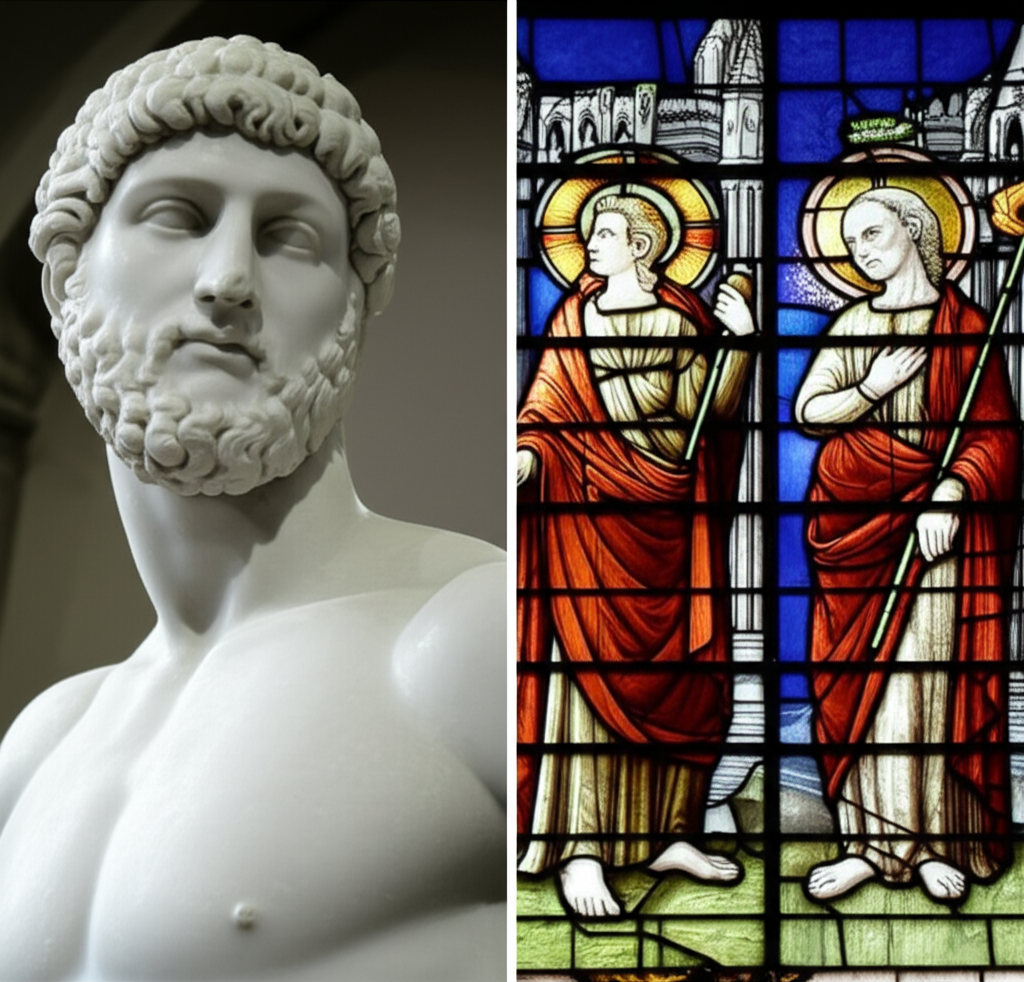
Aristotle, while more empirical, still emphasized order, symmetry, and definite proportion as crucial elements of aesthetic appeal. The art of this period, from the Parthenon to the idealized sculptures of Phidias, embodies these principles:
- Proportionate Human Form: Sculptures like the Doryphoros showcased perfect anatomical balance.
- Architectural Harmony: Temples adhered to precise ratios and visual corrections.
- Clarity and Order: A rejection of chaos in favor of rational arrangement.
This classical ideal presented beauty as an objective, measurable quality, reflecting a cosmic order that humanity could glimpse through reason and artistic endeavor.
Medieval Transformations: Beauty as a Reflection of the Sacred
With the rise of Christianity, the philosophical landscape underwent a dramatic change, and with it, the perception of beauty in art. The focus shifted from the perfection of the earthly form to the spiritual and the divine. Beauty was no longer primarily about humanistic ideals or physical perfection, but about transcendence, symbolism, and the reflection of God's glory.
Medieval art, from stained-glass windows to illuminated manuscripts and Gothic cathedrals, prioritized:
- Symbolism over Realism: Figures were often elongated or stylized to represent spiritual states rather than anatomical accuracy.
- Light as Divine Presence: The luminous quality of stained glass in cathedrals was seen as a manifestation of God.
- Intricacy and Detail: The painstaking craftsmanship reflected devotion and the vastness of divine creation.
Here, beauty served a didactic and devotional purpose, guiding the viewer towards spiritual contemplation rather than earthly admiration. The evolution of art during this period marked a profound departure from classical aesthetics, demonstrating a radical change in what was considered aesthetically valuable.
The Renaissance Resurgence: Humanism and the Rebirth of Perspective
The Renaissance marked a pivotal moment, a "rebirth" that saw a renewed interest in classical antiquity but infused with a burgeoning humanism. Artists and thinkers, drawing on rediscovered classical texts, sought to reconcile the earthly and the divine, the rational and the spiritual. The understanding of beauty underwent another significant change, embracing naturalism, empirical observation, and the human experience.
Key developments included:
- Linear Perspective: Pioneered by Brunelleschi and codified by Alberti, this technique created the illusion of depth and realism, placing the viewer within the painted world.
- Anatomical Accuracy: Artists like Leonardo da Vinci and Michelangelo studied human anatomy to render figures with unprecedented realism and emotional depth.
- Balance and Harmony: While still valuing classical ideals, Renaissance art imbued them with a new sense of dynamic energy and psychological insight.
This era’s art celebrated the potential of humanity, finding beauty in both the ideal and the meticulously observed reality, representing a sophisticated evolution from earlier forms.
From Baroque Grandeur to Neoclassical Restraint
Following the Renaissance, the Baroque period (17th century) introduced a dramatic, emotional, and opulent form of beauty. Think of Bernini's ecstatic sculptures or Caravaggio's intense chiaroscuro. This was art designed to evoke awe and passion, often serving the Counter-Reformation.
However, the Enlightenment brought another swing of the pendulum. Neoclassicism (18th century) reacted against Baroque exuberance, advocating a return to the perceived purity, order, and moral clarity of classical Greek and Roman art. Figures like Jacques-Louis David emphasized rational composition, heroic narratives, and a restrained, almost austere beauty that reflected the era's philosophical emphasis on reason and civic virtue. This continuous oscillation showcases the dynamic evolution of aesthetic taste.
The Modernist Rupture: Challenging the Very Definition of Beauty
The 19th and 20th centuries witnessed perhaps the most radical change in the perception of beauty in art. Romanticism initially emphasized emotion, the sublime, and the individual experience over classical order. Then, a series of movements — Impressionism, Cubism, Expressionism, Surrealism, Abstract Art — systematically dismantled traditional notions of representation and aesthetic pleasure.
- Impressionism: Challenged academic realism by focusing on light, color, and fleeting moments.
- Cubism: Fragmented reality, questioning conventional perspective and the singular viewpoint.
- Abstract Art: Abandoned figuration entirely, arguing that art's beauty could reside in pure form, color, and line, independent of external reality.
This period, deeply influenced by philosophical shifts (Nietzsche's critique of traditional values, the rise of psychoanalysis), questioned whether beauty was even the primary purpose of art. Art became a vehicle for expressing inner states, political commentary, or simply exploring the possibilities of form itself, marking a profound evolution away from centuries of established norms. The very definition of beauty was thrown into question, becoming subjective, contextual, and often provocative.
Contemporary Perspectives: Beauty in the Eye of the Beholder (and the Context)
In the postmodern and contemporary eras, the evolution of beauty in art has become even more diverse and pluralistic. There is no single dominant aesthetic; instead, art embraces a vast spectrum of forms, materials, and intentions. Beauty can be found in:
- Conceptual Depth: The idea behind the artwork is paramount.
- Experiential Engagement: The viewer's interaction and interpretation are central.
- Social Commentary: Art as a mirror to societal issues, sometimes intentionally unsettling rather than pleasing.
- The Everyday: Elevating mundane objects or experiences to artistic status.
Today, the discussion around beauty in art is less about universal standards and more about individual experience, cultural context, and the artist's intent. The constant change in how we define and appreciate beauty underscores its deeply intertwined relationship with philosophy, society, and the enduring human desire to make sense of the world through creative expression.
YouTube Video Suggestions:
-
📹 Related Video: PLATO ON: The Allegory of the Cave
Video by: The School of Life
💡 Want different videos? Search YouTube for: ""The Evolution of Art History: From Ancient to Modern""
2. ## 📹 Related Video: What is Philosophy?
Video by: The School of Life
💡 Want different videos? Search YouTube for: ""What is Beauty? Philosophy of Aesthetics Explained""