

The Shifting Canvas: Tracing the Evolution of Beauty in Art
The concept of beauty in art is far from static; it is a dynamic, ever-evolving construct, mirroring the philosophical, cultural, and societal shifts of humanity. From the idealized forms of ancient Greece to the challenging abstractions of modernism, our perception of what constitutes beauty in artistic expression has undergone profound transformations. This article delves into the historical evolution of aesthetic ideals, exploring how our understanding of beauty in art has been continuously redefined and reimagined, demonstrating that change is the only constant in our aesthetic journey.
Ancient Foundations: Beauty as Truth and Proportion
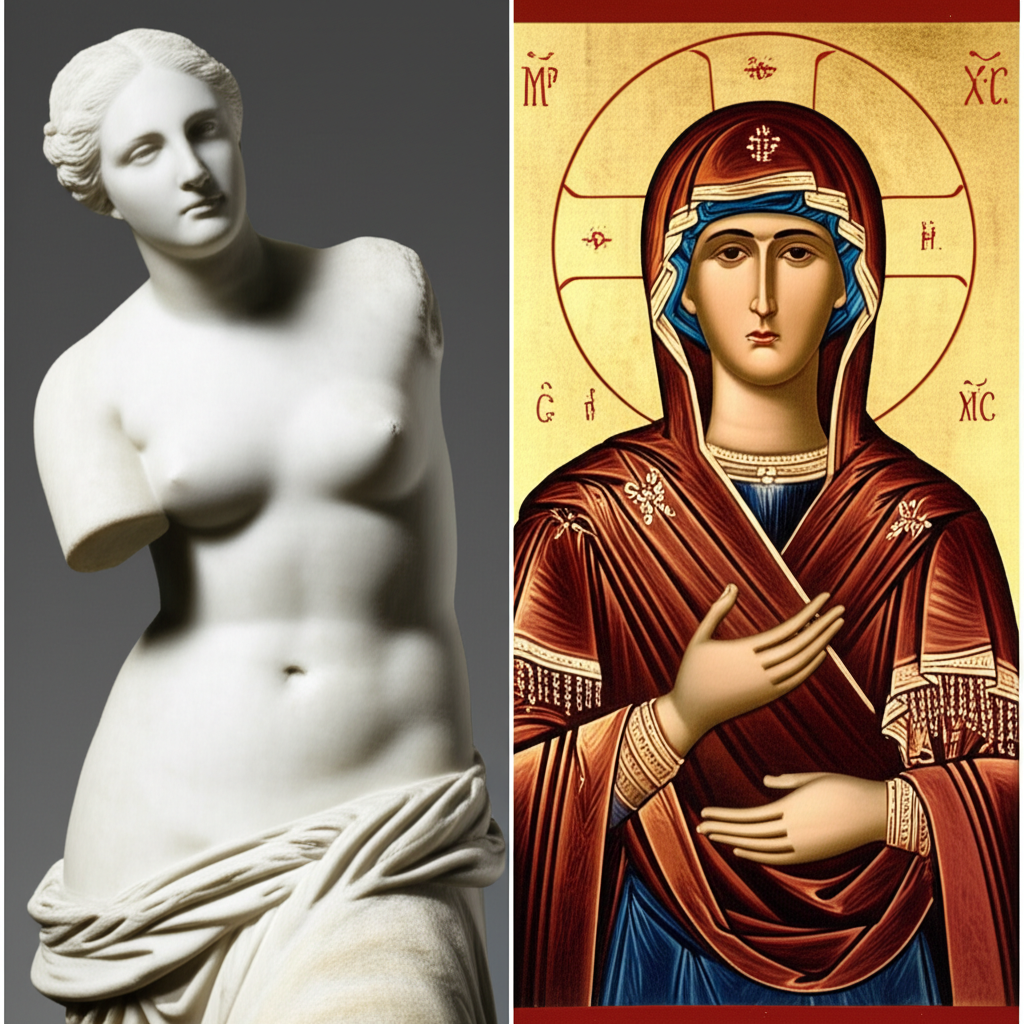
For the earliest philosophers, beauty was often intertwined with truth, order, and cosmic harmony. In the classical world, particularly as articulated by figures like Plato and Aristotle, beauty was not merely a subjective experience but an objective quality, often rooted in mathematical proportion, symmetry, and an adherence to ideal forms.
- Plato's Ideal Forms: For Plato, earthly beauty was a mere reflection of a perfect, transcendent Form of Beauty. A beautiful sculpture or painting was beautiful insofar as it participated in this ultimate Form. Art, therefore, aspired to reveal this underlying truth.
- Aristotle's Mimesis and Order: Aristotle, while more grounded in the empirical, also emphasized order, symmetry, and definite magnitude as crucial elements of beauty. Art's role was mimesis – imitation – but an imitation that could perfect and idealize reality, presenting things not just as they are, but as they ought to be. The Great Books of the Western World provide ample evidence of this foundational thinking, where the pursuit of the good, the true, and the beautiful were often inseparable.
This period saw art striving for an idealized representation of the human form, geometric precision, and a sense of calm, balanced order. The beauty lay in its perfection and its reflection of a rational, ordered cosmos.
The Medieval Gaze: Divine Radiance and Symbolism
With the advent of Christianity, the focus of art underwent a dramatic change. Beauty was no longer primarily about humanistic ideals or earthly perfection, but about divine glory and spiritual truth.
- Transcendence over Earthly Form: Medieval art often eschewed classical realism in favor of symbolism and spiritual didacticism. Figures became elongated, gold leaf signified divine light, and the emphasis was on the soul rather than the body.
- Beauty as an Attribute of God: Beauty was seen as an emanation of God's grace, and art served to inspire devotion and contemplation of the divine. The aesthetic experience was a pathway to spiritual understanding, a stark change from the human-centric beauty of antiquity.
Renaissance Humanism: Rediscovering the Human Form
The Renaissance marked a profound evolution in the understanding of beauty, rekindling interest in classical ideals while integrating Christian spirituality and a burgeoning humanism. Artists like Leonardo da Vinci and Michelangelo sought to harmonize the earthly and the divine.
- Return to Classical Proportion: There was a renewed fascination with anatomical accuracy, perspective, and the idealized human form, echoing the Greek and Roman masters.
- Individual Genius and Emotion: However, Renaissance art also introduced a new emphasis on individual expression, psychological depth, and emotional resonance. Beauty was found not just in perfect form, but in the skillful depiction of human experience and the artist's unique vision. This represented a sophisticated change, blending past and present.
Enlightenment and Beyond: Subjectivity and the Sublime
The Enlightenment introduced a radical change in aesthetic theory, shifting the locus of beauty from objective qualities to subjective experience. Immanuel Kant, a pivotal figure in the Great Books, argued that aesthetic judgment is rooted in the individual's mind.
- Kant's Aesthetic Judgment: For Kant, beauty is not a property of the object itself, but a feeling of pleasure derived from the harmonious free play of our cognitive faculties. It is "disinterested" – not tied to utility or moral good – and universal, in that we expect others to share our judgment.
- The Rise of the Sublime: Alongside beauty, the concept of the sublime gained prominence, particularly in Romanticism. The sublime evoked feelings of awe, terror, and grandeur, often through vast, powerful natural phenomena or overwhelming artistic expressions. This expanded the scope of what art could aim for beyond mere pleasantness, marking a significant evolution in aesthetic appreciation.
Modernity and Post-Modernity: Challenging Conventional Beauty
The 20th century witnessed an unprecedented acceleration in the evolution of art and its relationship with beauty. Modern and post-modern movements systematically dismantled traditional notions of what art should be and what beauty means.
- From Representation to Abstraction: Artists like Picasso and Kandinsky moved away from representational beauty, exploring fragmented forms, non-objective art, and the expressive power of color and line. The beauty here was often intellectual, conceptual, or purely formal.
- Challenging the Canon: Movements like Dadaism and Surrealism deliberately provoked, questioned, and even rejected conventional beauty, seeking to expose societal hypocrisies or delve into the subconscious. This was a deliberate act of change, forcing viewers to reconsider their preconceived notions of art and aesthetics.
- Conceptual Art: In some cases, the idea behind the art became paramount, sometimes overshadowing visual appeal entirely. Beauty might reside in the conceptual elegance or the provocative nature of the piece, rather than its traditional aesthetic qualities.
Here's a brief overview of how various movements redefined beauty:
| Artistic Movement | Approach to Beauty | Key Characteristic of Change |
|---|---|---|
| Impressionism | Fleeting sensory experience, light, color, subjective perception. | Shift from objective reality to subjective perception and ephemeral moments. |
| Cubism | Deconstructed forms, multiple perspectives, intellectual challenge. | Breaking down traditional single-point perspective and representational form. |
| Abstract Expressionism | Emotional expression, raw gesture, subconscious. | Emphasis on process and inner feeling over external subject matter. |
| Pop Art | Everyday objects, mass culture, irony, consumerism. | Elevating mundane commercial imagery to high art, blurring boundaries. |
| Minimalism | Simplicity, geometric forms, essentialism, viewer's interaction with space. | Reduction to fundamental elements, often removing personal expression or narrative. |
The Contemporary Kaleidoscope: Beauty Redefined (or Undefined)
Today, the evolution of beauty in art continues at a dizzying pace. There is no single prevailing definition; rather, beauty is often seen as a highly personal, contextual, and culturally informed experience.
- Plurality and Inclusivity: Contemporary art embraces a vast plurality of forms, materials, and intentions. Beauty can be found in the mundane, the grotesque, the political, the technological, or the deeply personal.
- The Viewer's Role: The viewer's interpretation, experience, and background play an increasingly central role in the aesthetic encounter. Art often serves as a catalyst for dialogue, reflection, or even discomfort, challenging us to expand our understanding of what beauty can encompass. The constant change in our world is reflected in the boundless interpretations of beauty that art now offers.
Conclusion: A Continuous Unfolding
The evolution of beauty in art is a testament to the dynamic nature of human perception and philosophical inquiry. From the objective ideals of antiquity to the radical subjectivities of the present, the concept has continuously adapted, reflecting our deepest beliefs about truth, spirituality, humanity, and the very act of seeing. What remains constant is art's enduring power to provoke, inspire, and challenge our understanding of what it means to experience beauty. As we move forward, the definition of beauty will undoubtedly continue its fascinating change, forever pushing the boundaries of our aesthetic imagination.
📹 Related Video: What is Philosophy?
Video by: The School of Life
💡 Want different videos? Search YouTube for: ""The Philosophy of Aesthetics: Crash Course Philosophy #30""
📹 Related Video: PLATO ON: The Allegory of the Cave
Video by: The School of Life
💡 Want different videos? Search YouTube for: ""Why is Modern Art So Ugly? - The Problem with Beauty""