

The Shifting Sands of Aesthetic Appreciation: The Evolution of Beauty in Art
Beauty in art is often perceived as an immutable, universal ideal, a timeless standard against which all creative endeavors are measured. Yet, to cling to such a notion is to misunderstand the very essence of human culture and philosophical inquiry. I contend that beauty, far from being static, undergoes a continuous, profound evolution, reflecting the deepest cultural, scientific, and philosophical changes of its age. This article will trace this fascinating evolution of beauty in art, demonstrating how our understanding and appreciation of aesthetics have been in a constant state of flux, mirroring the change in human consciousness itself.
Ancient Ideals: Harmony, Proportion, and the Divine Order
For the ancient Greeks, the concept of kalon – often translated as beauty – was intrinsically linked to truth, goodness, and order. As explored in the Great Books of the Western World, Plato, for instance, saw beauty as an echo of the eternal Forms, an objective quality residing in perfect proportion and harmony. Art, in this view, was an imitation (mimesis) of an ideal reality, and its beauty derived from its ability to approximate this divine order.
- Platonic Beauty: A reflection of the ultimate Form of Beauty, accessible through intellect.
- Aristotelian Beauty: Found in order, symmetry, definiteness, and magnitude; often tied to a work's internal coherence and purpose.
Consider the Parthenon: its architectural beauty wasn't merely subjective preference but an embodiment of mathematical precision, optical refinements, and a deep-seated belief in a rational cosmos. The human form in classical sculpture, too, adhered to strict canons of proportion, striving for an idealized, balanced physique. Here, the evolution of art was about perfecting the representation of an existing, albeit ideal, order.
Medieval Mysticism: Beauty as a Reflection of God's Light
With the advent of Christianity, the classical ideals underwent a significant change. Beauty was no longer primarily about earthly perfection but became a conduit to the divine. Thinkers like Augustine and Aquinas, central figures in the Great Books of the Western World, viewed beauty as a manifestation of God's glory, an attribute of the Creator imbued in creation.
- Divine Radiance: Beauty was seen as a reflection of divine light, drawing the soul towards God.
- Symbolism over Realism: Art's purpose shifted from realistic representation to symbolic meaning, conveying spiritual truths.
Gothic cathedrals, with their soaring spires, intricate stained glass, and luminosity, perfectly exemplify this era's aesthetic. Their beauty wasn't in humanistic proportion but in their ability to inspire awe, elevate the spirit, and create an immersive, transcendent experience. The evolution of beauty here was a move from the corporeal to the spiritual, from human-centric to divine-centric.
Renaissance Rebirth: Humanism, Perspective, and the Rediscovery of Form
The Renaissance marked a profound change, a "rebirth" that looked back to classical antiquity while forging new paths. Humanism placed man at the center, and this was reflected in the evolution of art. Artists like Leonardo da Vinci and Michelangelo, fueled by new scientific understanding and a mastery of anatomy and perspective, sought to combine classical ideals of proportion with a newfound realism and emotional depth.
- Perspective and Realism: The development of linear perspective allowed for convincing three-dimensional space on a two-dimensional canvas.
- Idealized Human Form: A return to the celebration of the human body, but with greater naturalism and psychological insight.
The Mona Lisa's enigmatic smile, the dramatic power of Michelangelo's David – these works epitomize a beauty that is both intellectually rigorous and emotionally resonant. The evolution of beauty here was a synthesis, a powerful reinterpretation of past glories through a new, human-centric lens.
Enlightenment and Romanticism: Reason, Emotion, and the Sublime
The Enlightenment brought a focus on reason and individual experience, leading to a further change in aesthetic theory. Immanuel Kant, whose critiques are foundational in the Great Books of the Western World, argued that beauty was not an objective property but arose from a harmonious interplay between the object and the perceiving mind. It was a "disinterested pleasure."
Simultaneously, Romanticism introduced the concept of the sublime, articulated by Edmund Burke, which contrasted sharply with traditional beauty. The sublime evoked feelings of awe, terror, and vastness – experiences that transcended mere pleasure and hinted at the overwhelming power of nature or the infinite.
Key Shifts in Aesthetic Perception:
- Subjectivity: Beauty increasingly rooted in individual perception and taste.
- Emotional Impact: The power of art to evoke strong feelings becomes paramount.
- The Sublime: A new category of aesthetic experience, challenging the gentle nature of traditional beauty.
This period witnessed a diversification of what was considered aesthetically valuable, pushing the boundaries beyond mere grace and order. The evolution of beauty was no longer a linear progression but a branching out into new psychological and emotional territories.
Modernity's Disruption: Challenging Conventions and the "Death of Beauty"
The 20th century saw an explosion of artistic movements that fundamentally challenged and often outright rejected traditional notions of beauty. Industrialization, global conflicts, and rapid social change shattered old certainties, and art reflected this upheaval. Impressionism fragmented light, Cubism deconstructed form, and Abstract Expressionism prioritized gesture and emotion over representation.
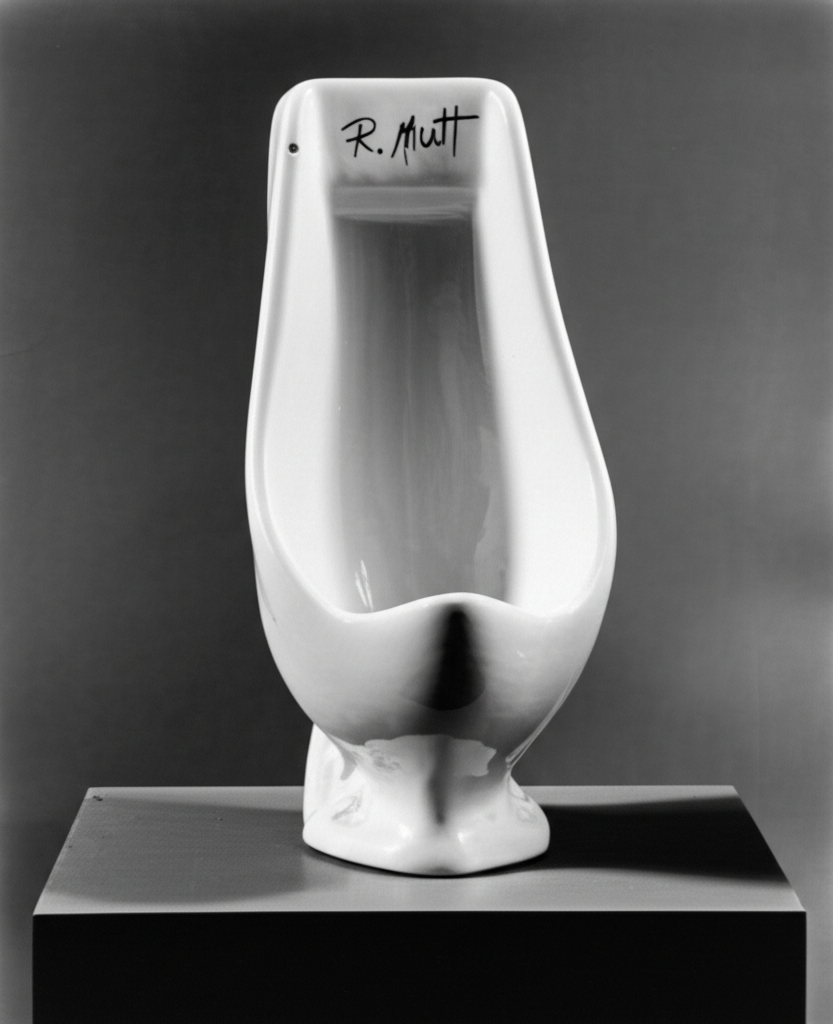
Artists like Marcel Duchamp, with his "readymades," deliberately provoked questions about what constitutes art and, by extension, beauty. Was beauty still about harmony, or could it be found in the disruptive, the conceptual, the ironic? This was a radical evolution, pushing beauty out of its comfortable, predictable aesthetic and into the realm of intellectual provocation. Some even declared the "death of beauty," arguing that art's purpose had shifted from pleasing the eye to challenging the mind.
Postmodern Perspectives: Deconstruction and Relativism
In our contemporary, postmodern era, the evolution of beauty has become even more complex and fragmented. Beauty is often seen as a social construct, a product of cultural conditioning, power dynamics, and individual interpretation. There's a skepticism towards universal standards and an embrace of pluralism. What one culture or subculture deems beautiful, another might not.
The line between art and non-art has blurred, and with it, the definition of beauty has expanded to encompass everything from the politically charged to the conceptually abstract, the ephemeral to the grotesque. The ongoing change is less about finding a new definition of beauty and more about questioning the very need for one.
Conclusion: The Ongoing Dialectic of Beauty
From the objective harmonies of ancient Greece to the subjective expressions of Romanticism, and from the divine light of the Middle Ages to the provocative challenges of modernism, the evolution of beauty in art is a testament to humanity's ceaseless quest for meaning and expression. Beauty is not a fixed star but a constellation, constantly shifting, reforming, and redefining itself in response to our ever-evolving understanding of the world and our place within it. To truly appreciate art, one must appreciate this dynamic, ongoing change, recognizing that what we deem beautiful today is merely the latest iteration in an ancient, vital, and endlessly fascinating philosophical journey.
YouTube Video Suggestions:
-
📹 Related Video: PLATO ON: The Allegory of the Cave
Video by: The School of Life
💡 Want different videos? Search YouTube for: ""The Philosophy of Aesthetics: From Plato to Postmodernism""
-
📹 Related Video: What is Philosophy?
Video by: The School of Life
💡 Want different videos? Search YouTube for: ""Is Beauty Objective or Subjective? Philosophy Debate""