

The Grand Tapestry of Being: Philosophical Reflections on the Evolution of Animal Species
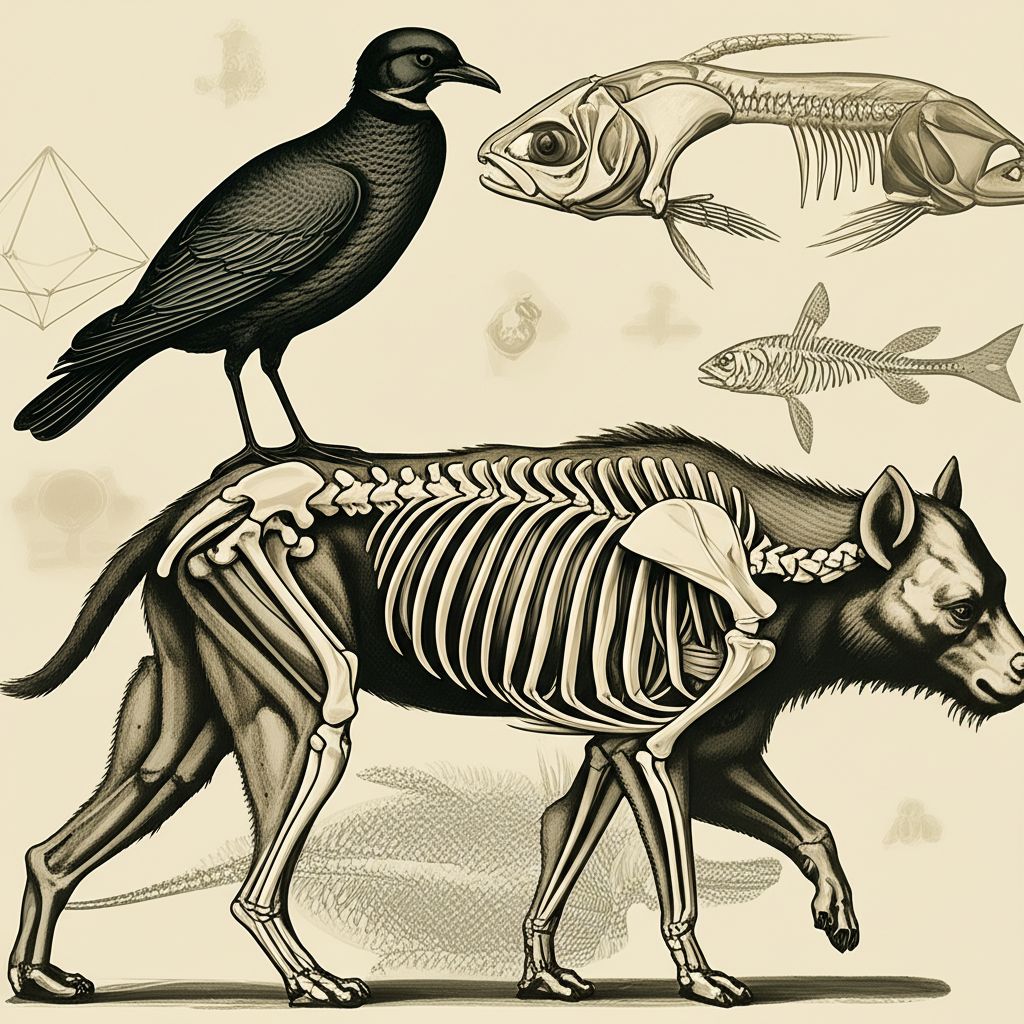
The ceaseless unfolding of life on Earth, particularly the intricate journey of animal species, presents not merely a biological phenomenon but a profound philosophical contemplation. From the simplest single-celled organisms to the most complex creatures that roam our planet, evolution is the grand narrative of change, adaptation, and the relentless dance between life and death. This article delves into the philosophical implications of animal evolution, exploring how this scientific understanding reshapes our perception of nature, our place within it, and the very essence of existence, drawing insights from the enduring wisdom of the Great Books.
I. The Ancient Gaze: Nature's First Philosophers and the Forms of Life
Before the advent of modern biology, philosophers of antiquity grappled with the astonishing diversity of animal forms. Their inquiries into nature (physis) laid the groundwork for understanding the world around them.
- Aristotle's Zoological Endeavors: In works like History of Animals and Parts of Animals, Aristotle meticulously observed and classified countless species, seeking to understand their internal structures, behaviors, and relationships. He saw a natural order, a scala naturae, or "Great Chain of Being," where organisms were arranged by complexity, hinting at an inherent teleology or purpose in nature. While not evolution in the Darwinian sense, his work emphasized the inherent dynamism and systematic organization of life.
- Plato's Ideal Forms: Plato, conversely, might have viewed species as imperfect manifestations of eternal, unchanging Forms existing in a transcendent realm. The animal kingdom, in this view, would be a shadow play of ideal archetypes. The concept of evolution, with its emphasis on constant flux and adaptation, directly challenges such fixed notions, suggesting that forms are not static but fluid, ever-transforming.
These early philosophical explorations, though lacking a mechanistic understanding of evolution, reveal humanity's enduring fascination with the origins and variations of animal life. They established the fundamental questions that evolutionary theory would later address: How did such diversity arise? What is the relationship between different species? And what is the underlying principle governing nature?
II. Darwin's Revolution: A New Lens on Life and Death
The 19th century brought a seismic shift with Charles Darwin's theory of evolution by natural selection. This scientific breakthrough profoundly reconfigured our philosophical understanding of nature and the cycle of life and death.
A. The Mechanics of Change:
Darwin's theory posited that species are not immutable but change over vast stretches of time through a process driven by:
- Variation: Individuals within a species exhibit differences.
- Inheritance: These variations can be passed to offspring.
- Selection: Environmental pressures favor individuals with certain traits, allowing them to survive and reproduce more successfully.
This mechanism, operating through countless generations, leads to the gradual divergence of species and the incredible diversity we observe.
B. Philosophical Implications of Natural Selection:
The concept of natural selection introduced several profound philosophical challenges and insights:
- The Absence of Teleology: Unlike Aristotle's inherent purpose, evolution by natural selection operates without a preordained goal or ultimate design. It is a blind, mechanistic process, driven by immediate environmental pressures, leading to a philosophical re-evaluation of purpose in nature.
- The Primacy of Life and Death: At the heart of evolution lies the stark reality of life and death. Survival of the fittest is not a moral judgment but a descriptive account of which organisms are best adapted to their environment. Death becomes not an end, but a crucial component of the ongoing evolutionary process, clearing the way for new forms and adaptations.
- Our Place in Nature: Evolution firmly places humanity within the grand animal kingdom, sharing common ancestry with all other life forms. This challenges anthropocentric views and fosters a deeper appreciation for the interconnectedness of all life.
III. The Unfolding Animal Story: Ethical and Existential Dimensions
The continuous saga of animal evolution forces us to confront fundamental questions about existence, morality, and our responsibilities.
- The Fragility and Resilience of Life: Evolution demonstrates both the incredible fragility of individual life (subject to selection pressures, disease, and predation) and the astounding resilience of life itself, which persists and diversifies through countless extinctions and environmental shifts. This duality offers a powerful metaphor for human experience.
- Understanding Animal Consciousness: As we recognize our shared evolutionary heritage, questions about animal consciousness, sentience, and suffering gain philosophical weight. If we are all products of the same evolutionary forces, where do we draw the lines of moral consideration?
- The Future of Evolution: Human activity has become a dominant evolutionary force, shaping the life on our planet at an unprecedented rate. This raises urgent ethical questions about conservation, genetic engineering, and our role as stewards (or destroyers) of nature's ongoing evolutionary experiment.
IV. Enduring Philosophical Questions Posed by Evolution
The theory of evolution does not answer all philosophical questions; rather, it often refines and deepens them.
- What is the meaning of existence in a universe without inherent teleology?
- How do we reconcile the apparent randomness of mutation with the intricate complexity of life?
- What are the ethical implications of our shared evolutionary history with all animal species?
- Does evolution diminish or enhance the sense of wonder we feel for nature?
These questions, echoing through the halls of philosophy from antiquity to the present, remind us that science and philosophy are not adversaries but partners in the quest for understanding.
Conclusion: The Evolving Wisdom of Nature
The evolution of animal species is more than a scientific theory; it is a profound philosophical narrative woven into the very fabric of existence. It compels us to see nature not as a static backdrop, but as a dynamic, ever-changing process where life and death are inseparable partners in creation. From the ancient Greeks who first sought to categorize the forms of life, to Darwin who revealed the engine of change, the journey of evolution continues to challenge our assumptions, deepen our appreciation for the intricate web of life, and ultimately, redefine our place within the grand, evolving tapestry of being.
📹 Related Video: ARISTOTLE ON: The Nicomachean Ethics
Video by: The School of Life
💡 Want different videos? Search YouTube for: ""Philosophical implications of Darwin's theory of evolution""
📹 Related Video: What is Philosophy?
Video by: The School of Life
💡 Want different videos? Search YouTube for: ""Ancient Greek philosophy on nature and living beings""