

The Enduring Interrogation of Slavery and Labor: A Philosophical Journey
The history of humanity is, in many respects, a history of labor, and tragically, a history intertwined with slavery. From ancient civilizations to the shadows of modern exploitation, the ethical implications of one person holding dominion over another's work, body, and very existence have persistently challenged our understanding of justice and human dignity. This pillar page embarks on a philosophical excavation, drawing from the Great Books of the Western World, to confront the profound ethical questions raised by these twin concepts, exploring how thinkers across millennia have grappled with the nature of human freedom, the value of work, and the moral imperative to dismantle systems of oppression. We will navigate the justifications, critiques, and enduring legacy of practices that have, time and again, forced us to re-evaluate what it means to be human and to live justly.
Unpacking the Chains: Early Philosophical Justifications and Their Discontents
To understand the ethics of slavery, we must first confront its historical justifications, however repugnant they may now seem. For centuries, philosophers and societies alike sought to rationalize the subjugation of one group by another, often cloaking economic and power dynamics in the guise of natural order or divine decree.
Aristotle and the "Natural Slave"
Perhaps no philosopher's contribution to this discussion is as foundational, and as problematic, as that of Aristotle. In his Politics, Aristotle presents a chilling rationale for slavery, arguing that some individuals are "natural slaves" – beings whose rational faculty is insufficient for self-governance, and who are therefore best suited to be instruments for others.
- Key Arguments:
- Natural Hierarchy: A perceived natural order where some are born to rule, others to be ruled.
- Household Economy: Slaves are "animate tools" essential for the functioning of the household (oikos), allowing masters to pursue higher intellectual and political endeavors.
- Mutual Advantage (Debatable): Aristotle suggests that slavery, when natural, is beneficial for both master and slave, though this "benefit" for the slave is largely defined by the master's needs.
Aristotle's concept of the natural slave, while widely influential in its time, stands in stark contrast to later philosophical developments emphasizing universal human rights and autonomy. It forces us to ask: Can any human being truly be considered a mere instrument, devoid of inherent worth?
The Roman Stoics and the Inner Freedom
In a fascinating counterpoint, Roman Stoic philosophers like Epictetus – himself a former slave – offered a radical redefinition of freedom. While not directly challenging the institution of slavery in the external world, Stoicism emphasized an inner freedom that transcended one's physical circumstances.
- Epictetus's Insight: True freedom lies in one's capacity to control one's judgments, desires, and aversions, rather than being enslaved by external events or the actions of others. A person could be a slave in body but free in mind.
- Ethical Implication: This perspective, while not a direct abolitionist argument, sowed seeds of doubt about the ultimate power of external chains, shifting the focus to the inviolable dignity of the human spirit.
The Enlightenment's Challenge: Natural Rights and the Inalienable Self
The Enlightenment era brought a seismic shift, introducing powerful concepts of natural rights and individual liberty that fundamentally undermined the philosophical underpinnings of slavery.
John Locke and the Right to Liberty
John Locke, in his Two Treatises of Government, articulated a vision of human beings endowed with inherent rights to life, liberty, and property. His theories provided a robust framework for challenging absolute monarchies and, by extension, any system that denied fundamental human freedom.
- Property in Person: Locke famously argued that every individual has "property in his own person," meaning no one else has a right to that person's body or labor. This was a direct ethical assault on the concept of human ownership.
- Slavery as a State of War: Locke viewed slavery as an extension of a "state of war," where one person has forfeited their right to life through aggression, making them subject to another's absolute power. However, this limited justification struggled to account for hereditary slavery or the transatlantic slave trade, which rarely involved such a "state of war."
Locke's ideas, while not perfectly applied to his own era's realities, laid crucial groundwork for later abolitionist movements, asserting that liberty was not a privilege but an inalienable right.
Jean-Jacques Rousseau and the Chains of Society
Jean-Jacques Rousseau, in The Social Contract, famously declared, "Man is born free, and everywhere he is in chains." While his primary focus was on political freedom and legitimate governance, his work resonated deeply with the plight of the enslaved.
- Forfeiture of Liberty: Rousseau argued that no person could legitimately alienate their freedom, nor could a people give up their sovereignty. To surrender one's liberty was to surrender one's humanity.
- Critique of Force: He contended that force creates no right, and therefore, any system of slavery based on conquest or coercion was illegitimate.
Rousseau's passionate defense of natural liberty provided a powerful ethical weapon against all forms of human bondage.
The Dignity of Labor and the Ethics of Exploitation
Beyond the absolute ownership of individuals, the ethics of labor itself has been a constant source of philosophical debate. What constitutes fair labor? When does work become exploitative? And what is the inherent value of human effort?
Kant and Human Dignity
Immanuel Kant, a towering figure of Enlightenment ethics, provided a profound framework for understanding human dignity that directly impacts our view of labor and slavery. His categorical imperative demands that we "act in such a way that you treat humanity, whether in your own person or in the person of any other, never merely as a means to an end, but always at the same time as an end."
- Humanity as an End: This principle makes any system that treats human beings as mere instruments for another's profit or purpose fundamentally unethical. Slavery, by its very definition, violates this principle entirely.
- Autonomous Rational Beings: Kant emphasized the capacity for rational thought and moral agency as the source of human dignity. To deny this agency, as slavery does, is to deny a person's humanity.
For Kant, the moral wrong of slavery is not merely a matter of suffering, but a direct affront to the inherent worth and rational nature of every human being.
Marx and Alienated Labor
Karl Marx, in his economic and philosophical manuscripts, shifted the focus to the nature of labor within capitalist systems, arguing that even "free" labor could be a form of exploitation, leading to alienation.
- Alienation from Product: Workers produce goods they do not own or control.
- Alienation from Process: Work becomes a means to an end (wages) rather than a fulfilling activity.
- Alienation from Species-Being: The creative, self-actualizing essence of human labor is denied.
- Alienation from Fellow Humans: Competition fostered by the system isolates individuals.
While Marx distinguished between chattel slavery and wage labor, his analysis of alienation highlights how systems can degrade human dignity even without outright ownership. The question he poses is: When does labor, even voluntarily undertaken, become so dehumanizing that it approaches a form of bondage?
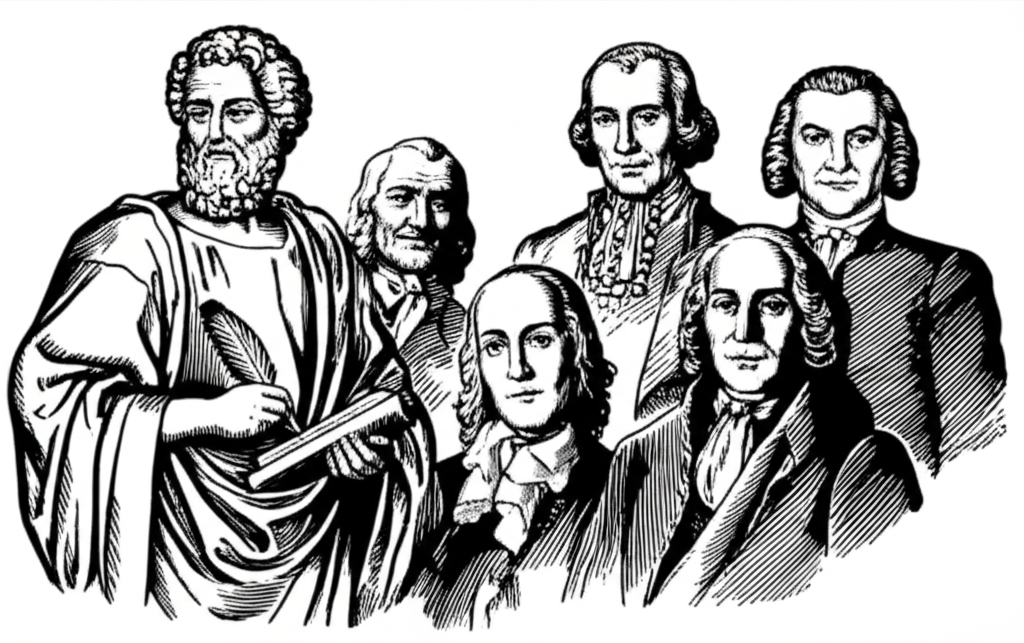 engaged in a serious debate, with a single, symbolic broken chain lying on a table between them, representing the ongoing struggle against slavery and for human freedom.)
Ethical Frameworks and the Scrutiny of Slavery and Labor
Different ethical frameworks offer distinct lenses through which to condemn slavery and evaluate the ethics of labor.
| Ethical Framework | Key Principle | Application to Slavery | Application to Labor Ethics |
|---|---|---|---|
| Deontology | Duty, Rules, Rights | Inherently wrong as it violates universal moral duties (e.g., Kant's categorical imperative) to treat humans as ends, not means. Violates fundamental rights. | Emphasizes fair treatment, respect for autonomy, and adherence to just labor laws. |
| Utilitarianism | Greatest Good for Greatest Number | Strongly condemned due to immense suffering, loss of potential, and negative societal impact, which far outweigh any perceived economic benefit for a few. | Seeks to maximize overall well-being and minimize suffering; concerns about worker safety, fair wages, and equitable distribution of benefits. |
| Virtue Ethics | Character, Moral Virtues | Condemned as it involves vices like injustice, cruelty, greed, and a lack of compassion. It prevents the development of virtues in both master and slave. | Encourages virtues like fairness, diligence, integrity, and compassion in both employers and employees. |
These frameworks, each in its own way, provide compelling arguments for the abolition of slavery and the establishment of just labor practices.
Modern Echoes and the Pursuit of Justice
The philosophical debates surrounding slavery and labor are far from academic exercises confined to the past. Modern forms of human trafficking, forced labor, and exploitative working conditions around the globe demonstrate the enduring relevance of these ethical interrogations.
Contemporary Challenges:
- Human Trafficking: Millions are still held in various forms of bondage, often through coercion, fraud, or force, echoing ancient forms of slavery.
- Sweatshop Labor: Debates around global supply chains, low wages, unsafe conditions, and child labor force us to ask whether modern economic systems inadvertently perpetuate forms of exploitation.
- Gig Economy Ethics: The rise of precarious labor, lack of benefits, and algorithmic management raises new questions about worker autonomy, fair compensation, and the definition of employment itself.
The pursuit of justice demands that we not only condemn historical slavery but also remain vigilant against its modern manifestations and continually scrutinize the ethical dimensions of all labor relations. This ongoing struggle requires a deep understanding of the philosophical foundations of human dignity and freedom.
Conclusion: The Unfinished Work of Freedom
The ethics of slavery and labor represent one of humanity's most persistent and painful philosophical challenges. From Aristotle's problematic justifications to Kant's unwavering defense of human dignity, and from Locke's natural rights to Marx's critique of alienated labor, the Great Books of the Western World provide an indispensable lens through which to understand this complex history. The journey through these ideas reveals a gradual, albeit often interrupted, expansion of our moral consciousness, pushing us towards an ever-deeper appreciation of individual freedom and collective justice. The work, however, is far from over. As Daniel Fletcher, I contend that the philosophical tools honed over millennia remain our most potent weapons in the ongoing fight to ensure that all human beings are treated not as means, but as ends in themselves, truly free to pursue their own flourishing through dignified labor.
Further Exploration:
📹 Related Video: ARISTOTLE ON: The Nicomachean Ethics
Video by: The School of Life
💡 Want different videos? Search YouTube for: ""Great Books of the Western World: Aristotle on Slavery" - Look for academic discussions or summaries of Aristotle's Politics concerning his views on natural slavery."
📹 Related Video: ARISTOTLE ON: The Nicomachean Ethics
Video by: The School of Life
💡 Want different videos? Search YouTube for: ""Kant's Ethics: Treating Humanity as an End" - Search for explanations of Kant's Categorical Imperative, particularly the formulation focusing on humanity as an end in itself."