

The Unholy Alliance: Slavery, Family, and the Enduring Ethical Quandary
The institution of slavery presents one of humanity's most profound ethical paradoxes, particularly when examined through the lens of family. This article delves into the complex and often contradictory relationship between slavery, a system built on dehumanization, and the concept of family, a fundamental unit of human society. Drawing upon the rich tapestry of thought found in the Great Books of the Western World, we explore how philosophers grappled with – or often rationalized – this inherent conflict, revealing the profound struggle between good and evil that lies at the heart of human morality. We will dissect the ethical implications of a system that simultaneously destroyed families, corrupted the concept of kinship, and challenged the very foundations of justice and human dignity.
Ancient Foundations and the Ethical Compromise
From the earliest recorded civilizations, slavery has been a pervasive, if morally contested, fixture. Ancient Greek thinkers, whose works form a cornerstone of the Great Books, offer particularly illuminating, albeit often troubling, insights. Aristotle, in his Politics, famously posits the concept of 'natural slaves,' arguing that some individuals are inherently suited to be instruments for others. For Aristotle, the household (oikos) was the foundational unit of the state, and slaves were considered property within this unit, essential for the master's leisure to engage in civic life.
This perspective, while foundational to ancient thought, presents a stark ethical dilemma: how can human beings be property, and what does this do to the very idea of a family unit, both for the enslaver and the enslaved? Plato, in his Republic, also acknowledges slavery, though his ideal state focuses more on the hierarchy of citizens. These ancient views, while providing a framework for understanding their societies, underscore a historical struggle to reconcile the inherent dignity of individuals with the economic and social structures of their time.
The Ethical Dilemma of Dehumanization
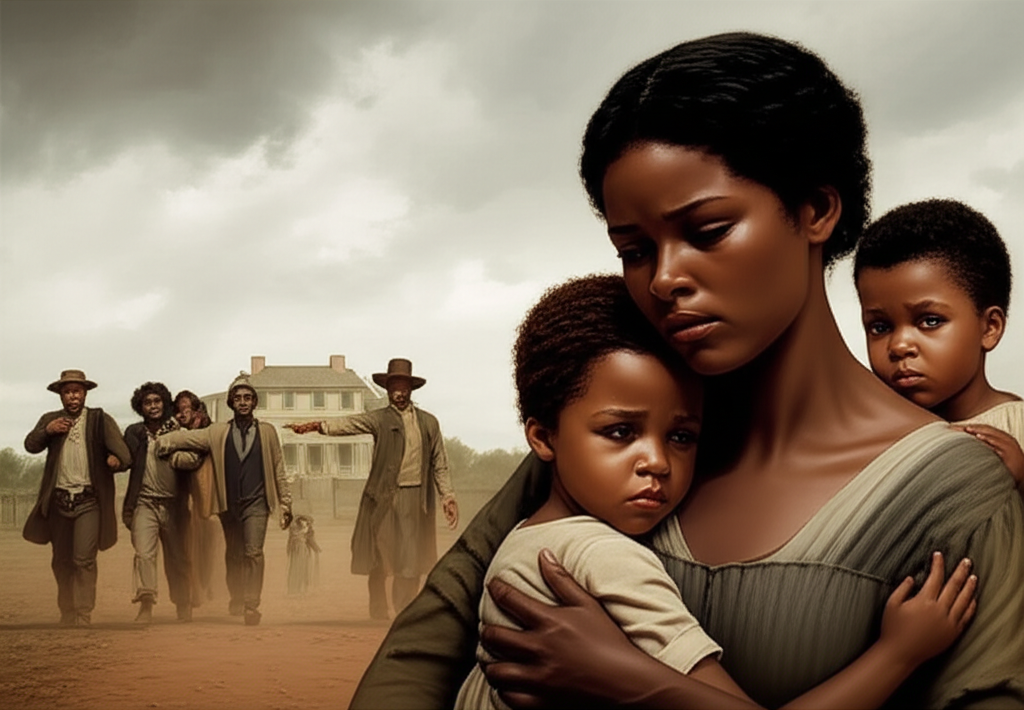
At its core, slavery is an institution of dehumanization. It strips individuals of their autonomy, their personhood, and fundamentally, their right to self-determination. This ethical violation is magnified when we consider the concept of family. A family, ideally, is a sanctuary of love, support, and mutual respect. Slavery systematically demolishes this ideal. Enslaved families were routinely torn apart through sale, their bonds severed, their children taken, and their lineage disrupted.
The very act of owning another human being as chattel inherently denies their capacity for genuine familial connection, reducing them to reproductive units or labor assets rather than individuals with inherent rights and affections. The moral injury inflicted upon enslaved individuals and their families represents a profound breach of ethical conduct, shattering the most basic human need for belonging and continuity.
Good and Evil: A Distorted Lens
The debate surrounding slavery often forces a confrontation with the concepts of good and evil. For those who perpetuated and benefited from slavery, the system was frequently framed as a good – a necessary economic engine, a means of maintaining social order, or even, in twisted paternalistic views, a way to 'civilize' certain populations. This perspective, however, requires a radical redefinition of good, one that negates universal human rights and empathy.
From an objective ethical standpoint, slavery is unequivocally an evil because it violates fundamental principles of justice, equality, and human dignity. It is an act of profound violence against the human spirit, demonstrating how self-interest and systemic power can warp moral reasoning to justify unimaginable cruelty. The inherent evil of slavery is perhaps most starkly revealed in its deliberate destruction of family bonds, an act that speaks to a deep moral failing at the heart of the institution.
The Corrosive Impact on All Families
The ethical stain of slavery was not confined merely to the enslaved; it also deeply corrupted the families of the enslavers. For slave-owning families, the presence of enslaved individuals within their households created a complex web of moral compromises and hypocrisies. Children grew up witnessing brutal power dynamics, the denial of basic human rights, and often, acts of sexual violence and abuse. This environment inevitably shaped their understanding of justice, compassion, and the sanctity of family itself.
The supposed 'family values' of the dominant culture were often built upon a foundation of injustice and exploitation, creating a profound ethical dissonance that has echoed through generations. The legacy of slavery is not just economic or social; it is a deep ethical wound on the very fabric of society, impacting how we understand kinship, responsibility, and the true meaning of a just community.
The Evolution of Ethical Thought and Abolition
The eventual condemnation of slavery across much of the Western world did not happen overnight. It was the culmination of centuries of evolving ethical thought, often fueled by philosophical treatises that challenged the very premises upon which slavery was built. Thinkers from the Enlightenment, such as John Locke, whose ideas on natural rights profoundly influenced later movements, began to articulate a vision of humanity where liberty was inherent, not granted.
The abolitionist movements, drawing heavily on these ethical frameworks, argued forcefully for the universal rights of all people, irrespective of race or origin. They highlighted the fundamental incompatibility of human bondage with true justice and the sanctity of family. The recognition that all individuals possess inherent dignity and the right to form and maintain families became a cornerstone of modern ethical thought, marking a significant departure from earlier rationalizations of slavery found in parts of the Great Books.
Conclusion: An Enduring Ethical Imperative
The ethics of slavery and family remain a potent and painful reminder of humanity's capacity for both profound cruelty and profound moral awakening. The systematic dismantling of families, the denial of personhood, and the inherent evil of forced labor stand in stark contrast to any genuine understanding of human flourishing or ethical governance. As we reflect upon the philosophical journey through the Great Books of the Western World, it becomes undeniably clear that any system built upon the subjugation of human beings, particularly one that tears apart the fundamental unit of family, is inherently unjust and morally indefensible. The lessons learned from this dark chapter continue to inform our understanding of human rights, the pursuit of justice, and the enduring imperative to uphold the dignity of every individual and the sanctity of their familial bonds.
YouTube Video Suggestions:
-
📹 Related Video: ARISTOTLE ON: The Nicomachean Ethics
Video by: The School of Life
💡 Want different videos? Search YouTube for: ""Ethics of Slavery Philosophy""
-
📹 Related Video: ARISTOTLE ON: The Nicomachean Ethics
Video by: The School of Life
💡 Want different videos? Search YouTube for: ""Aristotle on Slavery Explained""