

The Unbearable Contradiction: Slavery, Family, and Moral Decay
The institution of slavery stands as one of humanity's most profound moral failures, a stark testament to our capacity for evil disguised often by economic expediency or cultural tradition. Yet, when we delve into the ethics of slavery, particularly through the lens of family, its inherent depravity becomes terrifyingly unambiguous. This article explores how the very fabric of human connection—the family unit—is not merely undermined but actively annihilated by slavery, exposing an irreconcilable conflict with any notion of good. Drawing insights from the Great Books of the Western World, we confront the philosophical justifications and the enduring moral imperative to recognize the sanctity of human bonds.
A Historical Gaze: Slavery in the Great Books Tradition
For centuries, philosophical discourse, as chronicled in the Great Books, grappled with slavery, often with a troubling degree of acceptance. Ancient thinkers like Aristotle, in his Politics, famously posited the concept of the "natural slave"—individuals he deemed inherently suited for servitude due to a perceived lack of full rational capacity.
- Aristotle's "Natural Slave" and its Ethical Flaws: Aristotle's rationale, while foundational to Western thought, presents a profound ethical quandary. By asserting that some are "slaves by nature," he attempted to rationalize an institution that fundamentally denies human dignity and autonomy. This classification, however, crumbles under ethical scrutiny, failing to account for the inherent value of every individual and, crucially, their capacity for forming and sustaining familial bonds. The very idea of owning another person, regardless of their perceived natural state, is an affront to the universal principles of justice and human respect.
- The Roman Household: Property and Kinship: In the Roman world, as depicted in texts like Cicero's De Officiis or Seneca's Moral Letters, enslaved individuals were considered res—property—within the familia, the extended household. While they might form relationships, these were often precarious, subject to the whims of the master, and lacked legal recognition. The separation of families through sale, a common practice, starkly illustrates the profound ethical breach: children could be torn from parents, spouses from one another, dissolving the very foundation of kinship for economic gain. This practice highlights the fundamental conflict between the concept of property and the intrinsic value of human relationships.
The Core of the Conflict: Ethics and Human Bonds
The institution of slavery, at its heart, is a systematic assault on the family, and by extension, on fundamental ethics. It transforms human beings into commodities, denying their agency and severing the most basic ties that define our humanity.
- The Dehumanizing Force of Ownership: To own another person is to deny their personhood. This denial extends beyond individual autonomy to the very right to form and maintain a family. When individuals are property, their children are also property, their marriages are not legally binding, and their relationships are contingent on the owner's will. This reduction of human beings to chattel represents the ultimate triumph of evil over good, as it strips away the inherent dignity that forms the basis of all ethical systems.
- Family as a Moral Imperative: The family unit—whether biological, adoptive, or chosen—is a primary source of identity, nurture, and moral education. It is where individuals learn compassion, responsibility, and love. Slavery systematically dismantles this, creating a profound ethical void.
- Separation: The forced separation of family members through sale or relocation.
- Lack of Legal Recognition: Marriages and parental rights were often unrecognized or easily dissolved by masters.
- Sexual Exploitation: Enslaved women were particularly vulnerable, their bodies and reproductive capacities treated as property.
- Intergenerational Trauma: The psychological scars of family destruction passed down through generations.
- Good and Evil: An Unambiguous Divide: The ethical framework of good and evil finds one of its clearest expressions in the context of slavery. Actions that foster human connection, protect the vulnerable, and uphold dignity are good. Actions that systematically dehumanize, exploit, and sever the most sacred bonds are evil. Slavery, by its very nature, falls squarely into the latter category, leaving no room for ethical ambiguity.
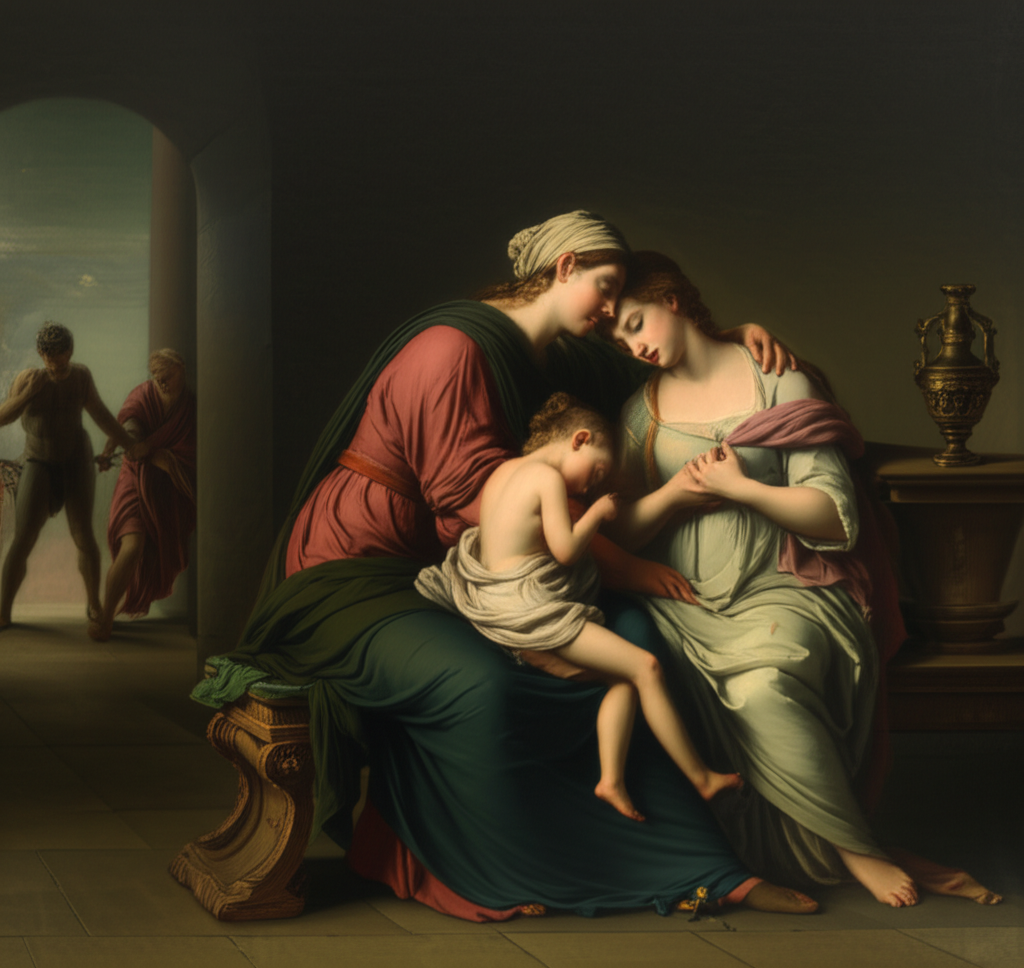
The Enduring Scar: Psychological and Societal Impacts
The legacy of slavery, particularly its impact on the family, continues to resonate. The profound trauma of forced separation, the denial of parental rights, and the systemic breakdown of kinship structures left indelible scars. Philosophically, this highlights that ethics are not merely abstract principles but have real, tangible consequences on individuals and societies. The absence of legal protection for enslaved families meant that an entire dimension of human experience was brutally suppressed, leading to deep-seated psychological and social damage that persists across generations.
Philosophical Reckoning: Towards a Just Future
The progression of philosophical thought, moving beyond the justifications found in earlier Great Books to a more universal understanding of human rights, eventually led to the condemnation of slavery. Thinkers from the Enlightenment onwards increasingly recognized the inherent and inalienable rights of all individuals, making the institution of slavery, and its assault on the family, ethically indefensible. The irreconcilable nature of freedom and servitude, of human dignity and human property, became undeniable.
Conclusion: A Moral Imperative for Humanity
The ethics of slavery, particularly when examined through the lens of family, present a clear and resounding moral condemnation. It is an institution founded on the premise of dehumanization, actively dismantling the very structures that provide love, identity, and security. The lessons from the Great Books and the subsequent philosophical advancements underscore a fundamental truth: any system that treats human beings as property, denying their right to self-determination and the sanctity of their familial bonds, is unequivocally an act of evil, standing in direct opposition to the pursuit of good. Our ongoing commitment to justice demands a constant vigilance against any form of exploitation that threatens the fundamental human right to family and freedom.
📹 Related Video: ARISTOTLE ON: The Nicomachean Ethics
Video by: The School of Life
💡 Want different videos? Search YouTube for: ""Philosophical arguments against slavery history" or "Ethics of family in ancient philosophy""