

From the ancient Greeks to modern thought, the concepts of pleasure and pain have stood at the very heart of ethics. This article explores how philosophers throughout the Great Books of the Western World have grappled with these fundamental human experiences, examining their roles in shaping our desires, defining our duties, and ultimately guiding our pursuit of a good and moral life. It's a journey into understanding not just what feels good or bad, but what should guide our choices when confronted with these powerful forces.
Introduction: The Irresistible Pull of Pleasure and the Unavoidable Shadow of Pain
As humans, we are inextricably linked to the sensations of pleasure and pain. They are our earliest teachers, our constant companions, and often, our most compelling motivators. From the simple joy of a warm meal to the profound satisfaction of a life well-lived, and from the sting of a minor injury to the ache of profound loss, these experiences shape our perceptions, drive our actions, and fundamentally influence our understanding of what it means to lead a good life. But how do we navigate this landscape? Is pleasure inherently good? Is pain inherently evil? And how do these primal responses inform our ethics – our understanding of right and wrong, of what we ought to do? Philosophers have wrestled with these questions for millennia, offering profound insights that continue to resonate today.
Ancient Echoes: Pleasure, Virtue, and the Path to Flourishing
The earliest philosophical inquiries into pleasure and pain often centered on their relationship to virtue and the ultimate goal of human existence.
Plato's Republic: The Hierarchy of the Soul and the Dangers of Unbridled Desire
For Plato, as illuminated in works like the Republic, pleasure was not inherently evil, but it was certainly suspect when untempered by reason. He envisioned the soul as having three parts: reason, spirit, and appetite (which includes desires for bodily pleasures like food, drink, and sex). A just and good life, for Plato, meant reason ruling over the spirit and the appetites. Unchecked desire for pleasure, he argued, could lead to imbalance, tyranny within the soul, and ultimately, an unjust and unhappy life. True good was found in the contemplation of the Forms, in justice, and in the harmonious ordering of the soul, not in fleeting sensual gratification.
Aristotle's Nicomachean Ethics: Pleasure as an Accompaniment to Virtue, Not its Goal
Aristotle, Plato's student, offered a more nuanced perspective. In his Nicomachean Ethics, he posited that the ultimate human good is eudaimonia, often translated as "flourishing" or "living well." While not equating pleasure with the good, Aristotle recognized that pleasure is a natural accompaniment to virtuous activity. When we act virtuously – whether it's exercising courage, temperance, or justice – we often experience a deep, fulfilling pleasure. This pleasure, however, is a byproduct of good action, not its primary aim. Pursuing pleasure for its own sake, much like Plato warned, could lead us astray. The key, for Aristotle, was moderation and the development of virtuous character through habit.
Epicurus and the Pursuit of Tranquility: Redefining Hedonism
Often misunderstood, Epicurus, another giant from the Hellenistic period, proposed a form of hedonism that was far from gluttonous indulgence. For Epicurus, the highest good was pleasure, but he defined this as the absence of pain in the body (aponia) and disturbance in the mind (ataraxia). He argued that many intense pleasures are followed by greater pains, and therefore, the wise person seeks tranquility through simple living, friendship, and intellectual pursuits. It was about minimizing pain and maximizing a calm, enduring contentment, not chasing fleeting sensations. This was a profound re-evaluation of pleasure as a guide to life.
The Stoic Stance: Fortitude in the Face of Fortune
Contemporaries of the Epicureans, the Stoics (like Epictetus and Seneca) took a radically different approach to pleasure and pain. For them, virtue was the sole good, and everything else – including pleasure and pain, wealth and poverty, health and sickness – was an "indifferent." Their philosophy centered on distinguishing between what is within our control (our judgments, attitudes, and actions) and what is not (external events, including the sensations of pleasure and pain).
The Stoics taught that we should strive for apathy in the original Greek sense – not indifference, but freedom from disruptive passions. They argued that our suffering comes not from pain itself, but from our judgment about the pain. By cultivating reason and accepting what we cannot change, we can achieve inner serenity and true freedom, fulfilling our duty to live in accordance with nature.
The Modern Divide: Calculating Happiness vs. Upholding Duty
As philosophy moved into the modern era, the debate over pleasure, pain, and ethics took on new forms, leading to two profoundly influential, yet opposing, schools of thought.
Utilitarianism: Jeremy Bentham and John Stuart Mill: The Greatest Happiness Principle
In the 18th and 19th centuries, Jeremy Bentham and John Stuart Mill developed Utilitarianism, an ethical framework that explicitly placed pleasure and pain at the center of moral decision-making. For Utilitarians, an action is morally right if it produces the greatest good for the greatest number of people. And what is this "good"? It is happiness, which they largely equated with pleasure and the absence of pain.
Bentham even proposed a "hedonic calculus" to measure the intensity, duration, certainty, propinquity, fecundity, purity, and extent of pleasures and pains to determine the morally correct action. Mill refined this, suggesting that there are qualitative differences in pleasures (intellectual pleasures being superior to purely physical ones), but the core idea remained: morality is about maximizing overall happiness and minimizing suffering. Here, desire for collective pleasure and avoidance of collective pain became the driving duty.
Immanuel Kant and the Primacy of Duty: Morality Beyond Inclination
In stark contrast to Utilitarianism, Immanuel Kant, in the 18th century, argued vehemently against grounding ethics in pleasure or pain. For Kant, morality was not about consequences or feelings, but about duty and rational principles. An action is morally good only if it is done from duty, out of respect for the moral law, not out of inclination or a desire for a pleasurable outcome, or even the avoidance of pain.
Kant's famous "Categorical Imperative" dictates that we should act only according to a maxim that we could at the same time will to become a universal law. This means our moral actions must be rationally justifiable for everyone, everywhere, all the time, regardless of personal feelings or the resulting pleasure or pain. Morality, for Kant, is an absolute command of reason, detached from the shifting sands of human experience.
Key Philosophical Approaches to Pleasure and Pain
- Platonism: Pleasure is subordinate to reason; true good lies in virtue and the Forms.
- Aristotelianism: Pleasure naturally accompanies virtuous activity; eudaimonia (flourishing) is the ultimate good, achieved through rational activity and moderation.
- Epicureanism: The highest good is tranquility (ataraxia) and freedom from pain (aponia), achieved through simple living and intellectual pursuits.
- Stoicism: Virtue is the sole good; external pleasures and pains are indifferent, and one should cultivate inner serenity and control over one's reactions.
- Utilitarianism: Actions are morally right if they promote the greatest happiness (pleasure) for the greatest number, and wrong if they cause pain.
- Kantian Ethics: Morality is based on duty and rational principles (the Categorical Imperative), not on the consequences of pleasure or pain, or personal inclination.
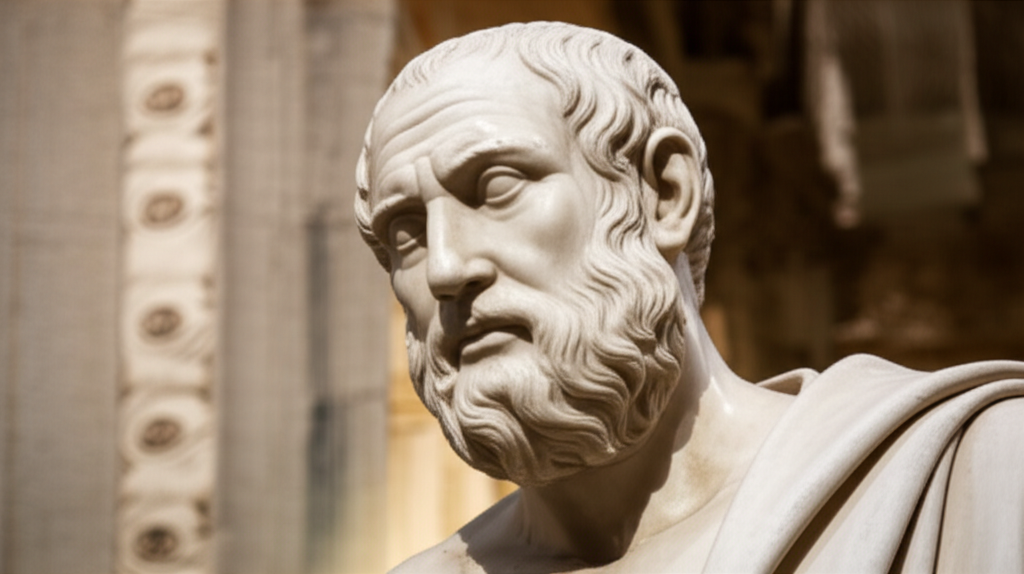
Desire vs. Duty: An Enduring Philosophical Tension
The philosophical journey through the ethics of pleasure and pain reveals a fundamental tension: the pull of desire for what feels good, and the imperative of duty to what is right. Is it possible to reconcile these?
Some philosophers might argue that a life lived in accordance with duty, with virtue, ultimately brings a deeper, more profound form of satisfaction – a pleasure not of the senses, but of the soul. Others might contend that our duties should indeed be guided by the goal of minimizing suffering and maximizing well-being, thus bringing desire and duty into alignment through a utilitarian lens.
The challenge lies in recognizing that while pleasure can be a powerful motivator and pain a potent deterrent, neither sensation alone provides a complete moral compass. The wisdom gleaned from the Great Books of the Western World suggests that true ethical living requires careful thought, self-awareness, and a willingness to transcend immediate gratification for a more enduring good.
Navigating Our Own Ethical Compass
As we reflect on these diverse perspectives, it becomes clear that there is no single, simple answer to the ethics of pleasure and pain. Instead, we are presented with a rich tapestry of thought that encourages us to:
- Question our desires: Are they leading us towards genuine flourishing or fleeting satisfaction?
- Consider our duties: To ourselves, to others, and to broader principles.
- Evaluate consequences: How do our actions impact the overall balance of pleasure and pain in the world?
- Cultivate wisdom: To discern when to embrace pleasure, when to endure pain, and when to rise above both in pursuit of a higher moral calling.
The ongoing dialogue sparked by these philosophical giants reminds us that the quest for an ethical life is a perpetual journey, deeply informed by our understanding – and our management – of these most fundamental human experiences.
YouTube Suggestions:
📹 Related Video: KANT ON: What is Enlightenment?
Video by: The School of Life
💡 Want different videos? Search YouTube for: "'Crash Course Philosophy: Kant & Categorical Imperatives'"
📹 Related Video: STOICISM: The Philosophy of Happiness
Video by: The School of Life
💡 Want different videos? Search YouTube for: "'The School of Life: What is Stoicism?'"