

The Ethics of Desire: Navigating the Labyrinth of Human Aspiration
A Précis on Desire's Moral Compass
Human existence is inextricably linked to desire. From the most fundamental urges for sustenance to the loftiest aspirations for truth and beauty, our lives are driven by what we want. But what constitutes ethical desire? This article delves into the philosophical examination of desire, exploring how our innate yearnings intersect with moral responsibility. Drawing upon the rich tapestry of thought found within the Great Books of the Western World, we will investigate the nature of desire, its relationship to the Will, and how it ultimately shapes our understanding and experience of Good and Evil. We contend that the ethical life is not merely about suppressing desire, but about cultivating and directing it towards virtuous ends, transforming raw impulse into a powerful force for moral flourishing.
The Dual Nature of Desire: Impulse and Aspiration
Desire is a potent force, often perceived as a chaotic, untamed element within the human psyche. Yet, it is also the wellspring of all striving, creativity, and progress. Philosophers across millennia have grappled with this duality: is desire a primal beast to be tamed, or a divine spark to be nurtured?
- Appetites and Instincts: At its most basic, desire manifests as physiological needs – hunger, thirst, comfort. These are often involuntary, immediate, and shared with the animal kingdom.
- Higher Aspirations: Beyond mere survival, humans desire knowledge, justice, love, recognition, and even immortality. These are complex, often learned, and deeply intertwined with our rational faculties and social constructs.
The ethical challenge lies in discerning which desires serve our higher nature and which merely cater to fleeting impulses. It's not the mere presence of desire that poses a moral dilemma, but its direction and the actions it compels.
Desire's Philosophical Roots: From Appetites to Aspiration
Ancient Greek thought, a cornerstone of the Great Books, offers profound insights into the nature of desire. Plato, for instance, articulated a tripartite soul, with different desires residing in different parts:
- Appetitive Soul: Resides in the belly, concerned with bodily pleasures and material gain.
- Spirited Soul: Resides in the chest, concerned with honor, courage, and recognition.
- Rational Soul: Resides in the head, concerned with truth, wisdom, and the Good.
For Plato, the ethical life involved the rational soul governing the appetitive and spirited parts, guiding all desires towards the ultimate Good. Aristotle, similarly, emphasized the role of reason in shaping desires, arguing that virtuous individuals desire what is truly good for them, not merely what feels pleasant. The cultivation of virtue, therefore, involves training our desires to align with reason.
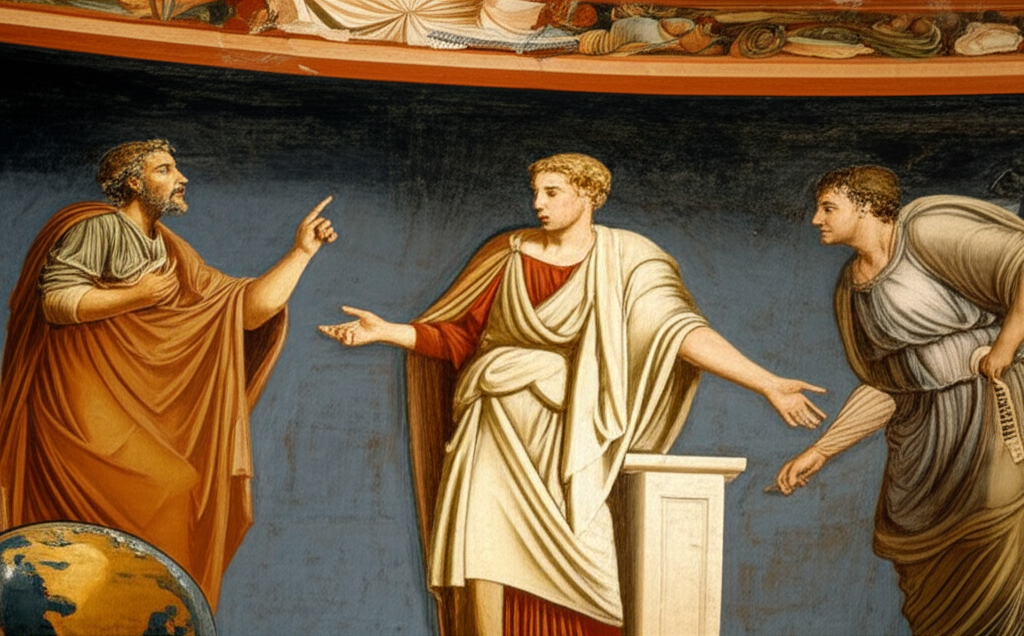
The Will as Moral Compass: Navigating Desire
The concept of the Will emerges as a crucial bridge between raw desire and ethical action. While desire might be a spontaneous inclination, the Will is our capacity for conscious choice, for assent or dissent. It is the faculty through which we evaluate our desires and decide whether to act upon them.
The Will's Ethical Function:
| Aspect of Will | Description | Ethical Implication |
|---|---|---|
| Deliberation | The process of reflecting on desires, weighing consequences. | Allows for reasoned moral choice, preventing impulsive actions. |
| Assent/Dissent | The power to approve or reject a desire as a basis for action. | Enables moral responsibility; we are accountable for what we will to do. |
| Self-Control | The ability to resist immediate gratification for a higher good. | Essential for developing virtues like temperance and patience. |
| Commitment | The resolve to pursue long-term goals despite conflicting desires. | Forms the basis for integrity and perseverance in ethical endeavors. |
Early Christian philosophers, particularly Augustine, placed immense emphasis on the Will, seeing it as the primary locus of moral responsibility, capable of choosing between Good and Evil. A good Will aligns itself with divine law and universal moral principles, while a bad Will succumbs to disordered desires, leading to sin and moral transgression. Later, Kant would emphasize the good Will as the only thing unconditionally good, acting out of duty and respect for the moral law, irrespective of desires or inclinations.
The Spectrum of Good and Evil: When Desire Goes Astray
The ethical quality of desire is not inherent; it is determined by its object and its alignment with reason and universal moral principles.
- Desires for Good: These are desires that, when pursued, lead to individual and collective flourishing. Examples include the desire for justice, knowledge, compassion, and community. These desires, guided by a virtuous Will, contribute to a life of Good.
- Desires for Evil: These are desires that, when acted upon, cause harm, injustice, or degradation. Examples include the desire for excessive power at others' expense, cruelty, or deceit. Such desires, unchecked or actively embraced by a corrupted Will, lead to Evil.
It is often the disordered desire – a good desire pursued in an inappropriate manner or to an excessive degree – that creates moral dilemmas. For instance, the desire for wealth is not inherently bad, but an insatiable desire for wealth that leads to exploitation or avarice becomes ethically problematic. The ethical task is to understand this spectrum and to continually re-evaluate our desires against a standard of universal Good.
Cultivating Ethical Desire: A Path to Virtue
The journey towards an ethical life is not about eradicating desire, which is both impossible and undesirable. Instead, it is about transforming our desires, making them instruments of virtue rather than sources of vice.
Strategies for Cultivating Ethical Desire:
- Self-Reflection: Regularly examine the origins and implications of your desires. Ask: "What do I truly want, and why?"
- Rational Evaluation: Subject desires to the scrutiny of reason. Is this desire congruent with my values? Will acting on it lead to Good outcomes?
- Virtue Cultivation: Engage in practices that strengthen virtues like temperance, courage, justice, and wisdom. These virtues, in turn, help shape and refine our desires.
- Moral Education: Immerse oneself in philosophical and ethical inquiry, drawing from the wisdom of the Great Books and other sources, to broaden one's understanding of Good and Evil.
- Community Engagement: Participate in communities that uphold ethical values, as our desires are often shaped by our social environment.
By consciously engaging our Will to guide and refine our desires, we move beyond mere impulse and towards a life of deliberate, ethical aspiration.
Conclusion: The Enduring Challenge
The ethics of desire remains a central challenge for humanity. Our desires define us, drive us, and, when misdirected, can undo us. However, by understanding the intricate relationship between Desire, the Will, and the concepts of Good and Evil, we gain the tools to navigate this complex inner landscape. The wisdom gleaned from centuries of philosophical inquiry, enshrined in works like the Great Books of the Western World, offers not just intellectual understanding but a practical guide for cultivating a life where our deepest yearnings align with our highest ethical ideals, leading to a richer, more meaningful existence.
📹 Related Video: PLATO ON: The Allegory of the Cave
Video by: The School of Life
💡 Want different videos? Search YouTube for: ""Plato's Theory of Desire" or "Kant's Good Will Explained""