

The Ethical Labyrinth of Endless Life: Navigating Immortality's Moral Maze
Summary: A Glimpse into Eternity's Moral Mirror
The allure of immortality has captivated humanity for millennia, promising an escape from the inevitable decay of Life and Death. Yet, beneath the surface of this utopian dream lies a complex web of Ethical dilemmas that would fundamentally reshape our understanding of existence, society, and personal identity. This article delves into the profound moral consequences of achieving endless life, exploring how such a radical Change would challenge our concepts of meaning, justice, and progress, drawing upon the enduring questions posed by the Great Books of the Western World. Far from a simple blessing, immortality emerges as a philosophical crucible, demanding we confront the very essence of what it means to be human.
Introduction: The Ancient Dream and Its Modern Shadow
From Gilgamesh's desperate quest to the alchemist's elusive elixir, the desire to transcend mortality is woven into the fabric of human history. Today, advancements in science and medicine bring the prospect of radical life extension, perhaps even true Immortality, closer to the realm of possibility than ever before. But as we stand on the precipice of potentially conquering death, it is imperative to pause and consider the profound Ethical ramifications. What would such a victory truly mean for us, not just individually, but as a species? Would it usher in an era of unparalleled flourishing, or would it unravel the very foundations of our moral and social structures? The questions are not merely academic; they strike at the heart of our values, our purpose, and our future.
The Personal Burden of Eternity: When Meaning Fades
The most immediate impact of Immortality would be on the individual. Imagine a life without end – a concept so vast it almost defies comprehension.
The Erosion of Meaning: A Life Without Life and Death
Our finite existence, the knowledge of our eventual demise, often imbues our lives with urgency, purpose, and a profound appreciation for the present. As thinkers from ancient Stoics to existentialist philosophers have argued, the boundary of Life and Death is what gives shape and significance to our experiences. If death were removed from the equation, would life retain its preciousness? Would ambition wane? Would love lose its intensity if "forever" became a literal, unending truth rather than a poetic aspiration? The very concept of striving, of seizing the day, might become obsolete, replaced by an endless, perhaps monotonous, stretch of time.
Identity in Flux: The Self Through Infinite Change
Who are we over the course of a finite lifespan? Our identities evolve, shaped by experiences, relationships, and the passage of time. But what happens when time is limitless? Could a single coherent identity be maintained across millennia? Memories would accumulate to an unimaginable degree, perhaps leading to cognitive overload or the necessity of constant mental 'reboots'. The capacity for empathy might diminish as individuals witness countless cycles of societal Change and personal loss, becoming detached observers in an ever-shifting world. The concept of "self" as we understand it, deeply tied to our journey from birth to death, would undergo a radical, perhaps terrifying, transformation.
Societal Collapse or Stagnation? The Global Implications of Endless Life
The individual challenges of Immortality pale in comparison to the potential societal upheaval. Our current social contracts, economic systems, and cultural norms are all predicated on a continuous cycle of generations, of Life and Death.
Resource Scarcity and Overpopulation: A Crisis of Ethics
Perhaps the most immediate and tangible Ethical concern is the issue of resources. An ever-growing, never-dying population would quickly exhaust the planet's finite capacity. Imagine the moral dilemmas:
- Who gets to be immortal? Would it be a privilege for the wealthy, creating an even more extreme class divide between the 'eternals' and the 'mortals'?
- Population control: Would strict birth limits be enforced globally, effectively ending the natural cycle of new generations?
- Resource allocation: How would food, water, and living space be distributed fairly in a world where no one ever leaves?
These questions plunge us into the deepest waters of distributive justice, echoing Plato's inquiries into the ideal state and the fair distribution of goods.
The Stifling of Progress: When Change Becomes a Threat
Societies evolve through the infusion of new ideas, perspectives, and energies brought by successive generations. The young challenge the old, fostering innovation and driving cultural Change. If the same individuals held power and influence for centuries, would society become stagnant?
- Political entrenchment: Leaders could rule indefinitely, creating autocratic systems resistant to democratic processes.
- Intellectual conservatism: New scientific theories, artistic movements, and philosophical paradigms might struggle to gain traction against the entrenched views of ageless elites.
- Social inertia: The impetus for radical social Change might vanish, leading to a static world devoid of the dynamism that defines human progress.
Justice and Punishment in an Ageless Society: A New Legal Ethics
Our legal and penal systems are designed with finite lifespans in mind. What would a life sentence mean for an immortal? What about rehabilitation? Would past crimes, no matter how ancient, forever define an individual? The very concept of forgiveness and redemption would be challenged. The Ethics of punishment and accountability would require a complete overhaul, forcing us to reconsider the fundamental principles of justice.
Redefining Life and Death: The Ultimate Ethical Quandary
Ultimately, the quest for Immortality forces us to re-evaluate our most fundamental concepts.
The Value of Finite Existence: Embracing Life and Death
Many philosophical traditions, from Buddhism to Christianity, emphasize the preciousness of our finite time and the spiritual growth that comes from confronting Life and Death. Would Immortality diminish this profound aspect of human experience? Would the pursuit of virtue, wisdom, or spiritual enlightenment lose its urgency if there were literally all the time in the world? The very definition of "living a good life" would be radically altered.
Who Deserves Immortality?: The Ultimate Test of Ethics
If Immortality were achievable, the question of who should receive it would be the most contentious and morally fraught debate in human history. Would it be a universal right, a reward for merit, or a lottery? The decision-making process would be an unprecedented Ethical challenge, potentially leading to global conflict, discrimination, and a profound crisis of conscience. The very act of choosing who lives forever and who does not would be a power of god-like proportions, demanding a level of wisdom and moral clarity that humanity has yet to demonstrate.
Conclusion: The Enduring Challenge of Eternity
The dream of Immortality, while alluring, presents a formidable array of Ethical challenges that touch every aspect of human existence. From the personal erosion of meaning and identity to the societal crises of resource allocation, stagnation, and justice, a life without Life and Death would necessitate a complete re-evaluation of our values. As we stand at the threshold of scientific possibility, the Great Books of the Western World remind us that true wisdom lies not just in what we can achieve, but in understanding what we should achieve, and the profound moral consequences of our choices. The ultimate lesson might be that true flourishing lies not in escaping Change or denying Life and Death, but in embracing them with courage, purpose, and a profound sense of Ethics.
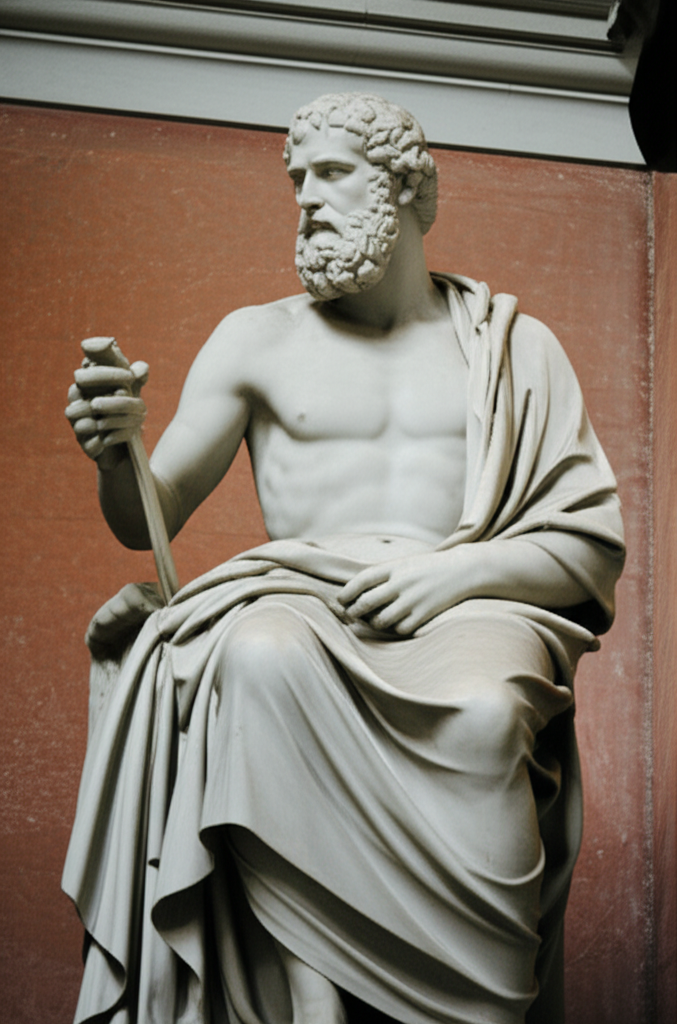 with an hourglass, but instead of the sand flowing downwards, it is flowing upwards, symbolizing the reversal of time or the cessation of its flow. His expression is one of ambiguous contemplation, neither joyful nor sorrowful, surrounded by faint, ethereal wisps of light that suggest a timeless, unchanging state.)
📹 Related Video: ARISTOTLE ON: The Nicomachean Ethics
Video by: The School of Life
💡 Want different videos? Search YouTube for: ""Philosophical implications of immortality", "Ethics of radical life extension""