

The Ethics of Slavery and Human Labor: A Philosophical Scrutiny
Summary: The institution of slavery represents one of humanity's most profound ethical failures, fundamentally stripping individuals of their autonomy and reducing their labor to a mere commodity. This article embarks on a philosophical journey through the history of thought, examining how various traditions, particularly those found within the Great Books of the Western World, have grappled with the morality of slavery, the inherent value of labor, and the stark distinction between Good and Evil in this context. We will explore ancient justifications, theological condemnations, and the enduring understanding of slavery as a grave sin against human dignity.
Introduction: Confronting the Uncomfortable Truth
To speak of slavery is to touch upon a raw nerve in the human story. It is a practice that has stained civilizations across millennia, a stark testament to humanity's capacity for cruelty and exploitation. Yet, it is precisely in confronting such difficult truths that philosophy finds its most crucial purpose: to dissect, to understand, and ultimately, to guide us towards a more just existence. This inquiry delves into the philosophical underpinnings and ethical arguments surrounding slavery and human labor, drawing insights from foundational texts that have shaped Western thought.
I. Historical Perspectives: Justifications and Emerging Doubts
The history of slavery is complex, often intertwined with economic necessity, conquest, and deeply ingrained social hierarchies. Early philosophical attempts to rationalize slavery provide a stark contrast to modern ethical sensibilities.
A. Ancient Rationalizations: Aristotle's "Natural Slave"
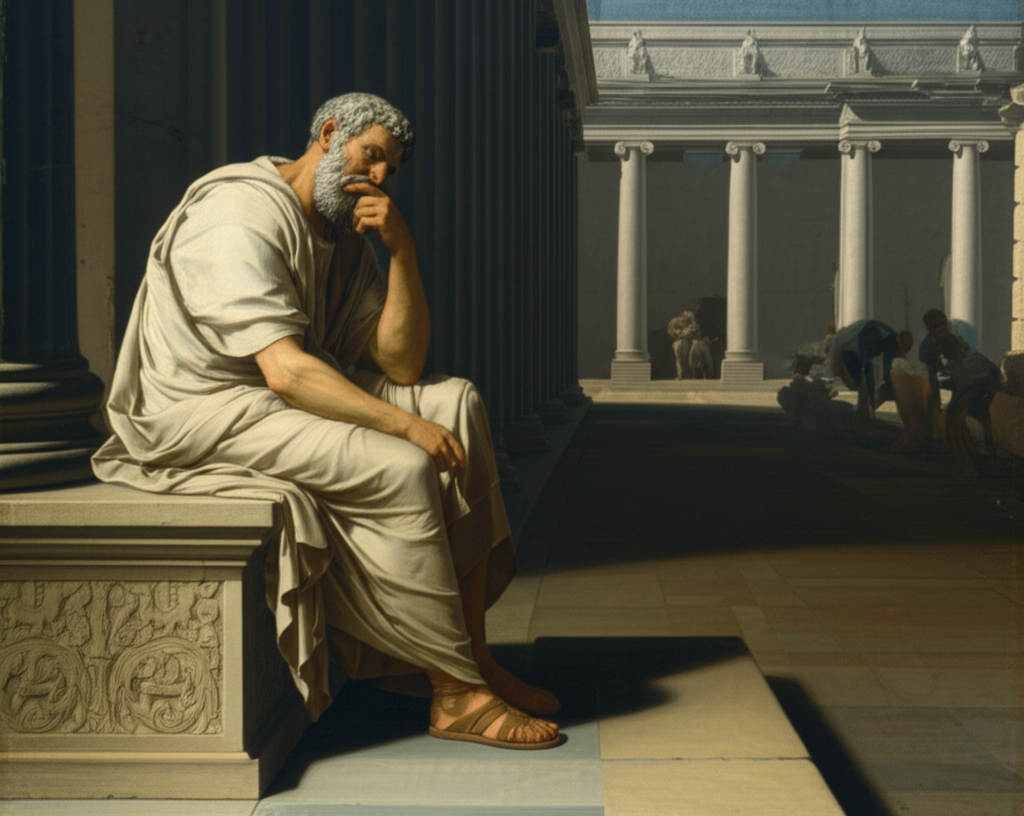
One of the most influential, and indeed controversial, justifications for slavery comes from Aristotle in his Politics. He posited the concept of the "natural slave," arguing that some individuals, by their very nature, lacked the capacity for full rational deliberation and were therefore better suited to be instruments of others' will, performing manual labor.
- Aristotle's Argument:
- Natural Hierarchy: A natural order exists where some are born to rule and others to be ruled.
- Bodily vs. Rational Soul: Those whose primary function is physical
laborare seen as extensions of the master's will, necessary for the master's leisure and intellectual pursuits. - Mutual Benefit (Controversial): Aristotle controversially suggested that this relationship could be mutually beneficial, as the slave gained direction and the master gained the means to pursue higher activities.
It is crucial to note that even within Aristotle's framework, he acknowledged that many slaves were not "natural" but rather made so by conquest, a form he found problematic. Nonetheless, his arguments provided a powerful, albeit flawed, philosophical basis for the institution for centuries.
B. Theological Shifts: Slavery, Sin, and the Soul
While early Christian societies did not immediately abolish slavery, the emergence of monotheistic ethical frameworks, particularly Christianity, introduced concepts that would ultimately undermine its moral legitimacy. The emphasis on the inherent spiritual equality of all souls before God, the injunction to love one's neighbor, and the pervasive understanding of sin began to erode the foundations of institutionalized bondage.
- Augustine of Hippo (in City of God), for instance, viewed
slaverynot as a natural state, but as a consequence of the Fall, a punishment forsin. This reframedslaveryfrom a natural order to a lamentable result of human imperfection, suggesting it was an affliction rather than a just arrangement. - Thomas Aquinas, while influenced by Aristotle, also tempered his views with Christian charity and natural law, questioning the absolute dominion implied by
slaveryand emphasizing the human person's intrinsic dignity. The concept ofsinhere shifts from a cause ofslaveryto the act of enslavement itself, particularly when it violates justice or charity.
II. The Nature of Human Labor: From Burden to Dignity
Labor is a fundamental aspect of the human condition. It is how we transform the world, sustain ourselves, and express our creativity. Understanding the ethics of slavery requires a clear distinction between free labor and forced labor.
A. Labor as Value Creation and Self-Expression
Philosophers like John Locke (in Two Treatises of Government) articulated a powerful connection between labor and property. For Locke, it is through mixing one's labor with the natural world that one creates value and establishes ownership. This perspective elevates labor from a mere physical exertion to an act of self-extension and a foundation of individual rights.
- Key Aspects of Free Labor:
- Autonomy: The individual freely chooses to engage in
labor. - Purpose:
Laborcan be a means of self-provision, contribution to community, or personal fulfillment. - Value:
Laborcreates value, both for the individual and for society. - Right to Fruits: The laborer has a right to the fruits of their
labor.
- Autonomy: The individual freely chooses to engage in
B. The Dehumanization of Forced Labor
Slavery, by definition, involves forced labor. It denies the individual's autonomy, severs the connection between labor and self-ownership, and reduces a human being to a tool. The labor of a slave is not an act of self-expression or value creation for themselves, but an extraction of utility for another. This is where the profound evil of slavery becomes undeniable.
III. The Moral Abyss: Slavery as a Profound Sin
The transition from ancient rationalizations to modern condemnations of slavery represents a crucial ethical evolution, marking a clearer understanding of Good and Evil.
A. Slavery as a Violation of Natural Rights
The Enlightenment, particularly through thinkers like Locke and later Jean-Jacques Rousseau (in The Social Contract), cemented the philosophical arguments against slavery on the grounds of natural rights. If all individuals are born free and equal, endowed with inherent rights to life, liberty, and property (including their own person and labor), then slavery is a direct and absolute violation of these foundational principles.
- Core Violations:
- Loss of Liberty: The most obvious deprivation, denying freedom of movement and choice.
- Loss of Self-Ownership: The slave's body and
laborare owned by another, negating their personhood. - Denial of Dignity: Treating a human being as property, an object, is an affront to their intrinsic worth and dignity.
B. The Inherent Sin and Evil of Enslavement
From a theological standpoint, the enslavement of another human being can be understood as a profound sin. It violates the divine command to love one's neighbor, disregards the image of God in every person, and represents an ultimate act of injustice and oppression. It is an act of evil because it actively seeks to diminish, control, and exploit another sentient, conscious being for selfish gain.
The very act of reducing a person to property, of denying their agency and humanity, is an act of evil that reverberates through generations. It is a sin against the individual, against humanity, and against any concept of a just and benevolent creator.
IV. The Lingering Shadow: Modern Ethical Vigilance
While chattel slavery has been formally abolished in most parts of the world, the ethical considerations it raises remain acutely relevant. Modern forms of human trafficking, forced labor, and economic exploitation echo the historical sin of slavery, reminding us that the fight for human dignity and against evil is ongoing.
- Contemporary Challenges:
- Human Trafficking
- Debt Bondage
- Child
Labor - Exploitative Working Conditions
The philosophical and ethical lessons learned from centuries of grappling with slavery compel us to remain vigilant against all forms of human exploitation, ensuring that the inherent worth of every individual and the dignity of their labor are universally recognized and protected.
Conclusion: An Unwavering Condemnation
The journey through the ethics of slavery and human labor reveals a profound evolution in human understanding. From ancient attempts at justification to the resounding condemnations of modernity, the philosophical consensus is clear: slavery is an unmitigated evil. It is a fundamental sin against human dignity, a denial of natural rights, and the ultimate perversion of labor from an act of creation to an instrument of oppression. The Great Books of the Western World provide not just a record of this intellectual struggle but also the enduring arguments necessary to affirm the inalienable freedom and worth of every human being.
📹 Related Video: ARISTOTLE ON: The Nicomachean Ethics
Video by: The School of Life
💡 Want different videos? Search YouTube for: ""Philosophical Arguments Against Slavery" or "Aristotle's Politics on Slavery Explained""