

Plato’s philosophy, much like a steady compass in tumultuous times, reminds us that true strength lies in self-mastery. This week, we examine Plato’s notion of temperance, a virtue anchored in self-control, and its relevance in our increasingly complex world. Self-control, according to Plato, is not merely a restrictive act but an alignment with our higher selves—a way to ensure our actions reflect both wisdom and reason. Imagine modern contexts where self-control influences not only personal growth but also the quality of our relationships and community bonds.
In our daily lives, self-control might look like turning down that impulsive late-night purchase or choosing our words carefully during heated discussions. Plato’s teachings suggest that each moment we exercise self-control, we step closer to a life filled with intentionality. Engaging with these ancient insights brings a renewed perspective on the small choices that shape our character, making self-mastery a journey rather than a one-time achievement.
For readers interested in delving deeper into self-control as a pillar of the good life, we encourage you to explore these ideas further on planksip.org. Here, Plato is personified as an ideal worth embodying—a timeless voice reminding us that mastering our desires can be our greatest strength.
From the Archives of Ancient Greece: Featuring Dr. Michael Sugrue
Dr. Michael Sugrue’s reflections bring a compelling modern voice to Plato’s views on self-control, helping us see how the ancient virtue of temperance translates into today’s world. Sugrue emphasizes that temperance is more than just “saying no”; it’s about knowing when to say “yes” and aligning our choices with a meaningful, virtuous life. In a world that often promotes consumption as fulfillment, Sugrue’s interpretation of Plato invites us to find value in moderation and purposeful restraint.
Consider how self-control plays out in various areas: in finances, temperance can mean prioritizing savings over instant gratification. In social media, it may look like limiting screen time to focus on face-to-face interactions. Sugrue’s perspective on Plato’s work encourages us to see these acts not as sacrifices but as decisions that ultimately enhance our well-being. He argues that a life filled with temperance becomes richer, as it allows for deeper reflection and connection with ourselves and others.
By reinterpreting ancient wisdom for a modern audience, Sugrue inspires us to make self-control a conscious, active practice rather than a passive limitation. Those interested in these ideas can join the conversation on planksip.org, where Plato’s teachings are continually brought to life through engaging discussions on how timeless virtues apply to contemporary challenges.
Insights from the Dialogues: Quoting Plato
In Charmides (159b-164d), Socrates’ examination of temperance becomes a profound exploration of self-knowledge. Through a conversation with the young and impressionable Charmides, Socrates questions whether true temperance is simply the act of restraint or whether it also involves understanding and wisdom. Plato illustrates this complexity by suggesting that self-control cannot be attained without a deep, inner knowledge of one’s own strengths and weaknesses.
For example, think about scenarios where self-control requires us to choose between comfort and growth. In moments of doubt or difficulty, Socrates would argue that true temperance helps us recognize when we’re indulging in what is easy versus what is right. Whether it’s stepping out of our comfort zones or embracing the patience to wait for the right opportunity, Plato’s dialogue with Charmides offers a timeless blueprint for using self-awareness as a tool for ethical living.
These reflections are especially relevant today. On planksip.org, you’ll find discussions about how Plato’s call for self-knowledge and temperance aligns with modern practices like mindfulness and intentional living, bridging ancient philosophy with practical applications for anyone seeking a more thoughtful, centered life.
Chance and Fate: Exploring Ancient Games
In ancient Greece, games often held symbolic roles, with games of chance like knucklebones reflecting life’s unpredictable twists. Ancient Greeks believed that playing such games mirrored the balance between fate and personal control. A roll of the knucklebones could represent either restraint or abandon, depending on the outcome. This delicate interplay was seen as a reminder that, while we can’t control everything, we do hold power over how we respond.
Imagine a modern parallel: how do we react when our plans don’t go as expected? Whether it’s a delayed promotion or a disrupted routine, our response often reveals our level of self-control. In the same way that ancient games symbolized fate and discipline, we might consider everyday decisions—choosing to stay calm in traffic, or resisting the urge to overspend—as small, personal victories over chance. Self-mastery, Plato might argue, is the ability to play life’s game without letting circumstances dictate our actions.
Explore the Mystical World of Astraguli: Ancient Games of Chance with Cultural Significance.
Engaging with these concepts can help us cultivate a balanced outlook. Join us on planksip.org, where readers explore how ancient rituals and games serve as metaphors for the pursuit of self-mastery, and where Plato’s philosophical ideas are revived through discussions on temperance, luck, and decision-making.
Virtues Revisited: Practical Lessons for Today
Temperance, or self-control, is often portrayed as a quiet virtue, yet its impact on our daily lives is profound. In today’s world, temperance is the practice of prioritizing long-term well-being over short-term gratification, a skill that requires patience and discipline. Think of the significance of temperance in building relationships, pursuing personal goals, or managing stress. Plato reminds us that without self-control, we risk losing our agency to fleeting desires, much like a ship without a steady course.
For example, consider how self-control affects our diet, fitness, and even mental health. Setting boundaries, like going for a walk instead of binge-watching a show, demonstrates how small acts of temperance accumulate into a more fulfilling life. In our communities, practicing temperance fosters trust, as people learn to respect one another’s boundaries and work toward shared goals without succumbing to conflict or jealousy.
This week, we encourage you to reflect on areas where you might embrace temperance. How could a more intentional approach transform your daily routines? Visit planksip.org to explore how others are integrating this ancient virtue into their lives and join the conversation on living a life of purpose and restraint.
Engage with Us: Reader’s Corner
We want to hear from you! What are your thoughts on self-control as a foundation for ethical living? Has there been a moment where practicing temperance helped you make a wiser choice or avoid a regrettable one? Perhaps a story where you practiced restraint in an unexpected way? Share your reflections, and we’ll feature selected responses in next week’s newsletter.
At planksip.org, you’ll find a community dedicated to examining these questions, along with lively discussions that bring Plato’s teachings into dialogue with our everyday experiences. Here, we’re building a space where readers can share their stories, reflect on ancient wisdom, and imagine Plato’s ideals in action.
Closing Reflection: Socrates’ Enduring Legacy
Socrates taught us that the examined life is inseparable from the virtuous life. To practice self-control is, in many ways, to examine the desires and impulses that shape our choices. In learning to hold these impulses at arm’s length, we create a buffer for reflection—a pause that allows reason to inform action. It’s this quality of intentional restraint that allows us to grow and, ultimately, to act in harmony with our highest ideals.
As you consider this week’s themes, let Socrates’ legacy inspire you to approach life with a spirit of curiosity and a dedication to self-mastery. Through the lens of Plato’s dialogues, we gain not only ancient insights but practical tools to navigate modern challenges. On planksip.org, we invite you to join a community dedicated to these timeless principles and discover new ways to embody Plato’s wisdom in your own journey.
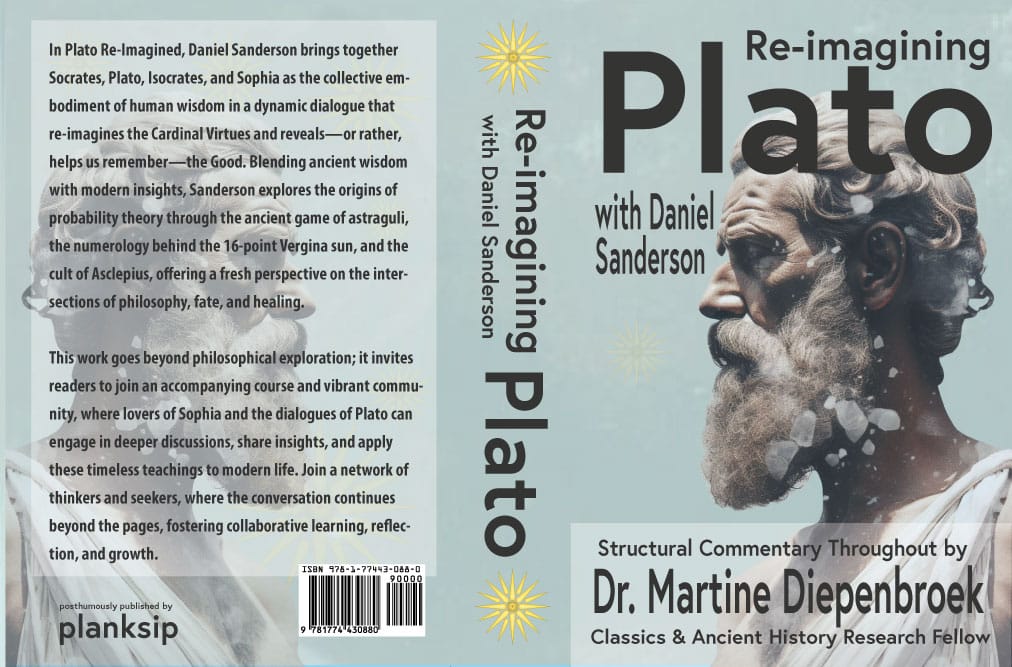
Plato Re-Imagined
This course offers 32 comprehensive lectures exploring most of Plato's dialogues. These lectures guide students toward a consilient understanding of the divine—a concept that harmonizes knowledge across disciplines and resonates with secular and religious leaders. As a bonus, Lecture #33 focuses on consilience, demonstrating how different fields of knowledge can converge to form a unified understanding.


