

The Weight of Discovery: Navigating the Ethical Responsibility of the Scientist
The relentless march of science has gifted humanity with unparalleled understanding and transformative power. From unraveling the cosmos to decoding the very blueprint of life, scientific knowledge has reshaped our world. Yet, with this immense power comes an equally immense duty: the ethical responsibility of the scientist. This article delves into the profound moral obligations that accompany scientific inquiry and innovation, examining how the pursuit of knowledge inevitably confronts the ancient questions of good and evil, drawing insights from the enduring wisdom of the Great Books of the Western World. We will explore the historical context, philosophical underpinnings, and practical implications of this crucial ethical imperative.
Table of Contents
- The Genesis of Scientific Power and its Moral Imperative
- The Philosopher's Gaze: Defining the Scientist's Duty
- The Perils of Unchecked Knowledge: Good and Evil in Scientific Endeavor
- Cultivating Conscience: Education and Ethical Frameworks
- Key Takeaways
- Further Reading and Resources
- Engage with Us
The Genesis of Scientific Power and its Moral Imperative
For millennia, humanity has sought to understand the world, driven by an insatiable curiosity. This quest for understanding, the very essence of science, has evolved from speculative philosophy to rigorous empirical investigation. Yet, the moment knowledge moves from passive observation to active manipulation of the world, a new dimension of responsibility emerges.
From Ancient Inquiry to Modern Innovation
The foundations of scientific thought can be traced back to the ancient Greeks, whose philosophical inquiries laid the groundwork for systematic observation and rational deduction. Aristotle, whose works are central to the Great Books of the Western World, meticulously categorized and analyzed phenomena, demonstrating an early commitment to empirical knowledge. However, the modern scientific method, with its emphasis on experimentation and technological application, has amplified the scale and impact of discovery exponentially. This shift means that the scientist is no longer merely an observer but an active shaper of reality, thereby inheriting a profound ethical duty.
The Double-Edged Sword of Discovery
Science itself is often considered amoral, a neutral tool. A hammer can build a home or smash a skull; the moral valence lies in the hand that wields it. Similarly, scientific knowledge can be employed for incredible good—curing diseases, feeding populations, illuminating the universe—or for devastating evil—weapons of mass destruction, invasive surveillance, environmental catastrophe. The rapid acceleration of scientific progress demands a constant, vigilant assessment of its potential consequences, forcing scientists to grapple with the inherent tension between discovery and its ethical implications.
The Philosopher's Gaze: Defining the Scientist's Duty
Philosophers throughout history have grappled with the responsibilities of those who possess specialized knowledge or wield significant power. Their insights offer a robust framework for understanding the ethical duty of the modern scientist.
Plato's Guardians and the Pursuit of Truth
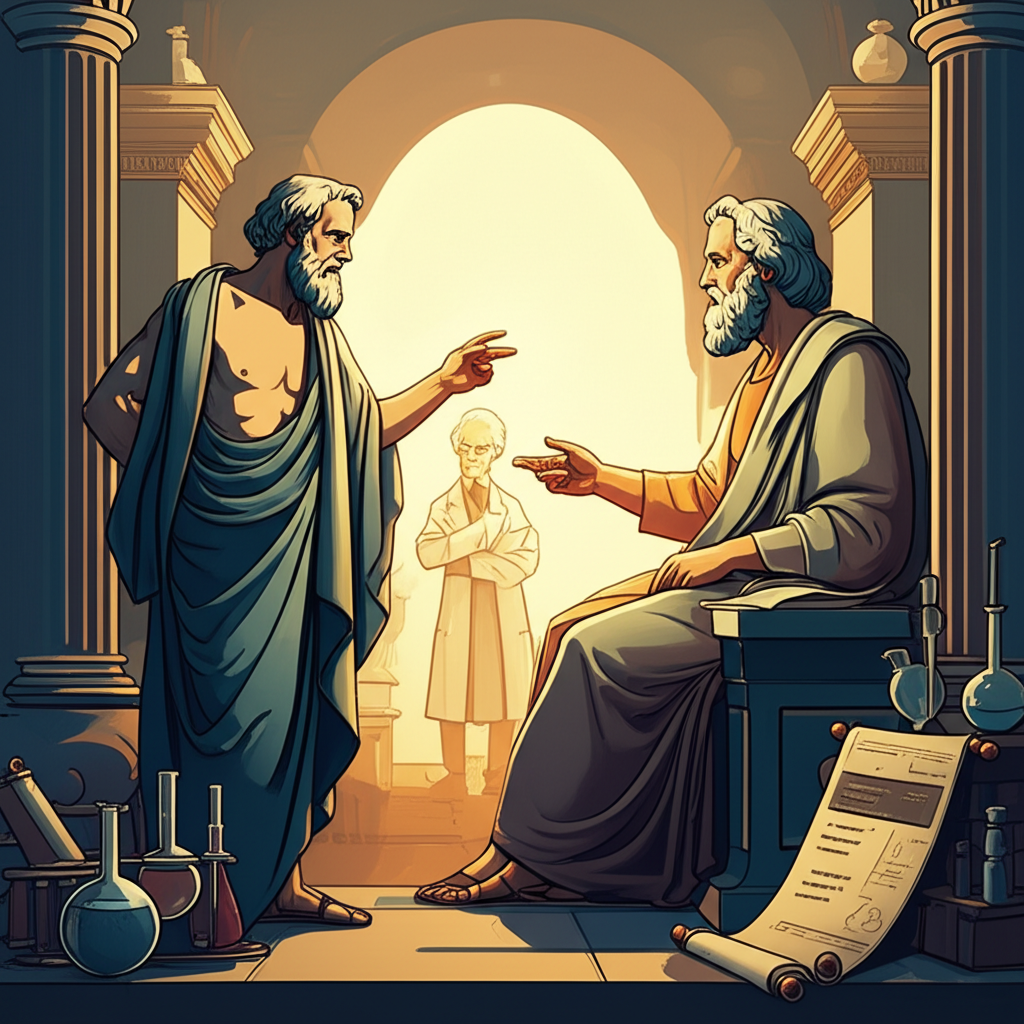
In Plato's Republic, another cornerstone of the Great Books, the ideal state is governed by philosopher-kings, individuals who, through rigorous intellectual training, attain a profound understanding of truth and the Good. Their duty is to use this superior knowledge not for personal gain, but for the welfare of the entire community. This concept resonates deeply with the scientist's role: those who possess the deepest knowledge of nature's laws bear a commensurate duty to ensure their discoveries serve the common good, rather than being exploited for narrow or destructive ends. The pursuit of truth, for Plato, was inextricably linked to the pursuit of virtue.
Kant's Categorical Imperative in the Lab
Immanuel Kant, a pivotal figure in Enlightenment philosophy and another author featured in the Great Books, provided a powerful ethical framework with his concept of the categorical imperative. Kant argued that moral actions must be universalizable – could everyone act this way? – and must treat humanity always as an end in itself, never merely as a means. For the scientist, this translates into a duty to consider the universal implications of their research. Would the world be a better place if everyone pursued this line of inquiry without ethical constraint? Does the research respect the inherent dignity and autonomy of all individuals, whether they are subjects of study or potential beneficiaries/victims of its application? These questions are crucial in preventing scientific pursuits from straying into realms of evil.
The Perils of Unchecked Knowledge: Good and Evil in Scientific Endeavor
History is replete with examples where the pursuit of knowledge, detached from ethical considerations, has led to profound suffering. The very nature of scientific progress, pushing boundaries and challenging assumptions, demands a heightened awareness of its potential for both upliftment and destruction.
The Prometheus Myth and Modern Dilemmas
The ancient Greek myth of Prometheus, who stole fire (symbolizing knowledge and technology) from the gods to give to humanity, serves as a timeless warning. While fire brought warmth and civilization, it also brought the capacity for destruction. This myth highlights the inherent danger when powerful knowledge is wielded without commensurate wisdom or foresight. In the modern era, science has given us the "fire" of nuclear energy, genetic engineering, and artificial intelligence. Each of these represents immense potential for good, but also carries the terrifying specter of evil if not guided by a profound ethical duty.
Case Studies and Ethical Crossroads
The tension between scientific advancement and ethical responsibility is evident in numerous historical and contemporary examples:
- The Manhattan Project: The development of the atomic bomb showcased the pinnacle of scientific collaboration and ingenuity, yet it culminated in a weapon of unprecedented destructive power, forcing scientists to confront the immediate and long-term implications of their creation.
- Genetic Engineering: The ability to edit genes holds incredible promise for curing diseases, but also raises profound ethical questions about altering the human germline, designer babies, and unintended ecological consequences.
- Artificial Intelligence: AI offers solutions to complex problems, but its rapid advancement prompts concerns about autonomous weapons, algorithmic bias, job displacement, and the potential for super-intelligent systems that could escape human control.
In each instance, the scientist's duty extends beyond mere technical proficiency to include a moral obligation to anticipate, mitigate, and communicate potential harms, distinguishing between what can be done and what should be done.
Cultivating Conscience: Education and Ethical Frameworks
Given the profound impact of science on society, integrating ethical reflection into scientific training and practice is not merely desirable, but essential. The cultivation of a moral compass is as vital as the development of technical skills.
The Socratic Method in Scientific Training
Socrates, as documented by Plato in the Great Books, famously taught through persistent questioning, challenging assumptions, and forcing individuals to examine their own beliefs and their implications. This Socratic method is highly relevant for scientific education. Rather than simply imparting facts and methodologies, scientific curricula should foster critical ethical reasoning, encouraging students to constantly question the "why" and "what if" behind their research. This cultivates a sense of personal duty and moral accountability, making ethics an intrinsic part of scientific inquiry from its earliest stages.
Institutional Responsibilities and Individual Accountability
While individual scientists bear significant responsibility, the institutions that house and fund scientific research also have a crucial duty. This includes:
- Ethical Review Boards: Ensuring that all research involving human subjects, animals, or sensitive data adheres to strict ethical guidelines.
- Professional Codes of Conduct: Establishing clear standards for integrity, transparency, and accountability within scientific disciplines.
- Whistleblower Protections: Empowering scientists to speak out against unethical practices without fear of reprisal.
- Public Engagement: Facilitating open dialogue between scientists and the public about the implications of new discoveries, bridging the gap between expert knowledge and societal values.
Ultimately, the ethical responsibility of the scientist is a shared burden, requiring both individual conscience and robust institutional support to navigate the complex interplay of science, knowledge, good and evil, and duty.
Key Takeaways
The ethical responsibility of the scientist is a foundational principle for navigating the complexities of modern progress. It is a duty born from the immense power of science and the profound impact of knowledge on the human condition. From the ancient philosophies of Plato and Aristotle to the categorical imperatives of Kant, the Great Books of the Western World provide timeless wisdom that underscores this imperative. Scientists must not only pursue truth but also consider the potential for both good and evil inherent in their discoveries, actively working to ensure that their contributions serve humanity's highest aspirations.
Further Reading and Resources
- Explore our other articles on the philosophy of technology and artificial intelligence.
- Delve deeper into the works of Plato, Aristotle, and Kant available through the Great Books of the Western World collection.
- Research current ethical guidelines for specific scientific fields (e.g., bioethics, AI ethics).
Engage with Us
What are your thoughts on the most pressing ethical dilemmas facing scientists today? How can we better integrate ethical training into scientific education? Share your perspectives in the comments below, and join the ongoing philosophical conversation at planksip.org.
📹 Related Video: ARISTOTLE ON: The Nicomachean Ethics
Video by: The School of Life
💡 Want different videos? Search YouTube for: "ethics of scientific discovery philosophy"
📹 Related Video: PLATO ON: The Allegory of the Cave
Video by: The School of Life
💡 Want different videos? Search YouTube for: "plato's republic knowledge responsibility"