

The Unseen Burden: The Ethical Responsibility of the Scientist
Summary: The pursuit of knowledge is a fundamental human endeavor, yet with the immense power of science comes an equally immense duty. This article explores the historical and philosophical underpinnings of the scientist's ethical responsibility, examining how the very tools that unlock the universe also present profound questions of good and evil, demanding a moral compass beyond mere discovery. Drawing from the wisdom of the Great Books, we argue that true scientific advancement must be inextricably linked to ethical foresight and a commitment to human well-being.
The Genesis of Scientific Duty: From Contemplation to Consequence
For millennia, humanity has sought to understand the cosmos, from the celestial mechanics observed by the Babylonians to the intricate biological systems revealed by modern genomics. Yet, the journey from speculative philosophy to empirical science brought with it a shift in the very nature of knowledge and, crucially, its associated responsibilities.
The ancient Greeks, as chronicled in the Great Books of the Western World, understood the pursuit of knowledge as a noble, often contemplative, exercise. Plato, in his Republic, envisioned a philosopher-king whose wisdom would guide the state, implying that the possessor of truth bore a significant duty to the polis. Aristotle, too, explored the virtues necessary for a good life, where intellectual virtues, while prized, were always in service of practical wisdom (phronesis) and the ultimate good of humanity. Their focus was often on understanding for the sake of understanding, or for the cultivation of virtue.
However, with the Enlightenment and the scientific revolution, spearheaded by figures like Francis Bacon, the very purpose of science began to transform. Bacon’s Novum Organum championed an inductive method aimed not just at contemplation but at the "relief of man's estate." Knowledge, Bacon argued, was power – power to control nature, to improve life, to achieve what was once deemed impossible. This shift, while liberating and transformative, planted the seeds for the modern ethical dilemma: if knowledge is power, who wields it, and to what ends?
Knowledge as a Double-Edged Sword: Navigating Good and Evil
The history of science is replete with examples of discoveries that have undeniably advanced human civilization: cures for diseases, abundant food production, instantaneous global communication. Yet, these same advances often carry the potential for immense harm, revealing knowledge as a truly double-edged sword.
Consider the following:
- Nuclear Physics: The unlocking of atomic energy promised limitless power and revolutionary medical applications. Yet, it also ushered in the age of nuclear weapons, posing an existential threat to humanity. The very same science capable of generating clean energy could annihilate cities.
- Genetics: Understanding the human genome offers unprecedented opportunities for treating genetic diseases and enhancing human capabilities. Simultaneously, it raises profound ethical questions regarding designer babies, genetic discrimination, and the potential for unintended biological consequences.
- Artificial Intelligence: AI holds the promise of solving complex problems, from climate change to medical diagnostics. However, concerns about autonomous weapons, job displacement, and the ethical implications of superintelligent machines loom large.
In each case, the science itself is often neutral. A chemical formula, a mathematical equation, a biological mechanism – these are facts of the universe. The moral valence, the distinction between good and evil, arises from human intent, application, and the foresight (or lack thereof) of the scientist and society. The scientist, therefore, bears a duty not just to uncover truth, but to anticipate the impact of that truth.
The Scientist's Duty: Beyond Discovery
The ethical responsibility of the scientist extends far beyond the laboratory bench or the theoretical framework. It encompasses a multifaceted duty that includes:
- Integrity in Research:
- Honest reporting of data.
- Transparency in methods.
- Avoidance of plagiarism and fabrication.
- Impartiality in interpretation.
- Foresight and Consequence:
- Anticipating potential positive and negative applications of discoveries.
- Considering the societal, environmental, and long-term impacts.
- Engaging in proactive risk assessment.
- Communication and Education:
- Clearly communicating complex scientific findings to the public.
- Educating policymakers about the implications of scientific advancements.
- Combating misinformation and pseudoscience.
- Advocacy and Public Engagement:
- Speaking out against the misuse of science.
- Contributing to ethical guidelines and policy development.
- Participating in public discourse about scientific issues.
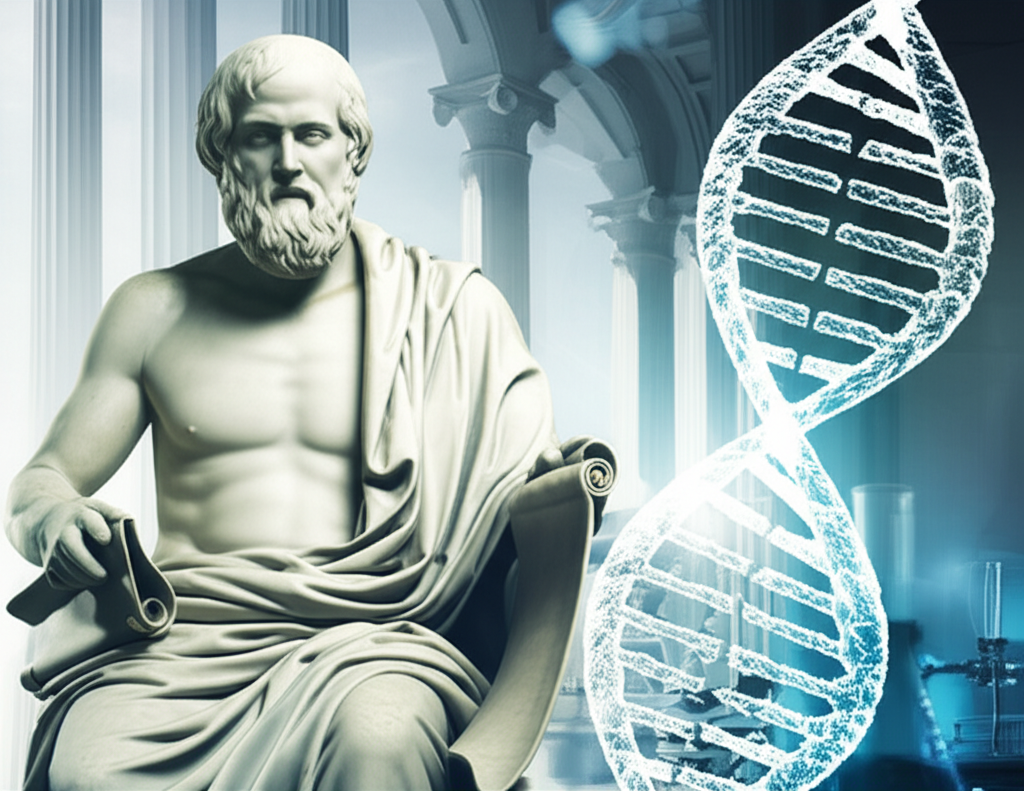
This duty is not merely an add-on; it is integral to the very definition of responsible science. As Immanuel Kant might suggest, the moral law applies universally, and the pursuit of knowledge cannot exempt one from the categorical imperative to act in a way that respects humanity.
Challenges to Ethical Science
Fulfilling this ethical duty is not without its challenges. Scientists operate within complex systems influenced by funding pressures, political agendas, and the relentless pace of technological advancement.
| Challenge | Ethical Implication |
|---|---|
| Funding Pressures | Bias towards commercially viable or politically favored research; potential for data manipulation to secure grants. |
| Rapid Technological Pace | Insufficient time for ethical reflection before new technologies are deployed; difficulty in predicting long-term impacts. |
| Commercialization | Prioritizing profit over public good; restricted access to life-saving technologies. |
| "Publish or Perish" Culture | Pressure to produce novel, impactful results, potentially leading to hasty or less rigorous science. |
| Public Misunderstanding | Difficulty in fostering informed debate and gaining public trust, leading to resistance or irrational fear. |
These systemic pressures can make it difficult for individual scientists to uphold their duty, highlighting the need for institutional support, robust ethical frameworks, and a continuous philosophical engagement with the evolving landscape of science.
Cultivating Ethical Knowledge
The solution to the ethical dilemmas posed by science lies not in stifling inquiry, but in cultivating a deeper, more responsible form of knowledge. This requires:
- Philosophical Integration: Incorporating ethics, philosophy of science, and critical thinking into scientific education from the earliest stages.
- Interdisciplinary Collaboration: Fostering dialogue between scientists, ethicists, sociologists, and policymakers to anticipate and address complex issues.
- Public Dialogue: Creating accessible platforms for informed public discussion about scientific advancements and their societal implications.
- Robust Oversight: Establishing independent ethical review boards and regulatory bodies with the authority and expertise to guide scientific practice.
The lessons from the Great Books of the Western World remind us that the pursuit of truth has always been intertwined with the quest for the good life. The scientist of today, standing on the shoulders of giants, bears the inherited duty to ensure that the magnificent edifice of science serves humanity’s highest aspirations, rather than succumbing to the darker potentials of unchecked knowledge.
YouTube: "ethical dilemmas in science and technology"
YouTube: "philosophy of science responsibility"
📹 Related Video: What is Philosophy?
Video by: The School of Life
💡 Want different videos? Search YouTube for: "The Ethical Responsibility of the Scientist philosophy"