

The Scientist's Moral Compass: Navigating Knowledge, Duty, and the Shadow of Good and Evil
The pursuit of Science, in its purest form, is a noble quest for Knowledge – an endeavor to peel back the layers of the universe and understand its intricate workings. Yet, as history has repeatedly shown, the power unleashed by scientific discovery carries an inherent moral weight, placing a profound Duty upon the scientist. This article argues that the ethical responsibility of the scientist is not merely an afterthought but an integral component of their vocation, demanding a constant engagement with the potential for both Good and Evil that their work can unleash. It is a call to conscious deliberation, rooted in the timeless philosophical inquiries into human action and its consequences.
The Unveiling of Knowledge: A Double-Edged Sword
From the earliest inquiries into the natural world, humanity has sought to understand, to categorize, and ultimately, to master its environment. Science is the engine of this understanding, providing the Knowledge that underpins civilization. However, this very power to comprehend and manipulate reality brings with it an inescapable moral quandary. The same principles that allow for life-saving medicine can, in different hands, forge instruments of destruction. The Great Books of the Western World are replete with narratives and philosophical treatises that grapple with the nature of Knowledge itself – its allure, its liberating potential, and its capacity to corrupt or destroy when wielded without wisdom. The pursuit of truth, while inherently valuable, is not inherently benign in its application.
- Knowledge as Power: Francis Bacon famously stated, "knowledge itself is power." This power, however, is morally neutral. Its ethical valence is determined by the intentions and actions of those who possess and apply it.
- The Socratic Imperative: While Socrates argued that "knowledge is virtue," implying that understanding leads to right action, the complexities of modern Science reveal that specialized Knowledge alone does not guarantee ethical application. A profound understanding of physics does not inherently confer moral wisdom regarding nuclear weapons.
The Scientist's Duty: Beyond Pure Discovery
The traditional view of the scientist often positions them as an objective observer, detached from the societal implications of their findings. However, this perspective is increasingly untenable. The modern scientist, by virtue of their capacity to alter the fundamental fabric of existence – from genetics to artificial intelligence – bears a unique and weighty Duty. This Duty extends beyond the laboratory bench and into the broader societal landscape. It demands an active role in anticipating consequences, communicating risks, and participating in the ethical discourse surrounding their innovations.
Dimensions of Scientific Responsibility:
| Dimension | Description
The ethical responsibility of the scientist is a topic of perpetual philosophical debate, particularly since the advent of modern scientific capabilities. It's a discussion that transcends the laboratory and touches upon the very essence of human flourishing and survival. The core question is this: when Science grants the power to profoundly alter life, what Duty does the scientist owe to society, to humanity, and to the future? The answer, I believe, lies in an unwavering commitment to ethical foresight, open communication, and a deep understanding of the potential for both Good and Evil inherent in all Knowledge.
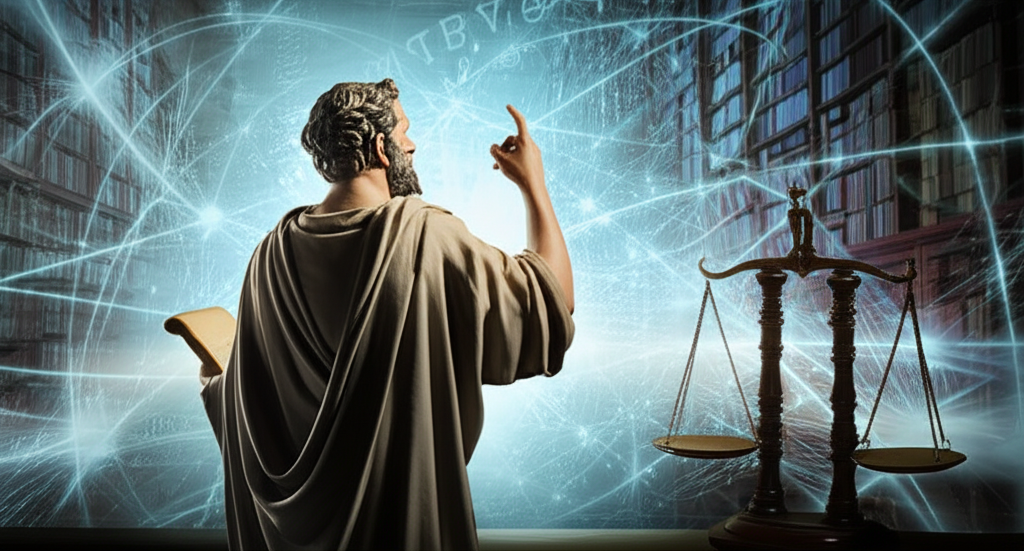
The Power of Knowledge: A Moral Imperative
The entire edifice of Science is built upon the relentless pursuit of Knowledge. From understanding the cosmos to unraveling the secrets of the atom, this quest has granted humanity unprecedented power. Yet, this power is not ethically neutral. As we delve deeper into the fundamental forces of nature and the very building blocks of life, the implications of our discoveries become increasingly profound. The same Knowledge that allows us to eradicate diseases can, if misdirected, create new biological threats. The understanding of nuclear physics, which offers boundless energy, also opened the terrifying vista of nuclear annihilation.
The philosophical tradition, particularly as explored in the Great Books, has long grappled with the relationship between Knowledge and virtue. Plato, in his Republic, posits that true Knowledge leads to understanding the Good. However, the practical application of scientific Knowledge often presents a more complex picture. The technical brilliance required to split an atom does not automatically confer the moral wisdom to use that power wisely. This disjunction underscores the critical need for an ethical framework that guides scientific endeavor.
The Scientist's Duty: Beyond the Experiment
The traditional image of the scientist as an objective, detached observer, solely focused on discovery, is a relic of a simpler time. Today, the scientist's Duty extends far beyond the confines of the laboratory. It encompasses a broader responsibility to society, to the future, and to the very principles of human welfare. This Duty requires active engagement with the ethical implications of their work, a willingness to speak out, and a commitment to ensuring that Science serves the common good.
Here are key aspects of this expanded Duty:
- Fidelity to Truth and Integrity: The primary Duty remains the honest pursuit and reporting of truth. Fabricating data, withholding contradictory results, or succumbing to external pressures compromises the very essence of Science.
- Anticipation of Consequences: Scientists have a unique vantage point to foresee the potential impacts – both positive and negative – of their discoveries. This requires rigorous ethical foresight, considering not just immediate applications but also long-term societal, environmental, and humanitarian consequences.
- Transparent Communication: The complex nature of scientific Knowledge often makes it inaccessible to the public. Scientists have a Duty to communicate their findings, their implications, and associated risks clearly and honestly to policymakers and the general public, fostering informed decision-making.
- Ethical Application and Restraint: When discoveries hold the potential for significant harm, scientists bear a Duty to advocate for ethical guidelines, regulations, and, where necessary, to exercise self-restraint or call for moratoriums on certain lines of research.
- Societal Engagement: Scientists should actively participate in public discourse, contributing their expert perspective to debates on Science policy and the ethical governance of technology. Their voice is crucial in shaping a future where Science is a force for good.
Navigating Good and Evil in Scientific Progress
The line between Good and Evil in scientific application is often blurred, making the scientist's ethical journey fraught with complexity. A breakthrough designed to improve human life can inadvertently create unforeseen problems. For instance, the development of pesticides dramatically increased food production (a clear good) but also led to environmental degradation and health concerns (an unforeseen evil). The challenge lies in distinguishing beneficial innovation from dangerous overreach, a distinction that often requires a philosophical rather than purely scientific lens.
Consider the following ethical dilemmas inherent in modern Science:
- Dual-Use Research: Discoveries with legitimate scientific and beneficial applications can also be readily adapted for malicious purposes (e.g., vaccine research that could also inform biological weapons).
- Unforeseen Societal Impacts: The rapid pace of technological change often outstrips our capacity to fully understand its long-term social, economic, and psychological consequences.
- Defining "Good": What constitutes "good" can vary across cultures, belief systems, and individual values. The scientist must engage with these diverse perspectives when considering the impact of their work.
- The Slippery Slope: Incremental advancements, each seemingly innocuous, can collectively lead to profound ethical shifts or the erosion of fundamental human values.
These challenges demand that scientists cultivate a robust ethical sensibility, drawing not only on scientific rigor but also on the wisdom of philosophy, history, and a deep empathy for humanity.
Conclusion: The Enduring Responsibility
The ethical responsibility of the scientist is not an optional add-on to their profession; it is an intrinsic part of their Duty. In an age where Science possesses unprecedented power to shape our world, the pursuit of Knowledge must be tempered by a profound awareness of its potential for both Good and Evil. The modern scientist, standing on the shoulders of giants from the Great Books of the Western World, must recognize that their work is not merely an intellectual exercise, but a moral endeavor with far-reaching consequences. Their ethical compass must guide every experiment, every discovery, and every application, ensuring that Science truly serves the flourishing of all.
📹 Related Video: ARISTOTLE ON: The Nicomachean Ethics
Video by: The School of Life
💡 Want different videos? Search YouTube for: ""philosophy of science ethics responsibility""
📹 Related Video: KANT ON: What is Enlightenment?
Video by: The School of Life
💡 Want different videos? Search YouTube for: ""great books western thought science morality""