

The Ethical Implications of Cloning: Navigating the Labyrinth of Creation
The advent of cloning technology has propelled humanity into a profound ethical thicket, forcing us to confront fundamental questions about Life and Death, individuality, and the very essence of what it means to be human. As Science pushes the boundaries of what is possible, Medicine grapples with its applications, and philosophy seeks to understand the Cause and consequence of our newfound powers. This article delves into the multifaceted ethical considerations surrounding cloning, exploring its potential benefits alongside its perilous moral hazards, drawing upon classical philosophical insights to illuminate our path.
The Genesis of a Moral Quandary: What is Cloning?
Cloning, in its simplest definition, is the process of creating a genetically identical copy of a biological entity. While natural cloning occurs in various organisms (e.g., asexual reproduction), the ethical debate primarily centers on artificial cloning, particularly in mammals. We generally distinguish between two main types:
- Reproductive Cloning: Aims to create a new organism that is genetically identical to a donor organism. This is what typically comes to mind when discussing "cloning a human."
- Therapeutic Cloning: Involves creating a cloned embryo for the sole purpose of harvesting embryonic stem cells, which can then be used to grow tissues or organs for medical treatments, without the intention of creating a full organism.
The rapid progress in Science has made these possibilities tangible, initiating a global discussion on their moral permissibility and societal impact. The central cause of concern lies in our capacity to intervene at the most fundamental level of biological creation.
The Sanctity of Life and the Boundaries of Creation
At the heart of the cloning debate lies the profound question of Life and Death and the inherent value we place on human existence. Many philosophical and religious traditions hold that human life possesses intrinsic dignity and worth, distinct from its utility.
-
Instrumentalization vs. Intrinsic Worth: One of the most significant ethical objections to reproductive cloning, and even some forms of therapeutic cloning, is the fear of instrumentalizing human life. Immanuel Kant, in his Groundwork of the Metaphysics of Morals, famously argued that humanity should always be treated as an end in itself, never merely as a means. If a clone is created for a specific purpose—be it as a genetic "replacement," a source of organs, or an experimental subject—does this reduce their existence to a tool, thereby violating their inherent dignity? The creation of a human being with a predetermined genetic blueprint raises questions about their autonomy and freedom, central tenets of human flourishing as discussed by Aristotle in his Nicomachean Ethics.
-
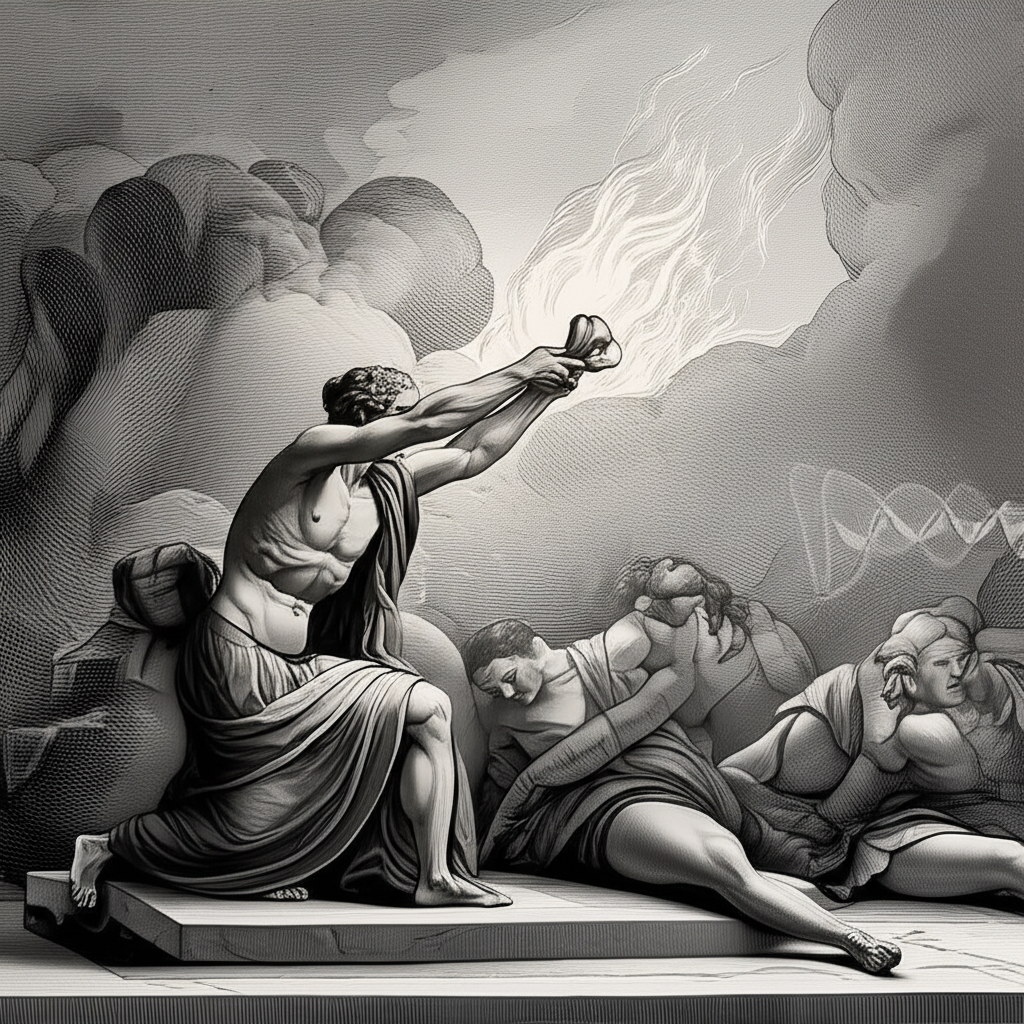
Playing God and the Natural Order: For many, cloning represents an unwarranted intrusion into processes traditionally considered the domain of nature or a divine creator. The ability to dictate the genetic makeup of a future individual, or to replicate an existing one, challenges our understanding of procreation and the "natural" order of things. This concern is not merely religious; it touches upon a deep-seated apprehension about humanity's hubris, a theme chillingly explored in Mary Shelley's Frankenstein, where Victor Frankenstein's scientific ambition leads to tragic consequences, highlighting the unforeseen ethical fallout of unchecked creation.
The Question of Individuality and Identity
What does it mean to be a unique individual? Philosophers like John Locke have explored identity through consciousness and memory, while others, following Plato's concept of Forms, might argue for an inherent, unique essence. A clone, sharing identical DNA with its progenitor, inevitably raises questions about its personal identity and uniqueness. While environmental factors and experience would undoubtedly shape a clone into a distinct person, the very notion of a genetic replica challenges our intuitive understanding of individual singularity and uniqueness.
Cloning for Medicine: A Double-Edged Scalpel
While reproductive cloning faces widespread moral condemnation, therapeutic cloning presents a more complex ethical landscape, primarily due to its potential to revolutionize Medicine.
Table 1: Potential Benefits vs. Ethical Concerns of Therapeutic Cloning
| Potential Medical Benefits | Ethical Concerns |
|---|---|
| Regenerative Therapies: Growing tissues/organs for transplant, avoiding immune rejection. | Embryo Destruction: Involves the creation and destruction of human embryos, raising questions about the moral status of an embryo. |
| Disease Modeling: Creating genetically specific cells to study diseases and test new drugs. | Slippery Slope: Fear that therapeutic cloning could lead to reproductive cloning. |
| Curing Genetic Disorders: Potential to replace diseased cells with healthy, genetically matched ones. | Commodification of Life: Treats human embryos as raw material for scientific or medical ends. |
| Understanding Development: Insights into early human development and disease progression. | Resource Allocation: Diverting resources from other promising research avenues. |
The ethical cause for therapeutic cloning often hinges on utilitarian arguments: the potential to alleviate immense suffering and save countless lives. However, this must be weighed against deontological concerns regarding the moral status of the embryo and the principle of not using any entity as a mere means. The debate here echoes ancient philosophical discussions on the greatest good for the greatest number versus the inviolability of individual rights, even in nascent forms of life.
Societal Ripples: Equity, Eugenics, and Human Relationships
Beyond individual ethical concerns, cloning has profound potential implications for society as a whole.
- Social Inequality and Access: If cloning technologies become available, who would have access? The wealthy might use it to "design" children, creating a new form of genetic inequality. This echoes Plato's discussions in The Republic about ideal societies and the potential for state-controlled breeding, albeit in a different, more technologically advanced context.
- Eugenics Concerns: The ability to select for specific genetic traits opens the door to eugenics, where society might value certain characteristics over others, leading to discrimination and the marginalization of those deemed "unfit." History has shown the devastating consequences of such ideologies.
- Altering Family Structures: Cloning could fundamentally alter our understanding of family, kinship, and parenthood. What would be the relationship between a cloned child and its genetic donor? How would this impact the psychological well-being of the clone and the dynamics of traditional family units?
The Cause for Caution: Unforeseen Consequences and the Path Forward
The sheer novelty of cloning means that many of its long-term ethical and societal implications remain unknown. Prudence dictates a cautious approach, guided by rigorous ethical deliberation. The cause of advancing scientific knowledge must be tempered by a deep respect for human dignity and the well-being of future generations.
Key Ethical Considerations Moving Forward:
- Informed Public Debate: Ensuring that discussions are inclusive, informed, and transcend scientific jargon.
- Robust Regulatory Frameworks: Developing international and national laws that reflect ethical consensus while allowing for responsible scientific inquiry.
- Prioritizing Human Dignity: Placing the intrinsic value and autonomy of all human beings, including potential clones, at the forefront of policy decisions.
- Interdisciplinary Collaboration: Fostering dialogue among scientists, ethicists, philosophers, policymakers, and the public.
Conclusion
The ethical implications of cloning represent one of the most significant philosophical challenges of our time. It forces us to re-examine our understanding of Life and Death, the role of Science in shaping our future, the boundaries of Medicine, and the ultimate Cause and purpose of human existence. As Daniel Fletcher, I contend that while the allure of scientific advancement is powerful, our pursuit of knowledge must always be tempered by wisdom, humility, and an unwavering commitment to the ethical principles that uphold our shared humanity. The Great Books of the Western World offer timeless insights into human nature and the societal good, reminding us that true progress lies not just in what we can do, but in what we ought to do.
📹 Related Video: ARISTOTLE ON: The Nicomachean Ethics
Video by: The School of Life
💡 Want different videos? Search YouTube for: ""Cloning ethics philosophy debate""
📹 Related Video: KANT ON: What is Enlightenment?
Video by: The School of Life
💡 Want different videos? Search YouTube for: ""Kant's Categorical Imperative explained""