

The Ethical Duty of the Citizen: A Philosophical Inquiry
The question of "The Ethical Duty of the Citizen" lies at the very heart of political philosophy, probing the intricate relationship between the individual and the state. From the bustling agora of ancient Athens to the complex democracies of today, thinkers have grappled with what we owe to our communities, our governments, and indeed, to ourselves. This pillar page delves into the multifaceted nature of this duty, exploring its historical foundations, its relationship with law, and the perennial struggle between good and evil in the pursuit of a just society. We will navigate the philosophical currents that define responsible citizenship, examining how classical thought illuminates our contemporary understanding of civic obligation.
I. Unpacking the Foundations of Civic Duty
What compels a citizen to act in the interest of the collective? Is it a tacit agreement, an innate moral compass, or simply the force of law? The concept of duty is not monolithic; its origins are debated and its expressions varied across philosophical traditions.
A. The Social Contract and Consent
Many philosophers posit that our duties as citizens stem from a social contract, an implicit or explicit agreement to live under a common set of rules for the mutual benefit and protection of all.
- Thomas Hobbes: In Leviathan, Hobbes argued that individuals surrender certain freedoms to a sovereign power in exchange for order and security, thus creating a duty of obedience to avoid the chaos of the "state of nature."
- John Locke: Offering a more optimistic view in his Two Treatises of Government, Locke suggested that government's legitimacy rests on the consent of the governed. Citizens have a duty to obey just laws, but also a right—and perhaps a duty—to resist tyranny when the government violates their natural rights.
- Jean-Jacques Rousseau: For Rousseau, in The Social Contract, true citizenship involves adhering to the "general will," a collective good that transcends individual desires. Our duty is not merely to obey, but to participate in shaping this general will, making us truly free.
B. Natural Law and Moral Imperatives
Beyond contractual agreements, some traditions ground civic duty in a higher, universal moral order—natural law. This perspective suggests that certain duties are inherent, discoverable through reason, and independent of human legislation.
- Stoicism: Ancient Stoics emphasized living in harmony with nature and reason, seeing one's duty to the community as a natural extension of universal brotherhood.
- Cicero: In On Duties, Cicero expounds upon the moral obligations of individuals, including their duty to the state, emphasizing virtues like justice, prudence, and courage as essential for a good citizen.
II. Law, Justice, and the Ethical Citizen
The relationship between law and the ethical duty of the citizen is perhaps the most direct and often contentious. Is the citizen's duty simply to obey the law, or does a higher moral obligation sometimes supersede legal mandates?
A. The Primacy of Law: Socrates's Example
Perhaps no figure embodies the philosophical dilemma of duty to law more profoundly than Socrates in Plato's Crito. Faced with an unjust death sentence, Socrates chose to accept his fate rather than escape, arguing that to defy the law (even an unjust one) would be to undermine the very fabric of the state that had nurtured him.
- Socrates's Argument:
- He had implicitly agreed to obey Athenian laws by living there his entire life.
- To escape would be to break his covenant with the state.
- Breaking laws would set a dangerous precedent, weakening the polis.
- His duty was to the law, not merely to his own survival or personal sense of justice.
B. When Law and Morality Diverge: The Challenge of Good and Evil
The Socratic position, while powerful, raises critical questions when laws are perceived as unjust or actively promote evil. This is where the citizen's duty becomes ethically complex.
| Philosophical Stance | Description | Example/Implication |
|---|---|---|
| Legal Positivism | Duty is primarily to obey validly enacted laws, regardless of their moral content. | Obedience to all laws is paramount for social order. |
| Natural Law Theory | Duty is to obey just laws; unjust laws (those contrary to natural good and evil) are not true laws and may not command obedience. | A citizen might have a duty to resist laws that violate fundamental human rights. |
| Civil Disobedience | A conscious, public, non-violent refusal to obey certain laws, often based on a moral conviction that those laws are unjust, with an acceptance of the legal consequences. | Martin Luther King Jr.'s actions against segregation laws. |
The tension between legal duty and moral duty forces the citizen to confront their understanding of good and evil. Is it always good to obey the law, or can evil be perpetuated through legal means?
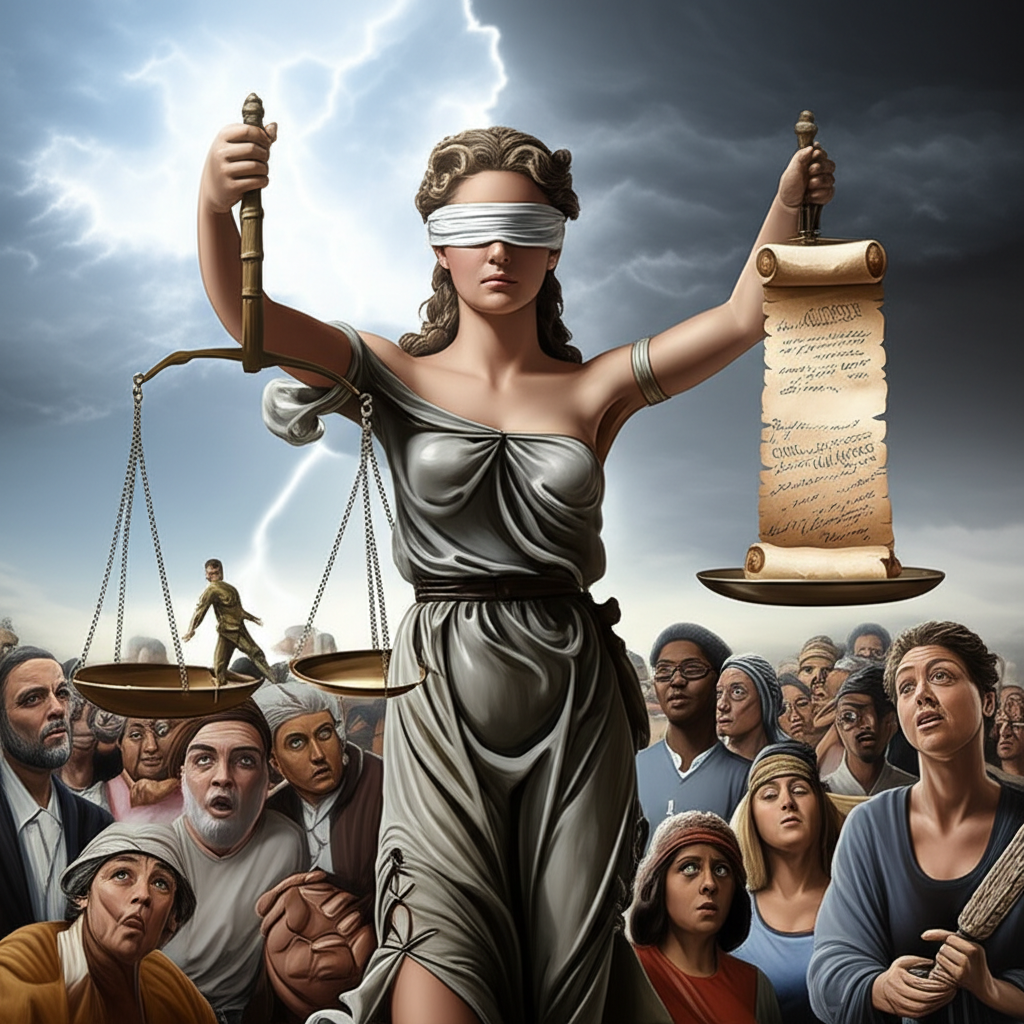
III. Cultivating Virtuous Citizenship: Beyond Mere Obedience
Aristotle, in Politics and Nicomachean Ethics, offers a profound understanding of citizenship that transcends mere obedience to law. For him, a truly ethical citizen is one who actively participates in the life of the polis and cultivates virtues conducive to the common good.
A. The Citizen as a Political Animal
Aristotle famously declared that "man is by nature a political animal." This means that our full human flourishing (eudaimonia) is only possible within a well-ordered community.
- Active Participation: The citizen's duty is not passive. It involves deliberation, voting, holding office, and contributing to the political life of the community.
- Civic Virtue: Virtues like justice, courage, temperance, and wisdom are not just individual traits but are essential for the health of the polis. A just citizen contributes to a just society.
B. The Pursuit of the Common Good
The ethical duty of the citizen is ultimately directed towards the common good. This requires:
- Discernment: The ability to distinguish between self-interest and the broader welfare of the community.
- Sacrifice: Sometimes, individual desires must be subordinated to the needs of the many.
- Responsibility: Taking ownership of the state's successes and failures, and working towards its improvement.
IV. The Evolving Landscape of Citizen Duty
While the foundational principles laid down by the Great Books of the Western World remain profoundly relevant, the nature of citizenship and its duties continues to evolve in a globalized, technologically advanced world.
- Global Citizenship: Do our duties extend beyond national borders? The rise of global challenges (climate change, pandemics) suggests a broader ethical responsibility.
- Digital Citizenship: The online realm presents new ethical dilemmas regarding privacy, misinformation, and respectful discourse.
- Environmental Stewardship: A growing recognition of our duty to the planet and future generations.
The ethical duty of the citizen is not a static decree but an ongoing philosophical conversation. It demands constant reflection, critical engagement with law, a clear understanding of good and evil, and a commitment to active, virtuous citizenship. As Emily Fletcher, I believe that by engaging with these profound questions, we not only understand our past but also forge a path towards a more just and ethical future for all.
YouTube Video Suggestions:
- YouTube: "Socrates Crito Plato's Argument for Obedience to Law"
- YouTube: "Aristotle Politics Citizenship and the Good Life Explained"
📹 Related Video: What is Philosophy?
Video by: The School of Life
💡 Want different videos? Search YouTube for: "The Ethical Duty of the Citizen philosophy"