

The Ethical Duty of the Citizen: Navigating Our Moral Compass in Society
Summary: A Call to Conscience and Community
The concept of duty forms the bedrock of any functioning society, particularly when viewed through the lens of the citizen. This pillar page delves into the multifaceted ethical duty of the citizen, exploring its historical evolution from the foundational texts of the Great Books of the Western World to its complex manifestations in contemporary life. We will examine how philosophers have grappled with the relationship between the individual and the state, the tension between obedience to law and the dictates of personal conscience, and the ever-present struggle to define good and evil within the civic sphere. Ultimately, we aim to illuminate that true ethical citizenship extends beyond mere compliance, demanding active engagement, critical reflection, and a steadfast commitment to the common good.
Introduction: What is Duty, and Why Does it Matter to a Citizen?
At its core, duty refers to a moral or legal obligation; a commitment to act in a certain way. For a citizen, this concept takes on profound significance, shaping our interactions with the state, our fellow inhabitants, and the very fabric of society. From the ancient polis to modern democracies, philosophers have consistently asked: What do we owe to our community? What are the ethical responsibilities that come with being a member of a collective, subject to its laws and beneficiary of its order?
The answers are rarely simple, often residing in the delicate balance between individual liberty and collective welfare. Our journey through the Great Books reveals a continuous dialogue, where thinkers wrestle with the nature of justice, the source of authority, and the fundamental question of how a citizen can live a truly good life within the confines of a structured society.
Historical Perspectives on Citizen Duty from the Great Books
The notion of the citizen's duty is not a static one; it has evolved dramatically across civilizations and philosophical epochs. By tracing these developments through the Great Books of the Western World, we gain a richer understanding of our current ethical landscape.
Ancient Greece: The Polis and the Pursuit of Virtue
In ancient Greece, the citizen was inextricably linked to the polis, or city-state. Duty was less about individual rights and more about active participation in the communal life and the pursuit of collective virtue.
- Plato (c. 428-348 BCE): In works like The Republic and Crito, Plato explores the ideal state and the citizen's role within it. Socrates, in Crito, famously argues for obedience to the laws of the state, even when they lead to an unjust personal outcome (his own execution), emphasizing the social contract and the benefits received from living under those laws. For Plato, the duty of the citizen was to contribute to the justice and harmony of the state, often by fulfilling a specific role dictated by their natural abilities.
- Aristotle (384-322 BCE): In Politics and Nicomachean Ethics, Aristotle posits that humans are "political animals" and that the highest good for an individual is achieved within the community. The citizen's duty is to actively participate in governance, cultivate virtues like justice and temperance, and contribute to the good life of the polis. He saw law as essential for guiding citizens toward virtuous conduct and maintaining order.
Roman Thought: Civic Virtue and Natural Law
Roman philosophy extended Greek ideals, emphasizing practical application, civic virtue, and the concept of natural law.
- Cicero (106-43 BCE): A statesman and philosopher, Cicero stressed the duty of public service, justice, and the common good. His concept of natural law suggested universal moral principles discernible through reason, which should inform human law and guide the citizen's ethical conduct. The citizen's duty was to uphold the Republic and its virtues.
Medieval Period: Divine Law and Earthly Order
The rise of Christianity introduced a new dimension to duty: the obligation to God, which often intersected with, and sometimes superseded, earthly law.
- Augustine of Hippo (354-430 CE): In City of God, Augustine distinguishes between the earthly city and the City of God. While the ultimate duty of the citizen is to God, earthly laws are necessary for maintaining order and peace in this world, and citizens have a duty to obey them insofar as they do not conflict with divine law.
- Thomas Aquinas (1225-1274 CE): Synthesizing Aristotelian philosophy with Christian theology in Summa Theologica, Aquinas developed a comprehensive theory of law: eternal, divine, natural, and human. He argued that human law derives its legitimacy from natural law, which reflects divine reason. The citizen's duty is to obey just laws that promote the common good, but there is a moral obligation to resist laws that are fundamentally unjust or contrary to natural law.
The Enlightenment and Modernity: Social Contract and Individual Rights
The Enlightenment brought a profound shift, emphasizing individual rights, reason, and the idea of a social contract as the basis for governmental legitimacy.
- John Locke (1632-1704 CE): In Two Treatises of Government, Locke argued for natural rights (life, liberty, property) that precede government. The citizen's duty arises from a social contract, where individuals consent to be governed in exchange for the protection of their rights. If the government fails in this duty, citizens have the right, and perhaps the duty, to resist.
- Jean-Jacques Rousseau (1712-1778 CE): The Social Contract posits that legitimate political authority comes from the "general will" of the people. The citizen's duty is to participate in the formation of this general will and to obey the laws that reflect it, thereby acting freely by obeying a law they have prescribed for themselves.
- Immanuel Kant (1724-1804 CE): Kant's ethical philosophy, articulated in works like Critique of Practical Reason and Metaphysics of Morals, centers on duty itself. For Kant, moral actions are those performed out of duty, not inclination, and are guided by the categorical imperative – acting only on maxims that could be universal laws. The citizen's duty includes obeying the law as a rational agent, respecting the autonomy of others, and striving for a "kingdom of ends" where all individuals are treated as ends in themselves.
The Interplay of Law, Ethics, and the Citizen's Conscience
The relationship between law, ethics, and the citizen's personal conscience is often complex and fraught with tension.
Law as an Expression of Duty
Law is, in many ways, the codified expression of a society's collective duty. It sets minimum standards of conduct, delineates rights and responsibilities, and provides a framework for resolving disputes. Obeying the law is often considered a fundamental duty of the citizen, contributing to social order and predictability.
The Challenge of Unjust Laws
However, history is replete with examples of laws that have been profoundly unjust, violating fundamental principles of good and evil. This raises a critical question: Does a citizen's duty to obey the law extend to laws that are immoral or oppressive?
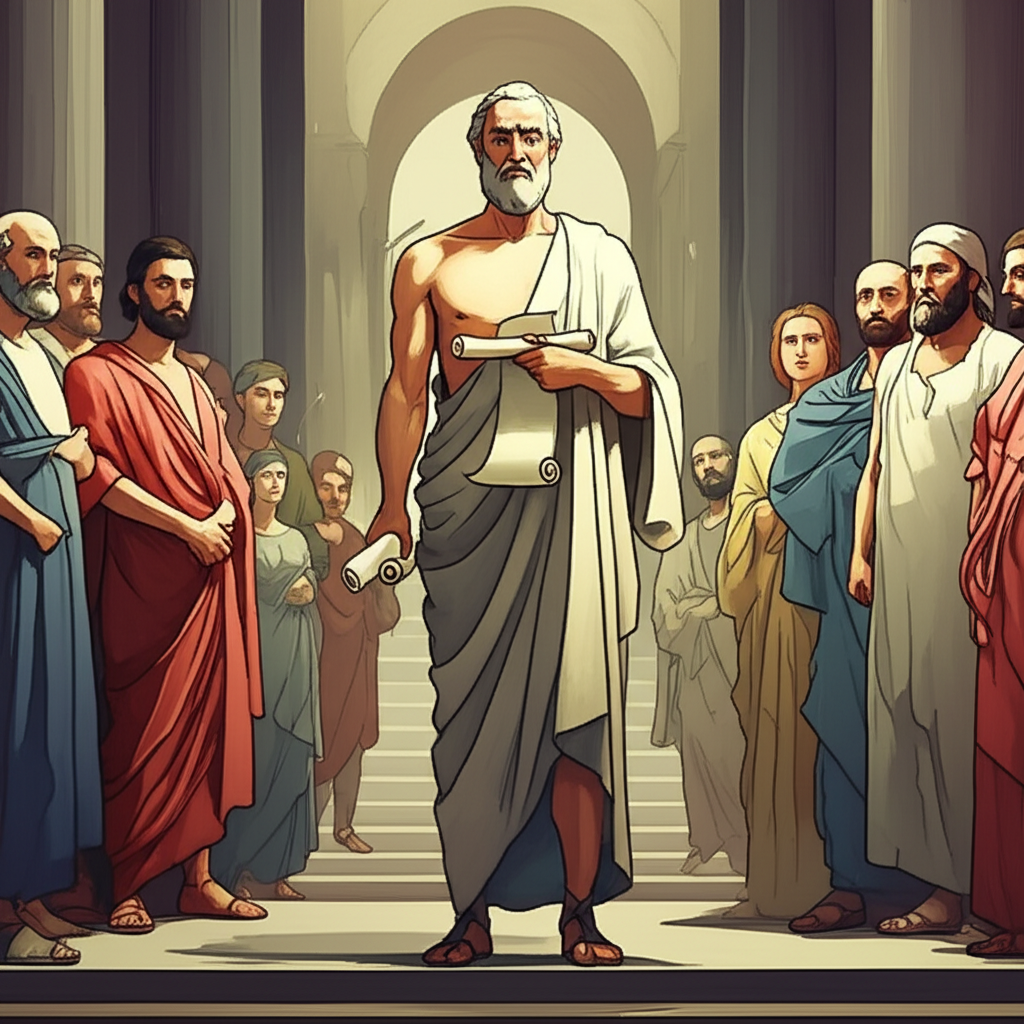
Conscience vs. Compliance
Philosophers like Henry David Thoreau, in his essay "Civil Disobedience," argued that when the law commands an individual to be an agent of injustice, the citizen's duty is not to comply but to resist. This highlights the profound tension between:
- Legal Duty: The obligation to adhere to the laws of the state.
- Moral Duty: The obligation to act in accordance with one's personal ethical principles and sense of good and evil.
The decision to engage in civil disobedience is never taken lightly, representing a profound ethical choice where the citizen places their moral duty above their legal duty, often with significant personal cost.
Defining the "Good Citizen": Beyond Mere Obedience
While obeying laws is a baseline expectation, the ethical duty of the citizen extends far beyond passive compliance. A truly "good citizen" is one who actively contributes to the flourishing of their community and upholds the principles of justice and fairness.
Key aspects of ethical citizenship include:
- Active Participation: Engaging in democratic processes (voting, thoughtful debate, advocacy), volunteering, and community involvement.
- Critical Engagement: Holding public officials accountable, questioning policies, and advocating for necessary reforms. This requires an informed perspective, often gained through a deep understanding of history and philosophy.
- Cultivating Civic Virtues: Developing personal qualities that contribute to a healthy society, such as:
- Responsibility: Taking ownership of one's actions and their impact.
- Respect: For diverse perspectives, rights, and the rule of law.
- Empathy: Understanding and sharing the feelings of others, especially those marginalized.
- Integrity: Adhering to moral and ethical principles.
- Pursuit of the Common Good: Acting in ways that benefit the entire community, not just individual interests. This often involves balancing personal desires with collective needs.
The Spectrum of Duty: From Individual to Collective
The citizen's duty operates on multiple levels, encompassing personal ethics, civic responsibilities, and universal moral obligations.
| Level of Duty | Description | Examples |
|---|---|---|
| Individual Ethical Duty | Personal moral obligations and virtues. | Honesty, integrity, self-improvement, kindness to strangers. |
| Civic Duty | Obligations to the state and local community. | Obeying laws, paying taxes, voting, jury service, community volunteering. |
| Universal Moral Duty | Obligations to humanity and the planet, transcending national borders. | Respect for human rights, environmental stewardship, humanitarian aid, striving for global justice. |
Understanding this spectrum helps us navigate the complexities of our moral obligations as citizens of both a particular nation and the wider world.
Challenges to Ethical Citizenship in the Modern World
The contemporary landscape presents unique challenges to the ethical duty of the citizen:
- Global Interconnectedness: Our actions have consequences far beyond national borders, raising questions about global duty versus national interest.
- Information Overload and Misinformation: Distinguishing truth from falsehood becomes a critical duty for informed participation.
- Polarization and Tribalism: The erosion of civil discourse makes it harder to pursue the common good and respect diverse perspectives.
- The Role of Technology: Digital citizenship introduces new ethical dilemmas concerning privacy, online conduct, and the spread of ideas.
Conclusion: A Continuous Dialogue of Duty and Conscience
The ethical duty of the citizen is not a static list of rules but a dynamic, ongoing process of reflection, engagement, and moral choice. Drawing inspiration from the profound insights of the Great Books of the Western World, we learn that true citizenship requires more than just obedience to law; it demands an active conscience, a commitment to justice, and a relentless pursuit of the good.
As Emily Fletcher, I believe that understanding these philosophical underpinnings empowers us to be more thoughtful, more responsible, and ultimately, more ethical citizens. The dialogue between our individual sense of good and evil and our collective responsibilities is perpetual, forming the very essence of a vibrant and just society.
Further Exploration:
-
📹 Related Video: PLATO ON: The Allegory of the Cave
Video by: The School of Life
💡 Want different videos? Search YouTube for: ""Plato Crito Summary" for an overview of Socrates' argument for civic duty"
-
📹 Related Video: ARISTOTLE ON: The Nicomachean Ethics
Video by: The School of Life
💡 Want different videos? Search YouTube for: ""Kant Categorical Imperative explained" to grasp the foundation of duty-based ethics"