

The Ethical Duty of the Citizen: Navigating the Moral Imperatives of Public Life
The concept of the citizen is not merely a legal status but a profound philosophical construct, deeply interwoven with the notion of duty. From the ancient Greek polis to the modern nation-state, thinkers have grappled with the moral obligations individuals hold towards their communities and governing structures. This pillar page explores the multifaceted ethical duty of the citizen, examining its historical evolution, core components, and the enduring challenges it presents in a complex world. We will delve into how philosophers from the Great Books of the Western World have shaped our understanding of this vital relationship, focusing on the interplay between individual conscience, the law, and the pursuit of the collective good.
I. Foundations of Civic Obligation: A Historical Overview
The idea that a citizen owes duty to their community is as old as organized society itself. This section traces the philosophical lineage of civic obligation, highlighting key periods and influential thinkers.
A. Ancient Greece: The Birth of the Polis and Virtue Ethics
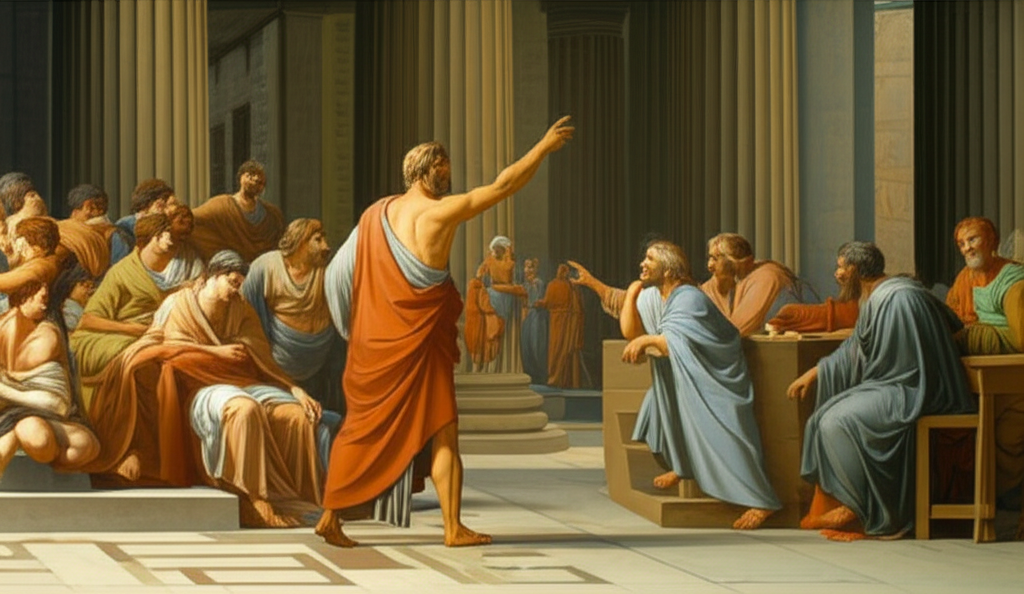
For the ancient Greeks, particularly in Athens, being a citizen was an active, participatory role, not a passive identity. The polis was the crucible of human flourishing, and a life lived outside its bounds was scarcely considered a full human existence.
- Plato's Republic and Crito: Plato, through Socrates, famously explored the duty to the state. In Crito, Socrates chooses to accept an unjust execution rather than escape, arguing that a citizen implicitly agrees to obey the laws of the state by choosing to live within it. To break the law would be to undermine the very fabric of society, an act of evil against the good of the community.
- Aristotle's Politics: Aristotle viewed humans as "political animals" (zoon politikon). For him, the citizen's highest duty was to participate in public life, contributing to the good of the polis through virtuous action. The law was seen as a tool for cultivating virtue and achieving the common good.
B. Roman Thought: Natural Law and Civic Responsibility
Roman philosophers and jurists expanded upon Greek ideas, emphasizing universal principles and the practical application of duty.
- Cicero's De Officiis: Cicero articulated a robust concept of duty (officium) rooted in natural law. He argued that citizens have obligations not only to the state but also to humanity at large. These duties encompassed justice, beneficence, and the pursuit of the common good, often requiring personal sacrifice.
C. The Enlightenment: Social Contract and Individual Rights
The Enlightenment era brought a revolutionary shift, placing individual rights at the forefront while redefining the basis of civic duty.
- Thomas Hobbes's Leviathan: Hobbes argued that citizens surrender some freedoms to a sovereign power in exchange for security and order, escaping the "state of nature." The duty to obey the law is paramount, as disobedience risks a return to chaos.
- John Locke's Two Treatises of Government: Locke proposed a social contract based on consent, where government protects natural rights (life, liberty, property). The citizen's duty to obey the law is conditional upon the government upholding its end of the contract. If the government becomes tyrannical, citizens have a right, and perhaps a duty, to resist.
- Jean-Jacques Rousseau's The Social Contract: Rousseau posited that citizens collectively form the "general will," to which all individuals must submit. True freedom lies in obeying the law that one has, in essence, prescribed for oneself. The duty is to participate in creating and upholding the general will for the common good.
D. Modern Philosophy: Universal Morality and Utilitarianism
The 18th and 19th centuries saw new frameworks for understanding moral duty.
- Immanuel Kant's Categorical Imperative: Kant emphasized the duty to act according to universal moral law, irrespective of consequences. For a citizen, this means acting in ways that could be willed as universal law, promoting justice and respecting the inherent dignity of all individuals. The good action is one performed out of duty.
- John Stuart Mill's Utilitarianism and On Liberty: Mill argued that actions are right if they promote happiness and wrong if they produce the opposite. A citizen's duty is to contribute to the greatest good for the greatest number. In On Liberty, Mill also stressed the duty to protect individual freedoms, provided they do not harm others, recognizing that individual flourishing contributes to collective well-being.
II. Core Components of the Citizen's Ethical Duty
The ethical duty of the citizen is not monolithic but comprises several key dimensions. These duties often intersect and, at times, present complex moral dilemmas.
A. Obedience to Law and Legitimate Authority
The most fundamental duty of a citizen is to obey the laws of the land. This underpins social order, predictability, and justice.
- The Social Contract Argument: As seen with Hobbes, Locke, and Rousseau, the very legitimacy of the state rests on the agreement, implicit or explicit, of citizens to abide by its rules.
- Maintaining Order: Law provides a framework for resolving disputes, protecting rights, and preventing chaos. Disregarding law can lead to anarchy, where the distinction between good and evil becomes blurred by self-interest.
- The Challenge of Unjust Laws: What happens when a law is perceived as unjust or immoral? This raises the complex question of civil disobedience. Philosophers like Henry David Thoreau and Martin Luther King Jr. argued that an individual has a moral duty to resist unjust laws, even if it means accepting the consequences. This is not a rejection of law itself, but an appeal to a higher moral law or an attempt to correct a perceived evil within the legal system.
B. Active Participation and Civic Engagement
Beyond mere obedience, an ethical citizen is often called to actively participate in the life of their community and nation.
- Voting and Political Engagement: Participating in elections, understanding political issues, and holding elected officials accountable are crucial for democratic self-governance.
- Community Service and Volunteerism: Contributing time and effort to local initiatives, charities, and community projects directly enhances the collective good.
- Informed Discourse: Engaging in respectful public debate, seeking out diverse perspectives, and contributing to a well-informed citizenry are vital for a healthy democracy. This helps distinguish between actions that lead to good outcomes and those that perpetuate evil or injustice.
C. Upholding Justice and Fairness
A core ethical duty is to strive for a just and fair society, both within and beyond the legal framework.
- Protecting Rights: This includes not only one's own rights but also the rights of others, especially the vulnerable.
- Promoting Equality: Working to dismantle systemic inequalities and ensure equitable opportunities for all citizens.
- Speaking Out Against Injustice: An ethical citizen has a duty to call out corruption, discrimination, and other forms of evil or injustice, even when it is uncomfortable or risky.
D. Moral Responsibility and the Pursuit of the Common Good
The ethical duty extends beyond formal civic actions to everyday moral conduct.
- Personal Integrity: Acting honestly, responsibly, and with respect for others in all interactions.
- Environmental Stewardship: Recognizing the duty to protect shared resources and the planet for future generations.
- Cultivating Virtue: As Aristotle suggested, striving to be a virtuous individual contributes directly to the virtue of the polis. This involves discerning between good and evil in personal and public life.
III. Challenges and Dilemmas in Fulfilling Civic Duty
The ethical duty of the citizen is rarely straightforward. Modern societies present complex challenges that test the limits of individual and collective responsibility.
A. Conflict Between Individual Conscience and State Demands
What happens when a citizen's deeply held moral convictions clash with the demands of the state or the law?
- Conscientious Objection: The refusal to participate in military service or other state-mandated activities due to moral or religious beliefs.
- Whistleblowing: The duty to expose corruption or wrongdoing within government or corporations, often at great personal risk, weighing the good of public exposure against the evil of potential harm to an organization.
- The Tyranny of the Majority: As highlighted by Mill, a democratic majority can sometimes impose laws or norms that suppress minority rights or individual freedoms, raising questions about the duty to resist.
B. Defining the "Common Good" in Diverse Societies
In pluralistic societies, what constitutes the "common good" is often contested. Different groups may have conflicting visions of what is beneficial, just, or morally right.
- Balancing Rights and Interests: The duty to promote the common good often involves balancing competing individual rights and group interests.
- Global Citizenship: In an increasingly interconnected world, does the citizen's duty extend beyond national borders to address global issues like poverty, climate change, and human rights? This expands the scope of what constitutes the "common good."
C. Apathy and Disengagement
Perhaps the greatest modern challenge is the erosion of civic engagement and the rise of apathy. When citizens disengage, the democratic process weakens, and the collective good suffers.
- The Burden of Responsibility: The perceived complexity of political issues or the feeling that one's actions don't matter can lead to a retreat from civic duty.
- The Rise of Misinformation: The spread of false information can make it difficult for citizens to make informed decisions, undermining the duty to engage in rational public discourse and discern truth from falsehood, good from evil.
IV. Conclusion: The Enduring Imperative of Ethical Citizenship
The ethical duty of the citizen remains a cornerstone of a just and flourishing society. From the ancient Greek emphasis on virtue and active participation to Enlightenment theories of social contract and modern calls for universal justice, the journey through the Great Books of the Western World reveals a consistent thread: that the health of the community depends critically on the moral commitment of its members.
This duty is not static; it evolves with societies and global challenges. It demands constant reflection, courage, and a willingness to engage with complex moral questions. While the law provides a framework, the true ethical citizen strives to act beyond mere compliance, driven by a profound commitment to justice, fairness, and the collective good, ever vigilant against the forces of evil that threaten social harmony. In an age of rapid change and deepening divisions, understanding and embracing this ethical duty is more crucial than ever for constructing a future worthy of humanity.
Further Exploration:
YouTube: "Plato Crito philosophy explained"
YouTube: "Social contract theory explained Locke Rousseau Hobbes"
📹 Related Video: What is Philosophy?
Video by: The School of Life
💡 Want different videos? Search YouTube for: "The Ethical Duty of the Citizen philosophy"