

The Ethical Dimension of War and Peace: A Philosophical Inquiry
The perennial questions surrounding war and peace cut to the very core of human existence, challenging our understanding of justice, morality, and the nature of society itself. This article delves into the intricate ethical landscape of conflict, exploring how philosophers from antiquity to the modern era have grappled with the justifications for engaging in war, the conduct within it, and the ultimate pursuit of lasting peace. We will examine the tension between individual duty and collective responsibility, the shifting definitions of good and evil in times of crisis, and the enduring philosophical frameworks that attempt to navigate these profound dilemmas, drawing insights from the rich tapestry of the Great Books of the Western World.
The Enduring Paradox: Conflict and Human Nature
From the epic tales of Homer to the treatises of political philosophy, the specter of war has haunted humanity, often viewed as both a destructive force and, paradoxically, a catalyst for societal change or defense. Philosophers have long pondered whether conflict is an inherent part of the human condition or a preventable aberration. Plato, in The Republic, envisioned an ideal state where justice prevails, yet acknowledged the necessity of a guardian class to protect it, implicitly recognizing the threat of external aggression. Aristotle, too, explored the virtues necessary for a flourishing polis, implicitly contrasting them with the vices that lead to strife.
The tension lies in our capacity for both profound cooperation and devastating violence. How do we reconcile the pursuit of an ethical life with the grim realities of power struggles and territorial disputes? This fundamental paradox forms the bedrock of any philosophical discussion on War and Peace.
From Ancient Justice to Modern Realpolitik
The ethical considerations surrounding war are not monolithic. Different eras and thinkers have offered distinct lenses through which to view the morality of conflict.
- Classical Greece: Emphasized justice and the defense of the polis. War, while tragic, could be seen as a necessary evil to preserve a way of life.
- Medieval Thought: Introduced and refined the concept of Just War Theory, heavily influenced by Christian theology.
- Renaissance and Enlightenment: Saw the rise of state sovereignty and the concept of international law, alongside a pragmatic understanding of power.
Ethical Frameworks in the Crucible of Conflict
To navigate the moral quagmire of war, philosophers have developed various ethical frameworks, each offering a distinct perspective on when and how force might be justified.
1. Just War Theory: A Quest for Moral Boundaries
The most enduring and influential framework for evaluating the ethics of war is Just War Theory, significantly developed by figures like St. Augustine and St. Thomas Aquinas (whose works are foundational in the Great Books collection). It seeks to establish moral conditions under which war is permissible and ethical conduct within it. This theory is typically divided into two main components:
- Jus ad bellum (Justice in going to war):
- Just Cause: A legitimate reason for war (e.g., self-defense against aggression, protecting innocents).
- Legitimate Authority: War must be declared by a proper authority.
- Right Intention: The goal must be peace and justice, not conquest or revenge.
- Last Resort: All peaceful alternatives must have been exhausted.
- Proportionality: The good achieved must outweigh the harm caused.
- Reasonable Prospect of Success: War should not be undertaken if it's futile.
- Jus in bello (Justice in conducting war):
- Discrimination: Non-combatants must be protected; attacks should target military objectives only.
- Proportionality: The force used must be proportional to the military objective; excessive force is prohibited.
- Military Necessity: Actions must be necessary to achieve a legitimate military objective.
2. Pacifism: The Rejection of Violence
In stark contrast to Just War Theory, pacifism argues that war and violence are inherently immoral, regardless of the cause. While often rooted in religious convictions, philosophical pacifism also presents compelling arguments against the use of force, emphasizing non-violence as the only truly ethical path. Absolute pacifists reject all forms of violence, while contingent pacifists might accept violence only in extremely limited, self-defensive scenarios. The writings of figures like Leo Tolstoy, particularly his later philosophical works, resonate deeply with pacifist ideals, challenging the very notion of justified violence.
3. Realism: The Pragmatism of Power
Philosophical realism, exemplified by Niccolò Machiavelli in The Prince, takes a more pragmatic, often cynical, view. It argues that ethics and morality, as understood in individual conduct, often have little place in international relations. States act primarily out of self-interest, seeking power and security, and war is simply one of the tools available to achieve these ends. While not explicitly an ethical theory in the traditional sense, realism forces us to confront the harsh realities of power politics and the limitations of moral ideals when nations clash.
The Weight of Duty and the Shadow of Good and Evil
Central to the ethical dimension of war and peace is the concept of duty. What is the duty of a citizen to their state? What is the duty of a soldier on the battlefield? And what is our collective duty to pursue peace?
- Duty in War: For a soldier, duty often means obedience, courage, and sacrifice for their nation. Yet, this duty can conflict with individual moral conscience, particularly when confronted with acts that seem to cross the line into evil. Immanuel Kant's emphasis on duty as a moral imperative, independent of consequences, provides a rigorous framework for understanding individual moral obligations, even in the most extreme circumstances.
- Duty to Peace: Beyond the battlefield, there is a broader duty to prevent conflict and foster peace. This involves diplomatic efforts, international cooperation, and addressing the root causes of conflict, such as injustice and inequality.
The very terms good and evil become profoundly complex in the context of war. What one side perceives as a righteous defense of good, the other may see as an act of unprovoked evil. Propaganda often weaponizes these terms, dehumanizing the enemy and justifying atrocities. Philosophers strive to move beyond these simplistic binaries, seeking universal ethical principles that can transcend nationalistic fervor and guide actions towards a more just and humane outcome.
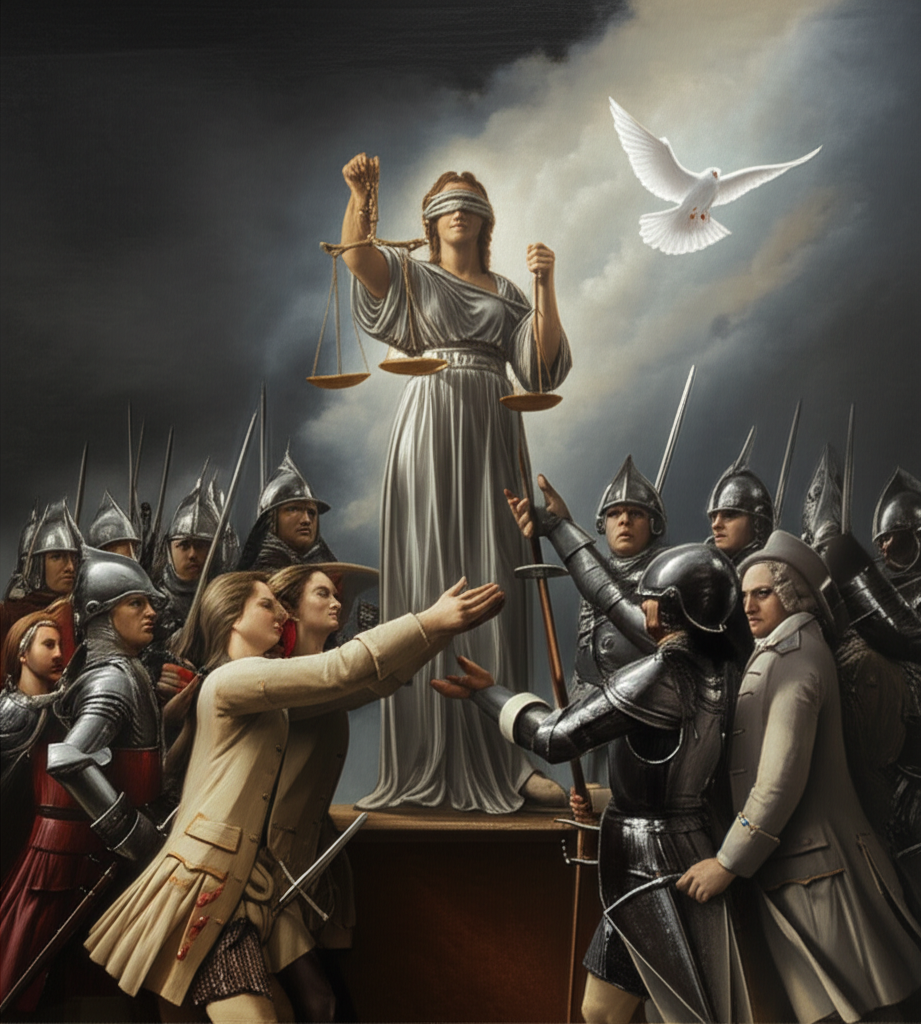
The Philosophical Pursuit of Perpetual Peace
Despite the recurring cycles of war, the philosophical aspiration for peace has never waned. Kant's seminal essay, "Perpetual Peace," outlines a vision for a world free from conflict, based on republican constitutions, a federation of free states, and universal hospitality. His arguments underscore the idea that peace is not merely the absence of war, but a positive state of affairs built on moral principles and rational governance.
Achieving lasting peace requires more than simply ending hostilities; it demands an ongoing commitment to justice, mutual respect, and the recognition of shared humanity. It is a continuous ethical endeavor, demanding constant vigilance against the forces that drive conflict and a steadfast duty to build bridges rather than walls. The philosophical journey through War and Peace is ultimately a testament to humanity's enduring struggle to define and achieve a truly ethical existence, both individually and collectively.
Further Philosophical Exploration:
- The Problem of Evil: How can good exist if evil is so prevalent, especially in the context of war?
- Human Rights: The role of universal human rights in preventing and mitigating conflict.
- Reconciliation: The ethical challenges and necessities of post-conflict reconciliation.
📹 Related Video: PLATO ON: The Allegory of the Cave
Video by: The School of Life
💡 Want different videos? Search YouTube for: ""Just War Theory Explained""
📹 Related Video: KANT ON: What is Enlightenment?
Video by: The School of Life
💡 Want different videos? Search YouTube for: ""Kant Perpetual Peace Summary""