

The Unyielding Gaze: Navigating the Ethical Labyrinth of War and Peace
The discourse surrounding War and Peace isn't merely a historical chronicle or a political analysis; it is, at its core, an urgent and profound exploration of Ethics. From the grand pronouncements of empires to the silent suffering of individuals, every act of conflict and every pursuit of harmony forces us to confront the very essence of Good and Evil, and the heavy burden of Duty. This article delves into the philosophical underpinnings of this eternal dilemma, drawing insights from the timeless wisdom preserved within the Great Books of the Western World, to understand how humanity has grappled with the moral dimensions of organized violence and the arduous path to lasting peace. It's a journey into the heart of human morality, where ideal principles clash with brutal realities, and where the line between justifiable action and unforgivable atrocity often blurs.
The Ancient Echoes: Justice, Order, and the State
Philosophers throughout history have wrestled with the question of whether war can ever be morally permissible. From the earliest city-states to the sprawling empires, the Great Books reveal a consistent thread: the attempt to impose ethical boundaries on the raw power of conflict.
- Plato's Republic envisioned a just state where conflict, if necessary, served the greater good of order and harmony, though his focus was more on the internal justice of the state.
- Aristotle, in his Politics, acknowledged war as a means to an end, often for defense or to secure resources, but always subordinate to the pursuit of eudaimonia – human flourishing – which war inherently disrupts.
These early thinkers laid the groundwork for understanding war not as an isolated event, but as an act deeply intertwined with the nature of the state, justice, and the well-being of its citizens. The concept of duty to the state, to one's fellow citizens, and to the preservation of a particular way of life, begins to emerge as a powerful justification for engaging in conflict.
The Moral Compass: Just War Theory
As societies evolved and religious thought gained prominence, the ethical framework for war became more formalized. Just War Theory, a cornerstone of Western ethical thought, largely developed by figures like Augustine of Hippo and Thomas Aquinas (whose works are central to the Great Books tradition), provides a set of criteria to evaluate the morality of going to war (jus ad bellum) and the morality of conduct within war (jus in bello). This theory is a profound attempt to delineate Good and Evil in the context of armed conflict, establishing a moral duty to avoid unjust wars while also providing a framework for ethical conduct when war is deemed necessary.
Key Principles of Just War Theory:
-
Jus ad Bellum (Justice in Going to War):
- Just Cause: War must be waged for a morally legitimate reason, such as self-defense against aggression.
- Right Intention: The aim must be peace, not conquest or revenge.
- Legitimate Authority: Only a legitimate government can declare war.
- Last Resort: All peaceful alternatives must have been exhausted.
- Probability of Success: There must be a reasonable chance of achieving the war's objectives.
- Proportionality: The good achieved by war must outweigh the harm caused.
-
Jus in Bello (Justice in Conduct of War):
- Discrimination: Non-combatants must be protected; only legitimate military targets should be attacked.
- Proportionality: The force used must be proportional to the military objective; excessive force is prohibited.
These principles articulate a severe duty to weigh the profound moral costs before, and during, any engagement in war.
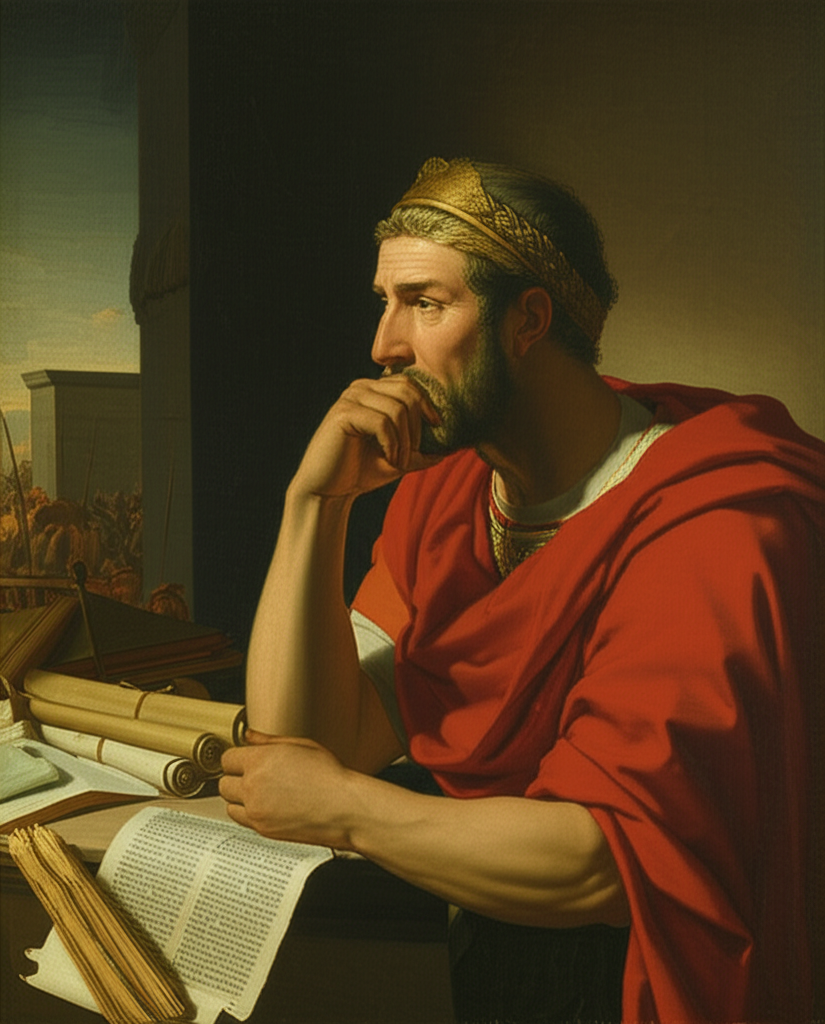
The Individual's Burden: Duty, Conscience, and Sacrifice
Beyond the grand theories of statecraft, the ethical dimension of war presses most heavily on the individual. What is the soldier's duty? Is it to obey orders unequivocally, or does a higher moral law permit or even demand dissent? The Great Books offer poignant reflections on this internal struggle.
- Leo Tolstoy's War and Peace, while a novel, is a profound philosophical meditation on the human condition amidst conflict, questioning the grand narratives of history and emphasizing the small, often morally ambiguous, actions of individuals. It challenges the very notion of heroism and duty when faced with the overwhelming chaos and suffering of war.
- Immanuel Kant, though not writing directly on war as a primary topic, provides a framework for understanding duty as a categorical imperative – an unconditional moral obligation. How does this apply when one's duty to the state conflicts with a universal moral duty to preserve life or avoid cruelty?
The experience of war often blurs the lines between Good and Evil, forcing individuals to make choices under duress that challenge their core moral fabric. The concept of moral injury, the psychological wound resulting from perpetrating, failing to prevent, or witnessing acts that transgress deeply held moral beliefs, speaks volumes to the profound ethical toll of conflict.
The Ethical Imperative of Peace
If war represents a failure of ethical imagination and political will, then peace must be understood as an active, ongoing ethical project. It is not merely the absence of conflict but the presence of justice, equity, and mutual respect. The pursuit of peace carries its own set of duties: to foster understanding, to build institutions that mediate conflict, and to address the root causes of violence such as poverty, injustice, and oppression.
Philosophers like John Locke and Jean-Jacques Rousseau, through their social contract theories, explored how rational individuals might consent to a governing authority to escape the "state of nature" – a state potentially fraught with conflict – thereby implicitly outlining the ethical imperative for peaceful coexistence and a just society. Their ideas, foundational to modern political thought, underscore the ethical duty of states and citizens alike to construct and maintain a just peace.
Conclusion: An Enduring Ethical Challenge
The ethical dimension of War and Peace remains one of humanity's most enduring and complex challenges. It forces us to confront our capacity for both profound Good and Evil, to critically examine the nature of Duty, and to constantly refine our understanding of justice. The wisdom gleaned from the Great Books of the Western World does not offer easy answers, but it provides an invaluable framework for asking the right questions, for navigating the moral ambiguities, and for holding ourselves accountable for the choices we make, individually and collectively, in the face of conflict and in the eternal pursuit of a more peaceful world. The ethical journey is ongoing, demanding continuous reflection, dialogue, and a steadfast commitment to humanity's highest ideals.
YouTube Video Suggestions:
-
📹 Related Video: What is Philosophy?
Video by: The School of Life
💡 Want different videos? Search YouTube for: ""Just War Theory Explained Philosophy""
-
📹 Related Video: What is Philosophy?
Video by: The School of Life
💡 Want different videos? Search YouTube for: ""Moral Dilemmas in War Philosophy""