

The Weight of Forever: Navigating the Ethical Labyrinth of Immortality
The quest for eternal life, a perennial dream woven into the fabric of human mythology and ambition, has long transcended the realm of mere fantasy to become a tantalizing scientific possibility. But as we inch closer to a future where Life and Death might no longer be an inescapable binary, we must confront a profound set of ethical dilemmas. Is Immortality truly a blessing, or does it carry an unbearable moral burden? This article delves into the philosophical quandaries that arise when the finite nature of human existence is challenged, exploring how our understanding of Duty, Good and Evil would be irrevocably transformed.
The Shifting Sands of Life and Death
For millennia, the inevitability of death has shaped human experience, lending urgency to our ambitions, profundity to our relationships, and meaning to our brief time on Earth. Philosophers from ancient Greece to the modern era have grappled with this fundamental truth. Aristotle, in his Nicomachean Ethics, posits that true happiness (eudaimonia) is achieved over a complete life, implying a finite span within which one can cultivate virtue. The very concept of a "good death" or a "life well-lived" is predicated on an ending.
What happens, then, when this fundamental boundary dissolves?
- The Devaluation of Experience: If every moment is one of an infinite number, does the individual moment lose its preciousness? Would the intensity of joy, sorrow, or achievement diminish when there is no final curtain?
- The Nature of Identity: Our identities are forged through change, growth, and the passage of time. How would an immortal being maintain a coherent sense of self across millennia, accumulating an unimaginable repository of memories and experiences? Would the self become fluid to the point of dissolution?
- The Meaning of Legacy: If one never dies, the traditional concept of leaving a legacy for future generations becomes moot. What drives ambition when there is no end to one's own story?
The removal of death as a motivator fundamentally reconfigures the human psyche, challenging deeply ingrained philosophical tenets about purpose and existence.
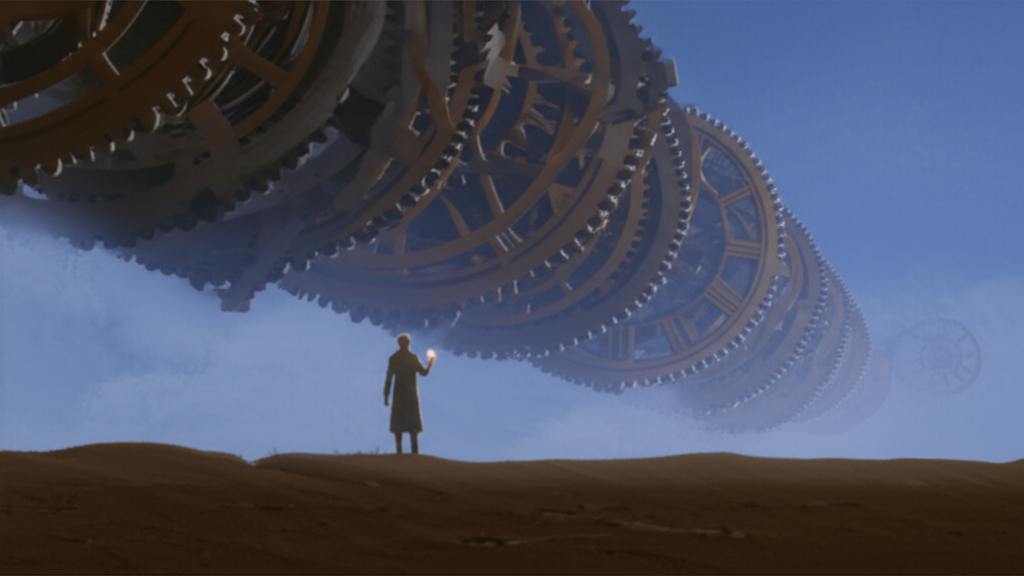
The Burden of Eternal Duty
With Immortality comes an unprecedented expansion of Duty. Our current ethical frameworks are largely designed for finite beings with limited lifespans and spheres of influence.
Consider the following ethical extensions:
| Category of Duty | Current Implications (Finite Life) | Immortal Implications (Infinite Life) |
|---|---|---|
| Self-Improvement | A lifelong pursuit, often with a sense of urgency to achieve potential. | An endless, potentially overwhelming task. When is "enough" achieved? |
| Social Responsibility | Contribute to society, raise families, leave the world better. | Perpetual stewardship of the planet and its inhabitants, potentially for all time. |
| Intergenerational | Ensure a sustainable future for direct descendants and future generations. | A Duty spanning thousands, if not millions, of years, to an ever-evolving humanity. |
| Knowledge & Wisdom | Accumulate and pass on knowledge within a lifetime. | The Duty to continually learn, adapt, and process an ever-expanding universe of information. |
Immanuel Kant's categorical imperative, which asks us to act only according to a maxim that we could at the same time will to become a universal law, would take on terrifying new dimensions. An immortal's actions could have eternal consequences, not just for themselves but for the entire fabric of an immortal society. The weight of such unending responsibility could be paralyzing. Would duty become an unbearable chains, leading to a pervasive sense of moral fatigue?
Redefining Good and Evil
The concepts of Good and Evil are often understood in relation to consequences and justice. In a world of immortals, these definitions become profoundly complex.
- Eternal Consequences: If an individual commits an act of evil, how would justice be served? Imprisonment for eternity? What punishment could truly fit an eternal crime? Conversely, how would one reward infinite good? The traditional notions of hell and heaven, as described by thinkers like Augustine in City of God, are often conceived as eternal states for finite souls. What if the eternal state is lived out on Earth?
- The Persistence of Vice: Would eternal life allow for the eternal perpetuation of vices? Without the natural end of a lifespan, would destructive habits or malevolent intentions simply fester and grow without limit, potentially corrupting an entire society?
- The Stagnation of Virtue: Could the pursuit of good become monotonous? Would the grand challenges that currently inspire heroism and self-sacrifice diminish in significance over an infinite timescale? What new forms of good would emerge, and what existing ones would become obsolete?
- The Problem of Moral Evolution: Human morality is not static; it evolves with societies and understanding. For immortals, would moral evolution halt, or would they be perpetually adapting to new ethical landscapes, often having to undo or reinterpret millennia-old moral frameworks?
Plato, in his Republic, explored the ideal state and the just individual, positing that understanding the Good was the ultimate aim. For immortals, the pursuit of this "Good" would be an infinite journey, perhaps never fully attainable, leading to existential frustration.
Socio-Political and Existential Quandaries
Beyond individual ethics, Immortality poses immense challenges to societal structures:
- Resource Allocation: A fixed planet with an ever-growing, non-dying population presents an insurmountable resource crisis. Who gets to be immortal? The ultimate form of inequality would be the division between mortals and immortals, raising questions of justice and fairness that dwarf any historical class struggle.
- Stagnation vs. Progress: While immortals would possess vast knowledge, would they be innovative? The constant influx of new, young minds often drives innovation. Would an immortal society become overly conservative, resistant to change, or bogged down by its own immense history?
- The Monotony of Existence: Perhaps the greatest individual ethical dilemma is the problem of eternal boredom. Without the pressure of time, would life lose its flavor? Nietzsche, in his exploration of the eternal recurrence, suggests that one must live each moment as if they would live it infinitely. But can the human psyche truly sustain joy, meaning, and engagement across an infinite timeline? The sheer weight of memory, experience, and the repetitive cycles of existence could lead to profound ennui.
Conclusion: A Double-Edged Eternity
The allure of Immortality is undeniable, a promise of escaping the ultimate boundary of Life and Death. Yet, as we peer into this potential future, the ethical shadows it casts are long and complex. The philosophical foundations of our existence—our understanding of Duty, Good and Evil, and the very meaning of life—are inextricably linked to our finitude. To transcend death is not merely to extend life; it is to fundamentally redefine what it means to be human. Before we grasp at eternal life, we must first grapple with the eternal questions it forces us to confront, lest we find that our greatest triumph becomes our most profound ethical dilemma.
📹 Related Video: ARISTOTLE ON: The Nicomachean Ethics
Video by: The School of Life
💡 Want different videos? Search YouTube for: ""Philosophical implications of immortality" or "Ethics of eternal life""