

The Eternal Question: Navigating the Ethical Dilemmas of Immortality
The dream of overcoming Life and Death has captivated humanity since time immemorial. From ancient myths of elixirs to modern scientific pursuits, the quest for Immortality often appears as the ultimate triumph over our finite existence. Yet, beneath the glittering promise of eternal life lies a profound and unsettling labyrinth of ethical dilemmas. This article will delve into these complexities, moving beyond the initial allure to confront the deep philosophical, social, and psychological challenges that an immortal future would inevitably bring, forcing us to redefine our understanding of purpose, Duty, Good and Evil, and what it truly means to be human.
The Allure and the Abyss: Why We Seek Eternity (and Why We Should Think Twice)
The initial appeal of immortality is undeniable. Imagine endless time for learning, for love, for creation, free from the specter of decay and oblivion. It promises the cessation of grief, the elimination of fear of the unknown, and the opportunity to master every art and science. Philosophers across the ages, from Plato's contemplation of the eternal Forms to the Stoic acceptance of our mortality, have grappled with the finite nature of human existence, often finding solace or meaning within its limits.
However, the abyss opens when we consider the practical and existential implications. What happens when the novelty wears off? Does an infinite lifespan lead to infinite wisdom, or merely infinite boredom? The very structure of human experience, our motivations, our love, and our capacity for change, are inextricably linked to our finite timeline.
Unpacking the Ethical Quandaries of Eternal Life
The ethical dilemmas of immortality are not mere academic exercises; they are fundamental questions about justice, resources, and the very fabric of society.
1. The Burden of Existence: Resources and Overpopulation
Perhaps the most immediate and tangible challenge of widespread immortality is the sheer pressure on global resources. Our planet, however resilient, has finite space, food, water, and energy.
- Resource Scarcity: An ever-increasing, never-dying population would rapidly deplete Earth's capacity, leading to unprecedented levels of competition and conflict.
- Environmental Impact: The ecological footprint of billions of immortal beings would be catastrophic, transforming our world into an uninhabitable wasteland.
- The Right to Life (and Immortality): If immortality became achievable, who would receive it? Would it be a universal right, or a privilege reserved for the wealthy, creating a stark, eternal class divide? This question alone brings up profound issues of distributive justice, echoing ancient debates about the fair distribution of societal goods.
2. Redefining Life and Death: The Erosion of Meaning
Our current understanding of Life and Death provides a framework for meaning, urgency, and appreciation. Death, as an inevitable end, imbues life with preciousness and motivates us to make the most of our time.
- Loss of Urgency: Without the ticking clock, would we lose our drive to achieve, to learn, to love deeply, to innovate? Would procrastination become an eternal state?
- The Cycle of Generations: The natural progression of generations, with new ideas replacing old, new perspectives challenging established ones, is crucial for societal evolution. Immortality could lead to stagnation, with entrenched powers and ideas resisting change indefinitely.
- Grief and Loss: While immortals wouldn't die, others might not be so fortunate (e.g., animals, plants, or even those who choose mortality). How would one cope with millennia of watching loved ones, entire species, or even civilizations pass away while they remain?
3. The Evolving Nature of Duty and Responsibility
Our concept of Duty is often tied to our finite existence. We have duties to our families, our communities, our nations, and future generations. But what about immortals?
- Eternal Duty: Would an immortal be bound by the same duties for eternity? Imagine a never-ending military service, or a perpetual political office.
- Duty to the Planet: If an immortal contributes to environmental degradation, their impact would be cumulative over millennia. What level of responsibility would they bear?
- The Burden of Memory: An immortal would accumulate an unfathomable amount of knowledge and memories, including countless tragedies and mistakes. Would this lead to profound wisdom or an unbearable psychological burden?
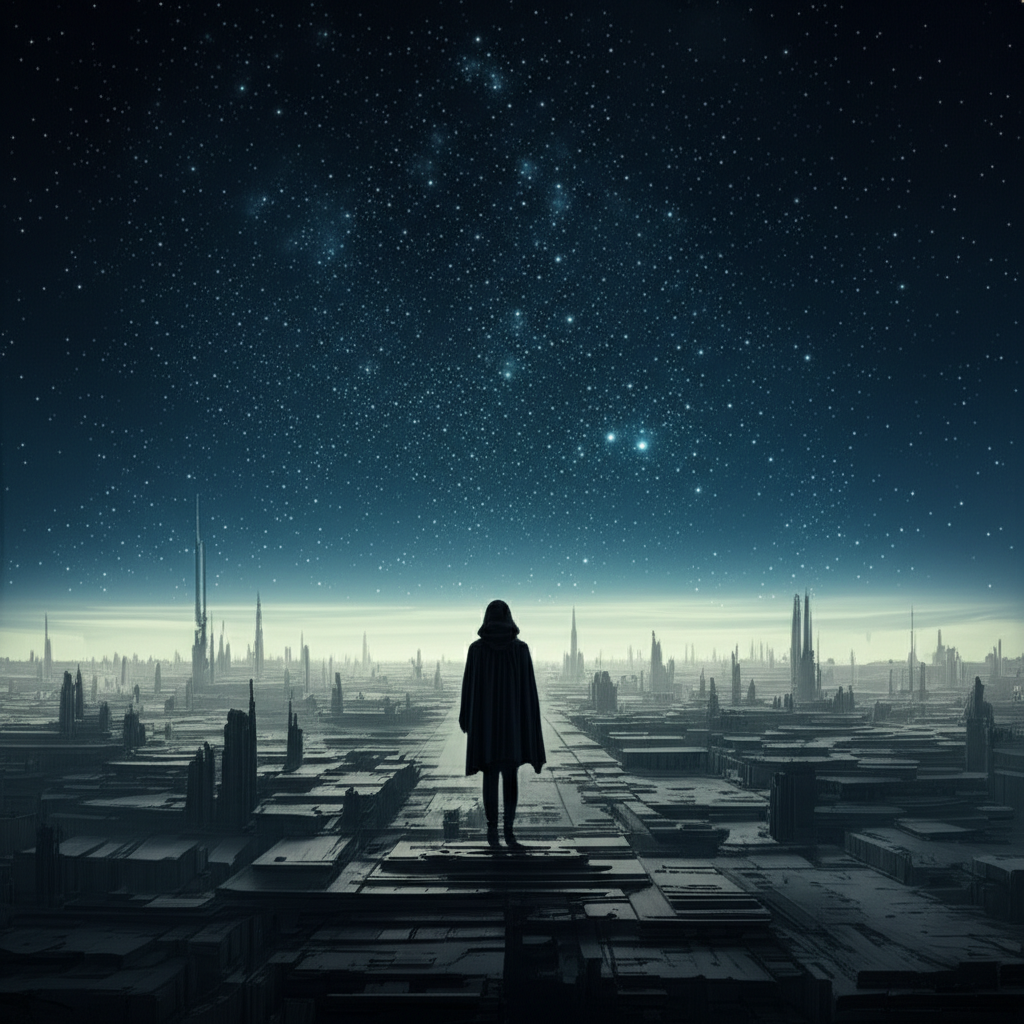
4. The Shifting Sands of Good and Evil
Moral frameworks are often developed within the context of human limitations and the consequences of actions within a finite lifespan. How would Good and Evil fare in an immortal society?
- Consequences and Punishment: How would justice be served for an immortal perpetrator? Eternal imprisonment? What does "punishment" even mean if one cannot die?
- Moral Stagnation vs. Evolution: Would moral principles remain fixed, or would they evolve over millennia, perhaps to the point where current concepts of Good and Evil become utterly alien or irrelevant?
- The Value of Life: If life is endless, does it lose its intrinsic value? If life is no longer precious due to its scarcity, would acts currently considered evil (like murder, if it were still possible for some) lose their moral weight?
Philosophical Echoes: Wisdom from the Ancients
The Great Books of the Western World, though written without the modern scientific prospect of immortality, offer profound insights into the human condition that remain relevant. Aristotle's emphasis on eudaimonia (flourishing) as an activity within a complete life, or Plato's exploration of the soul's journey and the pursuit of eternal truths, highlight that meaning isn't necessarily found in endless duration, but in the quality and purpose of existence. Stoic philosophers, like Marcus Aurelius, urged acceptance of our mortality, finding peace and virtue in living well now, recognizing that our time is limited. These ancient voices implicitly caution against the uncritical pursuit of endless life, suggesting that true fulfillment might lie in embracing, rather than defying, our natural limits.
The Human Condition, Redefined
Ultimately, the ethical dilemmas of immortality force us to confront what it means to be human. Our mortality is not merely a biological constraint; it is a fundamental aspect of our identity, shaping our relationships, our aspirations, our fears, and our capacity for love and sacrifice. To remove death from the equation is to fundamentally alter the human condition, perhaps beyond recognition. The dream of immortality may well be a nightmare in disguise, demanding that we engage in a deep and ongoing philosophical inquiry before we ever reach for the eternal.
YouTube:
- "The Philosophy of Immortality: Ethical Questions of Eternal Life"
- "What if we were immortal? - The psychology of eternal life"
📹 Related Video: What is Philosophy?
Video by: The School of Life
💡 Want different videos? Search YouTube for: "The Ethical Dilemmas of Immortality philosophy"