

The Unbearable Lightness of Being: Navigating the Ethical Labyrinth of Immortality
The human yearning for immortality is as old as consciousness itself, a persistent whisper across millennia promising an escape from the inevitable cycle of Life and Death. Yet, as we stand on the precipice of scientific advancements that hint at prolonging life indefinitely, the philosophical and ethical implications loom larger than ever. This isn't merely a question of living forever, but of whether we should, and at what cost. Immortality, far from being an unmitigated good, presents a tangle of profound ethical dilemmas that challenge our very definitions of Duty, justice, and the nature of Good and Evil.
The Siren Song of Eternal Life: A Double-Edged Desire
From Gilgamesh's desperate quest to the Christian promise of eternal life, the desire to transcend Life and Death has shaped cultures and philosophies. Historically, this longing was often framed within spiritual or mythical contexts, a reward for virtue or a divine gift. Today, however, the conversation shifts to the realm of scientific possibility, forcing us to confront the practical and moral consequences of achieving biological immortality. Is it a natural evolution, or a hubristic overreach that dismantles the very structures that give meaning to our finite existence?
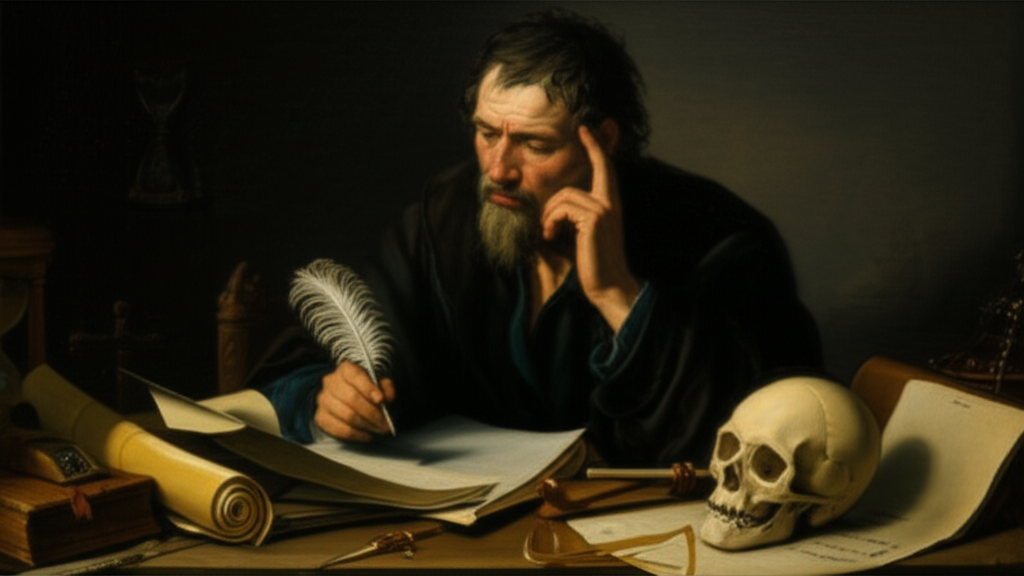
The Weight of Endless Existence: Personal and Societal Burdens
Consider the ramifications of a world populated by beings who never die. The ethical landscape transforms dramatically, presenting challenges that our current moral frameworks are ill-equipped to handle.
Individual Identity and Purpose in Perpetuity
- The Erosion of Self: What happens to personal identity over centuries, millennia? Would memories become a crushing burden, or would the self simply dissolve into an amorphous, unchanging entity? The Duty to grow, to learn, to contribute, often stems from the limited time we have. Would an immortal, facing infinite tomorrows, succumb to ennui or existential despair?
- Meaning and Motivation: If every experience can be repeated infinitely, does novelty cease? Does the urgency to act, to achieve, to love, which is so deeply tied to our mortality, simply vanish? Aristotle's concept of eudaimonia (flourishing) is often understood within the context of a complete life; what constitutes a "complete life" when it has no end?
Resource Scarcity and the Immortal Collective
The most immediate and stark ethical dilemma is resource allocation. A finite planet cannot sustain an infinite population.
| Ethical Dilemma | Description |
| Longevity and Inequality: | Access to life-extending technologies is unlikely to be universal. This creates a new social divide: the 'immortal wealthy' and the 'mortal poor'. How do we justify such an extreme disparity in a world claiming to value equality? The ancient Greek concept of arete (excellence) might suggest those who earn it deserve it, but does this extend to the fundamental right to unending Life and Death?
📹 Related Video: What is Philosophy?
Video by: The School of Life
💡 Want different videos? Search YouTube for: "The Ethical Dilemmas of Immortality philosophy"