

The Unsettling Gift: Navigating the Ethical Labyrinth of Immortality
The enduring human dream of transcending Life and Death often paints Immortality as the ultimate boon, a liberation from the finite. Yet, a deeper philosophical gaze reveals a landscape fraught with profound ethical quandaries. This article delves into the complex moral terrain that would emerge should eternal life become a reality, exploring how our understanding of Duty, Good and Evil, and the very fabric of existence would be irrevocably altered. Far from a simple blessing, immortality presents an existential dilemma, forcing us to confront the true value of finitude and the potential burdens of an endless journey.
The Paradox of Endless Existence
For millennia, philosophers, poets, and prophets have grappled with the concept of eternal life. From the mythical ambrosia of the gods to modern scientific aspirations, the yearning to escape the inevitable cessation of Life and Death is deeply ingrained. However, the ethical implications of such a transcendence are rarely fully explored beyond the initial allure. What would it truly mean to live forever? Would the ceaseless march of time diminish the very things that give our present, finite lives meaning?
- The Erosion of Urgency: A fundamental aspect of human motivation stems from the limited span of life. Projects are undertaken, relationships forged, and knowledge pursued with the implicit understanding that time is a precious, finite resource. In an immortal existence, would the drive for accomplishment and growth wane?
- The Weight of Memory: An immortal being would accumulate an unimaginable volume of experiences and memories. How would the psyche cope with such an endless archive? Would the past eventually become an unbearable burden, or would the capacity for new experience diminish under its weight?
- The Stagnation of Self: Personal growth and transformation are often catalyzed by critical junctures, losses, and the awareness of impending end. Without the crucible of mortality, would the self become ossified, incapable of genuine evolution?
Redefining Duty in Perpetuity
Our understanding of Duty is intrinsically linked to our temporal existence. Obligations to family, community, and future generations are often framed within the context of a legacy we leave behind, a continuation beyond our own Life and Death. Immortality would shatter these conventional frameworks, necessitating a radical re-evaluation of our responsibilities.
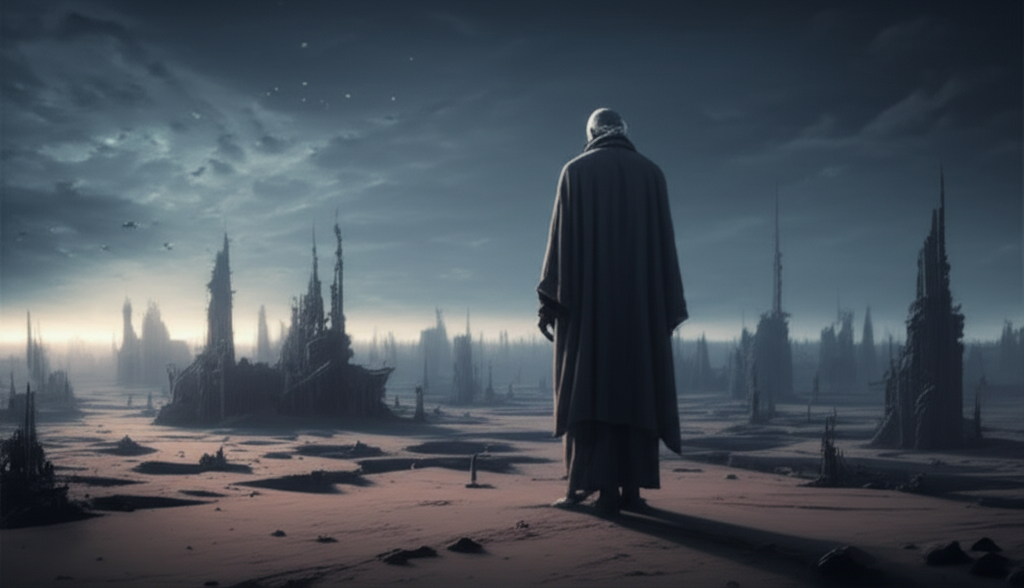
Consider the following shifts in Duty:
| Traditional Duty (Finite Life) | Immortal Duty (Potential Implications) |
|---|---|
| Procreation: Ensuring continuation of species | Population Control: Preventing unsustainable growth |
| Legacy Building: Contributions for future generations | Eternal Stewardship: Managing resources for infinite time |
| Social Contracts: Agreed-upon terms for a lifetime | Dynamic Governance: Adapting rules across aeons, potentially leading to eternal tyrannies or endless revolutions |
| Self-Improvement: Growth within a limited timeframe | Infinite Self-Actualization: The pressure to perpetually evolve, or the risk of profound ennui |
The very concept of justice would be challenged. How would one atone for an eternal crime? What would be the appropriate punishment for an immortal transgressor? The traditional systems of law and ethics, built upon the premise of finite Life and Death, would crumble under the weight of endless consequence.
The Shifting Landscape of Good and Evil
The definitions of Good and Evil are often shaped by their impact on human well-being within a finite lifespan. Acts deemed good typically foster flourishing, while evil causes suffering or limits potential. In an immortal society, these ethical parameters would undergo a profound transformation.
- Cumulative
Good and Evil: Every action, every decision, would carry an eternal weight. A single act of cruelty or benevolence would reverberate through an unending future. This could lead to an extreme paralysis of action, fearing eternal repercussions, or conversely, a callous indifference born of the endlessness of time. - The Problem of Boredom and Ennui: Many philosophers, from Plato to Nietzsche, have hinted at the potential for eternal boredom. If all experiences eventually repeat, all knowledge is acquired, and all passions fade, what would constitute a
Goodlife? Is eternal suffering the only alternative to eternal apathy? - The Value of Suffering: Suffering, in a finite existence, often serves as a catalyst for growth, empathy, and change. If death is removed from the equation, would the meaning of pain and loss be irrevocably altered? Would an immortal society seek to eradicate all suffering, even at the cost of profound experience?
- The Tyranny of the Old: If death no longer clears the way for new generations, power structures could become eternally entrenched. The wisdom of the ancients could become an insurmountable barrier to innovation, leading to a stagnant society where
Goodis defined by the status quo.
The Great Books of the Western World consistently remind us that human flourishing is deeply intertwined with our temporal nature. From Aristotle's pursuit of eudaimonia (often translated as human flourishing or happiness) within a complete life, to the Stoic acceptance of fate and the inevitability of death, the finite nature of existence provides a crucial context for our virtues and vices. Immortality would force us to invent entirely new ethical frameworks, without the guiding star of our shared mortality.
Conclusion: The Unbearable Lightness of Being Eternal
The ethical dilemmas of Immortality are not merely theoretical exercises; they are profound explorations into the very essence of what it means to be human. While the allure of escaping Life and Death is powerful, a sober analysis reveals that such a gift might be an unbearable burden. Our current understanding of Duty, Good and Evil, purpose, and meaning is deeply rooted in our finitude. To shed mortality is not merely to extend life, but to fundamentally alter the conditions of existence, potentially stripping away the very elements that make life meaningful and ethical. Perhaps the greatest wisdom lies not in striving for endless life, but in understanding and appreciating the profound value of the life we have, with all its beautiful, tragic, and finite dimensions.
**## 📹 Related Video: KANT ON: What is Enlightenment?
Video by: The School of Life
💡 Want different videos? Search YouTube for: ""Philosophical Problems of Immortality" or "Ethical Implications of Eternal Life""**