

The Ethical Dilemmas of Immortality: A Daniel Sanderson Perspective
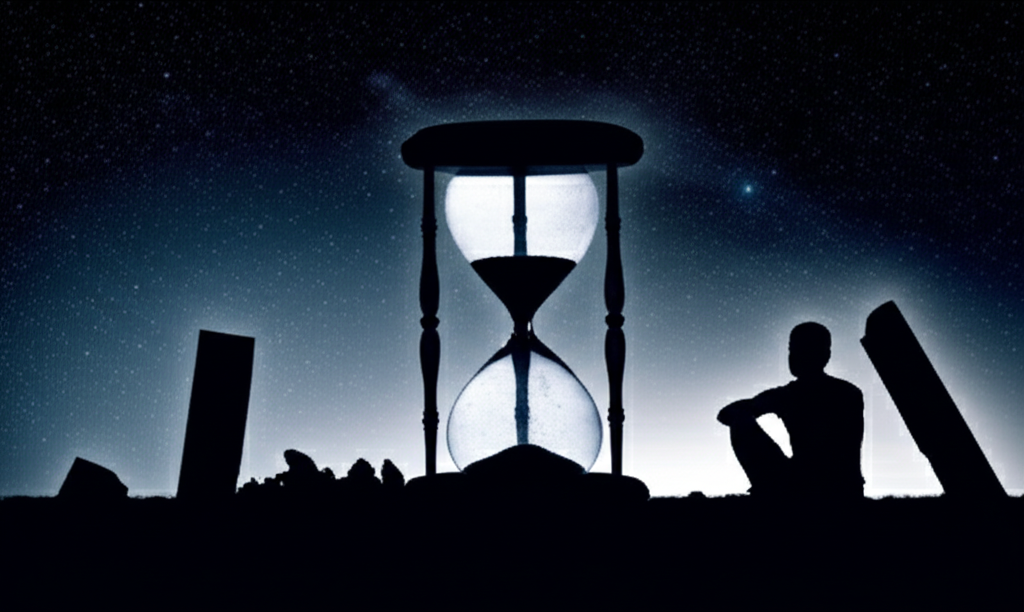
The dream of eternal life, a cornerstone of human mythology and religious aspiration, has long captivated the imagination. Yet, as scientific advancements nudge us closer to the possibility of extending human lifespan indefinitely, the philosophical and ethical ramifications of immortality shift from abstract thought experiments to urgent, practical considerations. This article delves into the profound ethical dilemmas that would inevitably arise from transcending death, exploring how such a radical change would redefine our understanding of life and death, reshape our duties, and challenge our very notions of good and evil. Far from a utopian fantasy, an immortal existence presents a complex web of personal and societal crises that demand rigorous philosophical scrutiny.
The Allure and the Abyss: Redefining Life and Death
The fundamental human condition is defined by finitude. Our aspirations, our loves, our fears, and our sense of purpose are intrinsically linked to the knowledge that our time is limited. To remove death from the equation is not merely to extend life; it is to fundamentally alter its nature. The Great Books of the Western World are replete with explorations of this dynamic, from Plato's search for the immortal soul in the Phaedo to the existential dread articulated by figures contemplating their mortality. If life becomes endless, does it lose its preciousness? Does the urgency to live fully, to achieve, to love, dissipate without the looming shadow of an end? This is the first, and perhaps most profound, ethical quandary: what becomes of meaning when the ultimate boundary is erased?
Personal Existential Quagmires of Endless Being
Beyond the initial euphoria, an immortal individual would face a cascade of personal ethical and psychological challenges. The very fabric of self, forged in the crucible of time and change, would be stretched to breaking point.
The Individual's Infinite Burden
- Loss of Meaning and Purpose: Does the absence of death diminish the urgency and preciousness of life? If there is always tomorrow, what compels us to act today? The pursuit of eudaimonia, as described by Aristotle in Nicomachean Ethics, relies on a finite life to achieve a flourishing state. What is flourishing over an infinite duration?
- Identity Erosion: How does one maintain a coherent self over millennia, as memories accumulate, experiences multiply, and personal beliefs inevitably evolve? The concept of a stable "self" might become a philosophical relic, replaced by an ever-shifting, fragmented consciousness.
- Eternal Boredom and Satiation: The potential for infinite repetition, a spiritual ennui that no new experience can assuage. Nietzsche's concept of the "eternal recurrence" in Thus Spoke Zarathustra challenges us to affirm life even if it were to repeat endlessly. For an immortal, this is not a hypothetical but a potential reality, raising questions about the sustainability of human joy and curiosity.
- Relational Isolation and Grief: The pain of outliving loved ones, watching generations pass into oblivion, would be an unbearable burden. Alternatively, the ethical imperative to grant immortality to everyone one cares for, regardless of their choice, raises its own set of coercive dilemmas.
Societal Strain: The Good, The Evil, and The Immortal Collective
The challenges scale dramatically when considering an entire society of immortals. Our current social, economic, and political structures are built upon the premise of finite life and generational turnover. Immortality would shatter these foundations, forcing a radical re-evaluation of our collective duties and our understanding of good and evil.
The Collective's Infinite Dilemmas
| Dilemma Category | Description | Philosophical Implications Resource Depletion: An immortal population would place unsustainable demands on planetary resources. This raises questions of distributive justice: who gets to be immortal, and how are those choices made?
- Inequality and Access: Who gains immortality? The ultimate stratification of society based on access to life-extending technologies. The rich might live forever while the poor remain mortal, exacerbating existing inequalities into an eternal caste system. This challenges fundamental concepts of fairness and universal human rights.
- Stagnation vs. Progress: Would an immortal society resist change, or would it endlessly adapt? The influx of new ideas and the challenging of old norms often come from younger generations. If generations no longer "pass on," what happens to innovation and the willingness to embrace societal evolution?
- Justice and Duty: How are crimes punished if the perpetrator cannot die? What becomes of social duty when individuals have infinite time to avoid consequences, or to perpetuate old grievances? The very concept of justice, built around finite lives and proportionate consequences, would be severely tested.
- The Nature of Good and Evil: Do our moral frameworks, built around finite lives and consequences, still hold? If one can live forever to atone, does the severity of a transgression diminish? The Augustinian struggle with good and evil within a mortal framework takes on entirely new dimensions.
Echoes from the Great Books: Philosophical Reflections on the Eternal
The Western philosophical tradition, as chronicled in the Great Books, offers rich ground for contemplating these dilemmas, even if the ancients didn't foresee biological immortality.
- Plato's Forms and the Immortal Soul: Plato, in dialogues like the Phaedo and Republic, posited an immortal soul and a realm of eternal Forms. His concern was for the soul's purity and its journey towards true knowledge. For Plato, a truly good life was one that prepared the soul for its eternal state. But what if the body, too, were immortal? Would the pursuit of the Forms be invigorated or rendered moot by an endless earthly existence?
- Aristotle's Eudaimonia: A Finite Pursuit? Aristotle's Nicomachean Ethics defines eudaimonia (human flourishing) as the ultimate good, achievable through virtuous action over a complete life. This flourishing is intimately tied to the human telos – our natural end. If that end, death, is removed, does the telos change? Does the pursuit of virtue become an endless, perhaps wearisome, task without a natural culmination?
- Nietzsche and the Affirmation of Mortal Life: Friedrich Nietzsche, particularly in Thus Spoke Zarathustra, grappled with the idea of eternal recurrence and championed the Übermensch who affirms life in all its tragic beauty, including its finitude. For Nietzsche, the preciousness of life is precisely because it ends. To remove death would, for him, be to strip life of its most profound challenge and its greatest opportunity for self-overcoming. The affirmation of life and death in their totality is key to true strength.
Conclusion: A Mortal Embrace for a Meaningful Existence?
The ethical dilemmas of immortality force us to confront what it truly means to be human. They challenge our deepest assumptions about purpose, identity, justice, and the very nature of good and evil. While the allure of transcending death is powerful, a sober philosophical assessment reveals a landscape fraught with profound ethical quagmires, both personal and societal. Perhaps the greatest wisdom gleaned from centuries of philosophical inquiry, from the Great Books to contemporary thought, is that the finite nature of our life is not a curse, but a condition that imbues our choices, our loves, and our struggles with their deepest significance. Embracing our mortality might just be the most ethical path to a truly meaningful existence.
YouTube Video Suggestions:
-
📹 Related Video: What is Philosophy?
Video by: The School of Life
💡 Want different videos? Search YouTube for: ""The Problem of Immortality Philosophy""
2. ## 📹 Related Video: KANT ON: What is Enlightenment?
Video by: The School of Life
💡 Want different videos? Search YouTube for: ""Ethical Implications of Radical Life Extension""