

The Shackles of Injustice: Unpacking the Ethical Dilemma of Slavery
Slavery, in its myriad forms throughout history, represents one of humanity's most profound and enduring ethical dilemmas. At its core, it is the systematic denial of an individual's fundamental liberty and agency, reducing a Man to property and thereby stripping away his inherent dignity. This practice, often justified by economic necessity, perceived racial inferiority, or conquest, stands in stark opposition to any robust conception of justice. This article delves into the philosophical arguments that expose slavery not merely as a historical institution, but as a perpetual ethical breach, drawing insights from the enduring wisdom contained within the Great Books of the Western World.
The Historical Shadow: Slavery in the Ancient World
From the earliest civilizations, slavery was a pervasive, albeit often unquestioned, feature of society. The Great Books offer a window into how ancient thinkers grappled with, or often rationalized, this institution.
- Aristotle's Politics: Perhaps one of the most contentious philosophical discussions of slavery comes from Aristotle, who posited the concept of "natural slaves." He argued that some individuals, by their very nature, lacked the capacity for self-governance and were thus better off serving a master. While this view is now universally condemned, it highlights the intellectual gymnastics employed to justify such an egregious practice. Aristotle believed that a Man could be a "tool" for another, blurring the lines between human being and inanimate object.
- Plato's Republic: While Plato did not explicitly advocate for slavery in the same way as Aristotle, his ideal society still implicitly relied on a hierarchical structure where certain roles were fixed, often by birth or perceived ability, which could be interpreted as limiting individual liberty.
Despite these justifications, even in ancient times, voices emerged questioning the morality of absolute servitude, particularly among Stoic philosophers who emphasized inner freedom regardless of external circumstances.
Justice Denied: The Fundamental Ethical Breach
The ethical dilemma of slavery primarily revolves around its direct assault on the principle of justice. True justice demands that every individual be treated as an end in themselves, possessing inherent worth, rather than as a means to another's end.
- Violation of Natural Rights: Enlightenment thinkers, drawing from earlier philosophical traditions, articulated the concept of natural rights – rights inherent to every Man by virtue of his humanity. These include the rights to life, liberty, and property. Slavery unequivocally violates all three, confiscating not just property but the very personhood of an individual.
- Inequality and Oppression: The institution of slavery is built upon a foundation of profound inequality, asserting the superiority of one group over another. This is a systemic form of oppression that denies the enslaved individual the capacity for moral agency, self-determination, and the pursuit of their own good.
Table: Core Principles Violated by Slavery
| Principle | Description | How Slavery Violates It |
|---|---|---|
| Liberty | The freedom to act, think, and choose without undue external restraint. | Enslaved individuals are denied freedom of movement, choice, thought, and self-ownership. |
| Justice | Fairness in the distribution of rights, opportunities, and burdens. | Creates an inherently unjust system where one group benefits from the forced labor and suffering of another. |
| Dignity of Man | The inherent worth and respect due to every human being. | Reduces a Man to chattel, a tool, or a commodity, stripping away personhood and inherent value. |
| Autonomy | The capacity to make informed, uncoerced decisions about one's own life. | Slaves have no autonomy; their lives, bodies, and labor are controlled entirely by another. |
The Assault on Liberty: A Man's Birthright
Perhaps the most visceral aspect of the ethical dilemma of slavery is its direct contradiction of liberty. For a Man to be truly human, he must possess the freedom to direct his own life, to make choices, and to exercise his will.
- Chains of the Body and Mind: Slavery imposes both physical and psychological chains. The enslaved individual's body is not his own, but neither is his will. The constant threat of violence, the denial of education, and the systematic destruction of family ties are all mechanisms designed to break the spirit and extinguish the desire for freedom.
- The Inalienable Right: Philosophers like John Locke, whose ideas profoundly influenced the American and French Revolutions, argued that liberty is an inalienable right, bestowed by nature or God, and cannot be justly surrendered or taken away. To deny a Man his liberty is to deny his very humanity.
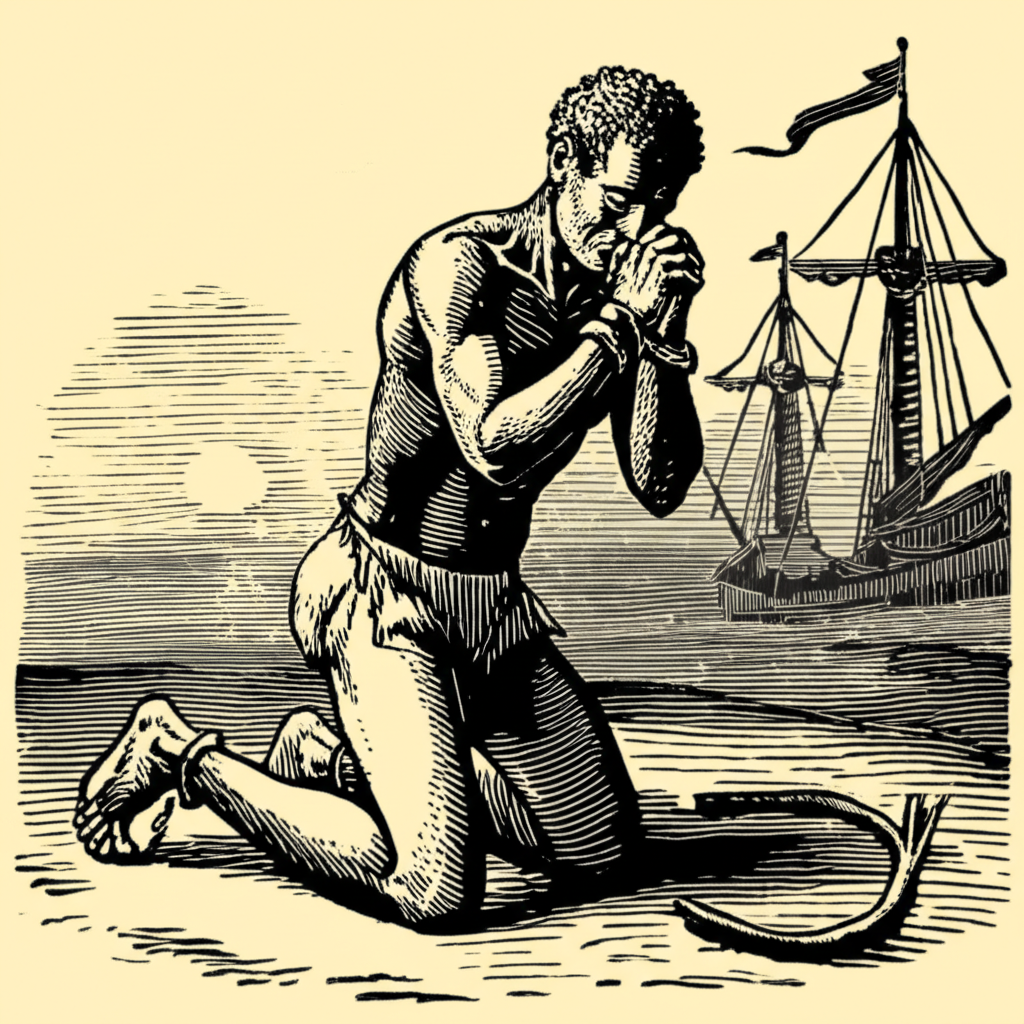
The Nature of Man: Beyond Property and Tool
Central to the ethical argument against slavery is a profound understanding of the Nature of Man. Is a Man merely a sophisticated animal, a resource to be exploited, or does he possess a unique essence that demands respect and freedom?
- Rationality and Moral Agency: Unlike tools or animals, humans possess rationality, the capacity for complex thought, moral reasoning, and self-awareness. To treat a rational being as mere property is to fundamentally deny this core aspect of their being. A Man is capable of understanding right and wrong, of forming intentions, and of pursuing a good life—faculties denied under slavery.
- The Pursuit of Eudaimonia: Ancient Greek philosophy, particularly Aristotle, spoke of eudaimonia – human flourishing or living well. This concept is impossible under slavery, where an individual's life is directed by another, and their potential for self-realization is brutally suppressed. The enslaved Man is prevented from pursuing virtue, knowledge, or happiness on his own terms.
- Universal Human Dignity: Modern ethical thought, influenced by Kant and others, emphasizes universal human dignity. This dignity is not earned but inherent, belonging to every Man simply because he is human. Slavery is a direct affront to this dignity, treating individuals as disposable and interchangeable, rather than as unique and valuable persons.
Conclusion: An Enduring Ethical Imperative
The ethical dilemma of slavery is not confined to the annals of history; its lessons resonate deeply in contemporary discussions about human rights, exploitation, and social justice. From the philosophical justifications of ancient Greece to the abolitionist movements inspired by Enlightenment ideals of liberty and the inherent dignity of Man, the trajectory of Western thought overwhelmingly condemns slavery as an ethically indefensible institution. It is a practice that fundamentally denies justice, obliterates liberty, and demeans the very Nature of Man. Understanding this profound ethical breach remains crucial for upholding human dignity and striving for a truly just world.
YouTube Video Suggestions:
- YouTube: "Philosophy of Slavery Ancient Greece Enlightenment"
- YouTube: "Great Books Western World Human Rights Liberty"
📹 Related Video: What is Philosophy?
Video by: The School of Life
💡 Want different videos? Search YouTube for: "The Ethical Dilemma of Slavery philosophy"