

The ethical dilemma of slavery stands as one of humanity's most profound and enduring moral challenges. At its core, it represents the fundamental denial of a person's inherent liberty, justice, and the very essence of what it means to be a man. This article explores the philosophical arguments that both historically attempted to justify this institution and, more importantly, those that ultimately condemned it, highlighting the timeless struggle to reconcile human dignity with practices that systematically strip it away.
The Enduring Stain on Human Conscience: A Philosophical Inquiry
Throughout history, slavery has manifested in myriad forms across diverse civilizations, from the ancient world to more recent centuries. While its prevalence was widespread, its ethical implications have always simmered beneath the surface of societal norms, occasionally erupting into profound philosophical debate and, eventually, abolitionist movements. The dilemma lies in how societies could simultaneously espouse ideals of order, virtue, and sometimes even freedom, while maintaining an institution that fundamentally contradicted these very tenets for a segment of the population.
I. The Philosophical Roots of Injustice: Denying the Essence of Man
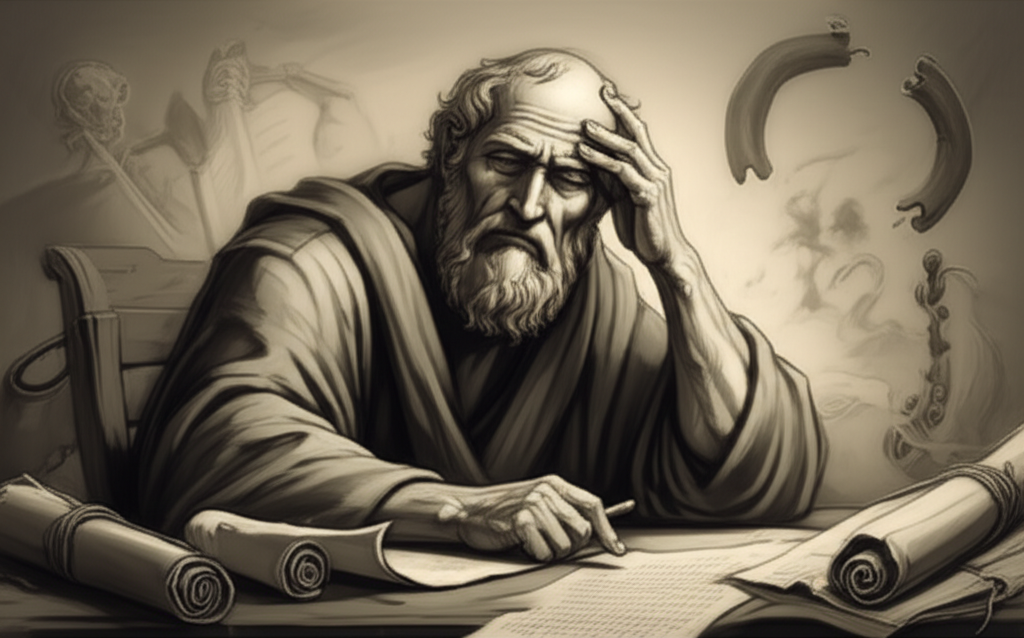
Early philosophical thought, as documented in the Great Books of the Western World, sometimes grappled with, and even attempted to rationalize, forms of slavery. Aristotle, for instance, in his Politics, posited the controversial notion of the "natural slave" – individuals he believed were naturally suited to be ruled and lacked the capacity for self-governance. This perspective, though widely influential in its time, represents a significant ethical misstep, fundamentally misconstruing the nature of man.
- Aristotle's "Natural Slave": This concept suggested that some individuals were inherently less rational and thus destined for servitude, a claim that modern ethics vehemently rejects.
- The Flaw in the Argument: The crucial flaw lies in the arbitrary and often brutal imposition of this status, rather than any inherent, verifiable difference in human capacity or dignity. It denies the universal potential for reason and moral agency that defines man.
The inherent dignity of every man, regardless of origin, intellect, or social standing, is a cornerstone of later ethical thought. To deny this dignity is to deny the very foundation upon which justice and liberty are built.
II. Liberty's Chains: The Contradiction of Freedom and Servitude
The concept of liberty is inextricably linked to the ethical dilemma of slavery. To be enslaved is to be utterly deprived of one's freedom – freedom of movement, thought, choice, and self-determination. Philosophers like John Locke, whose ideas on natural rights deeply influenced later thought, argued for inherent rights to life, liberty, and property, suggesting that government's legitimacy stemmed from its protection of these rights. While Locke's own views on slavery were complex and problematic, his foundational arguments for individual autonomy laid crucial groundwork for its eventual philosophical condemnation.
The institution of slavery represents:
- Absolute Ownership: The master's claim to own another man as property.
- Denial of Agency: The enslaved individual is stripped of all personal and moral agency.
- Forced Labor: Work performed under coercion, without compensation or consent.
- Lack of Legal Standing: Often, enslaved people had no legal rights or protections, existing outside the framework of justice.
This complete subjugation is the ultimate antithesis of liberty, transforming a human being into a mere instrument, an object rather than a subject of their own life.
III. Justice Undermined: The Moral Imperative Against Bondage
The ethical dilemma of slavery is perhaps most starkly revealed through the lens of justice. Slavery violates every conceivable principle of justice:
| Principle of Justice | How Slavery Violates It |
|---|---|
| Distributive Justice | Unequal distribution of burdens and benefits based on arbitrary power, not merit or need. |
| Retributive Justice | Imposes punishment (slavery) without crime or due process. |
| Corrective Justice | No mechanism for redress or restoration for wrongs committed against the enslaved. |
| Social Justice | Creates and perpetuates deep, systemic inequalities and oppression. |
Later philosophers, building on traditions found in the Great Books, articulated a universal moral law that transcends specific cultural practices. Immanuel Kant, for example, with his categorical imperative, insisted that humanity must always be treated as an end in itself, never merely as a means to an end. Slavery, by its very definition, treats human beings as instruments for the master's gain, a clear violation of this fundamental moral principle. The notion that any man could justly claim ownership over another is a profound affront to universal justice.
IV. The Long Arc Towards Emancipation: A Philosophical Journey
The journey from the philosophical justification of slavery to its universal condemnation has been a long and arduous one, marked by intellectual evolution and moral courage. Thinkers of the Enlightenment, drawing upon earlier concepts of natural law and individual rights, began to systematically dismantle the intellectual scaffolding that supported slavery. The inherent contradictions between the ideals of freedom and the reality of human bondage became increasingly undeniable.
- Enlightenment Ideals: Emphasis on reason, individual rights, and universal human dignity challenged traditional hierarchies.
- Abolitionist Movements: Fueled by moral and philosophical arguments, these movements gained momentum, advocating for the emancipation of all enslaved people.
- Universal Declaration of Human Rights: A modern culmination of this philosophical journey, explicitly stating that no one shall be held in slavery or servitude.
This trajectory underscores the power of philosophical inquiry to reshape societal norms and advance the cause of justice and liberty for every man.
Conclusion: Vigilance in the Face of Enduring Injustice
The ethical dilemma of slavery is not merely a historical footnote; it serves as a perpetual reminder of humanity's capacity for both profound cruelty and profound compassion. The philosophical arguments against slavery—rooted in the intrinsic dignity of every man, the inviolable right to liberty, and the universal demand for justice—remain as vital today as they ever were. While chattel slavery has been largely abolished, modern forms of human trafficking and exploitation continue to pose a similar ethical challenge, requiring constant vigilance and a renewed commitment to these timeless principles. Our philosophical journey demands that we remain steadfast in our defense of human freedom and dignity everywhere.
📹 Related Video: ARISTOTLE ON: The Nicomachean Ethics
Video by: The School of Life
💡 Want different videos? Search YouTube for: ""Aristotle on Slavery: A Philosophical Critique""
📹 Related Video: What is Philosophy?
Video by: The School of Life
💡 Want different videos? Search YouTube for: ""John Locke's Philosophy of Natural Rights and Liberty Explained""