

The Ethical Dilemma of Immortality: A Journey Beyond Mortality's Veil
The pursuit of immortality, once confined to myth and theological doctrine, increasingly edges into the realm of scientific possibility. Yet, as we draw closer to extending human lifespan indefinitely, we confront not merely a biological challenge, but a profound ethical dilemma that forces us to reconsider the very essence of "Life and Death," the meaning of the "Soul," and the foundations of human society. This article delves into the philosophical complexities and potential societal upheavals that an immortal future would entail, drawing on the wisdom of the Great Books of the Western World to frame our understanding of this ultimate human aspiration.
The Allure and the Abyss: Why We Seek Forever
From Gilgamesh's desperate quest to the Christian promise of eternal life, humanity has perpetually yearned to transcend its finite existence. This desire is deeply ingrained, fueled by our fear of oblivion, our love for life, and our innate drive for knowledge and experience. Modern science, with advances in genetic engineering, regenerative medicine, and artificial intelligence, presents a tantalizing vision of a future where death is no longer inevitable, but a choice, or perhaps, an oversight.
However, the question is not simply if we can achieve immortality, but should we, and what would be the cost? The prospect opens a Pandora's Box of philosophical quandaries that challenge our most fundamental understandings of purpose, progress, and societal structure.
Philosophical Echoes: The Soul, Finitude, and the Good Life
The Great Books of the Western World offer a rich tapestry of thought on Life and Death, the nature of the Soul, and the pursuit of a meaningful existence.
- Plato, in Phaedo, presents Socrates' arguments for the immortality of the soul, seeing it as distinct from the perishable body, and the true seat of reason and virtue. For Plato, philosophy itself is a preparation for death, a liberation of the soul from bodily constraints. If the body were to become immortal, what then of the soul's journey? Would it be forever tethered to a physical form, or would its distinct nature still offer a different kind of eternity?
- Aristotle, in Nicomachean Ethics, focuses on eudaimonia, the flourishing life, which is lived within the bounds of human finitude. He emphasizes the importance of virtue and rational activity in a life that has a clear beginning and end. How would the virtues change in an immortal existence? Would courage, for example, retain its meaning if death were no longer a threat?
- St. Augustine and Thomas Aquinas integrate the concept of eternal life into a theological framework, where immortality is a divine gift, not a human achievement, and contingent on spiritual salvation. Their works explore the moral implications of actions in the context of an afterlife, raising questions about justice and retribution that would take on new dimensions in a perpetually living society.
These thinkers, among many others, remind us that our understanding of life's value is often inextricably linked to its impermanence. The urgency to live well, to love deeply, and to create lasting legacies stems, in part, from the knowledge of our limited time.
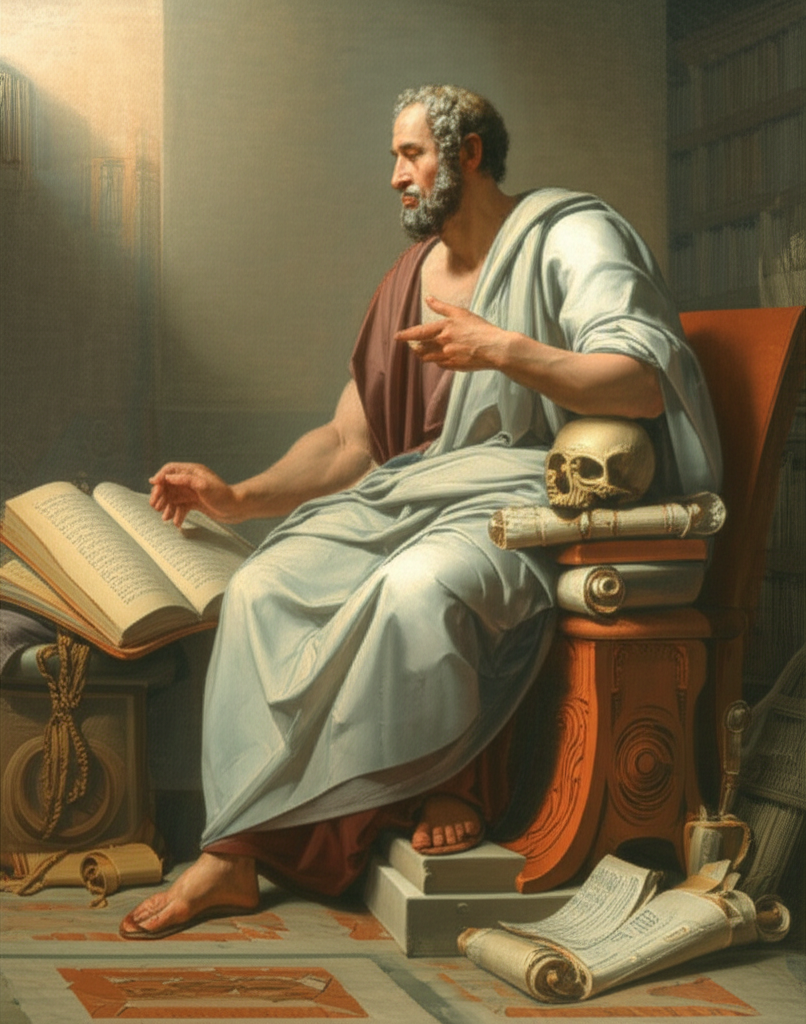
The Core Ethical Dilemmas of Immortality
The attainment of biological immortality would introduce unprecedented ethical challenges, impacting individuals, societies, and our very definition of humanity.
Here are some critical considerations:
-
Individual Existential Burden:
- Meaning and Purpose: If time is infinite, what provides motivation? Would the urgency to achieve, to learn, or to love diminish without the pressure of a deadline? Would the finite nature of human relationships be lost?
- Boredom and Stagnation: Could an immortal being truly avoid eternal ennui? Would endless experiences eventually lose their novelty and impact? Would the drive for personal growth cease when there's no perceived end?
- Identity and Memory: How would an individual's identity evolve over millennia? Could one retain a coherent sense of self given an infinite accumulation of memories and experiences?
-
Societal Cataclysms:
- Overpopulation and Resource Depletion: An ever-growing, non-dying population would quickly exhaust Earth's resources, leading to unprecedented crises. Who decides who gets to live forever, and who must continue to face death?
- Social Stratification: Would immortality become a luxury accessible only to the wealthy and powerful, creating an unbridgeable chasm between the "deathless" elite and the mortal masses? This could lead to new forms of oppression and inequality.
- Political and Cultural Stagnation: Without the natural cycle of generations, would societies become rigid and resistant to change? Would new ideas and innovations flourish, or would the old guard perpetually maintain control, hindering progress?
- Justice and Punishment: What would "life imprisonment" mean for an immortal? How would justice be served for crimes committed by individuals who cannot die?
-
Redefining "Life and Death":
- If death is abolished, what then defines "life"? Is it merely biological function, or something deeper?
- The natural cycle of Life and Death is integral to Earth's ecosystems. What would be the ecological impact of a species that no longer dies?
The Soul's Enduring Question
Beyond the biological, the ethical dilemma of immortality circles back to the concept of the Soul. Is our essence purely material, or is there an immaterial aspect that defines our humanity? If science grants us eternal bodies, does it also grant us eternal souls, or merely postpone the soul's inevitable journey? This question, explored by philosophers from Plato to Descartes, remains profoundly relevant. The pursuit of endless physical existence might inadvertently diminish the very spiritual or philosophical dimensions that give our finite lives profound meaning.
Navigating the Immortal Horizon
The dream of immortality is a powerful one, reflecting our deepest desires and fears. However, as we stand on the precipice of such a monumental achievement, it is imperative that we engage in rigorous ethical and philosophical discourse. The questions posed by the Great Books — about the good life, justice, and the nature of the Soul — are more urgent than ever. We must not merely pursue endless existence, but strive to understand what makes any existence, finite or infinite, truly worth living.
-
📹 Related Video: What is Philosophy?
Video by: The School of Life
💡 Want different videos? Search YouTube for: "The Philosophy of Immortality: Meaning, Morality, and the Soul"
-
📹 Related Video: ARISTOTLE ON: The Nicomachean Ethics
Video by: The School of Life
💡 Want different videos? Search YouTube for: "Ethical Dilemmas of Extending Human Lifespan Indefinitely"