

The Ethical Dilemma of Immortality: A Planksip Reflection
Summary: The human yearning for immortality, a timeless aspiration, presents a profound ethical quandary. While offering liberation from the inevitability of Life and Death, eternal existence raises complex questions concerning overpopulation, social justice, personal identity, and the very meaning of life itself. This article explores the multifaceted challenges of Immortality, urging us to consider whether an endless life truly serves the human Soul or if finitude is an essential, perhaps even beautiful, aspect of our existence.
The Enduring Allure of Endless Days
Since time immemorial, humanity has been captivated by the notion of Immortality. From ancient myths of gods and goddesses dwelling eternally to modern scientific quests for radical life extension, the desire to transcend the boundaries of Life and Death is deeply ingrained in our collective psyche. We dream of endless possibilities, of mastering knowledge, witnessing millennia unfold, and escaping the grief of farewells. But what if this dream, once realized, presented not a paradise, but a labyrinth of unforeseen ethical dilemmas? What if the very gift of eternal life became its most profound curse?
The Weight of Forever: Unpacking the Ethical Quandaries
The immediate appeal of living forever often overshadows the intricate web of ethical challenges it would undoubtedly weave. As we delve into the philosophical implications, the glittering promise of Immortality begins to reveal its darker, more complex facets.
-
Overpopulation and Resource Scarcity:
The most tangible and immediate concern is the Earth's capacity. If individuals no longer die, how would the planet sustain an ever-growing population? This isn't merely a logistical problem; it's a fundamental ethical one concerning resource allocation, environmental impact, and the potential for unending conflict over dwindling necessities. Would eternal life be reserved for a privileged few, creating an ultimate form of social stratification? -
Stagnation vs. Evolution: The Death of Progress?
Generational change is a powerful engine of progress. New ideas, perspectives, and innovations often arise from the fresh eyes of the young, unburdened by the traditions and failures of the past. If the same individuals were to populate society for centuries, would intellectual and cultural evolution grind to a halt? Would entrenched power structures become immutable? The dynamic interplay of Life and Death fosters renewal; without it, society might risk an unprecedented form of intellectual and creative stagnation. -
The Meaning of Life and the Redefinition of the Soul:
Perhaps the most profound philosophical challenge lies in how Immortality would redefine our understanding of purpose. Much of human striving—the urgency to create, to love deeply, to achieve greatness—is underscored by the finite nature of our existence. If there is no end, does the journey lose its significance?- How would personal identity endure through millennia? Would the Soul, as understood in various philosophical and religious traditions, remain coherent across such vast stretches of time, or would it fragment under the weight of endless experience and memory?
- The "Great Books" often explore the telos (purpose or end) of human life. What is the telos of an immortal being? Is it simply to be?
-
Social Inequality and the Immortal Divide:
Given the likely high cost and complexity of achieving true biological Immortality, it is highly probable that access would initially (and perhaps perpetually) be limited. This would create an unprecedented divide between the "mortals" and the "immortals," exacerbating existing social inequalities to an unimaginable degree. The ethical implications of such a two-tiered society—one condemned to oblivion, the other granted eternal life—are staggering and fraught with potential for conflict and injustice. -
The Burden of Endless Memory and Loss:
Imagine living for thousands of years, accumulating an unmanageable weight of memories, witnessing countless loved ones and entire civilizations fade into history while you remain. The psychological toll of such perpetual loss and the sheer volume of accumulated experience could become an unbearable burden. Would the immortal eventually succumb to an eternal ennui, a profound weariness of existence?
Finitude as a Catalyst for Meaning
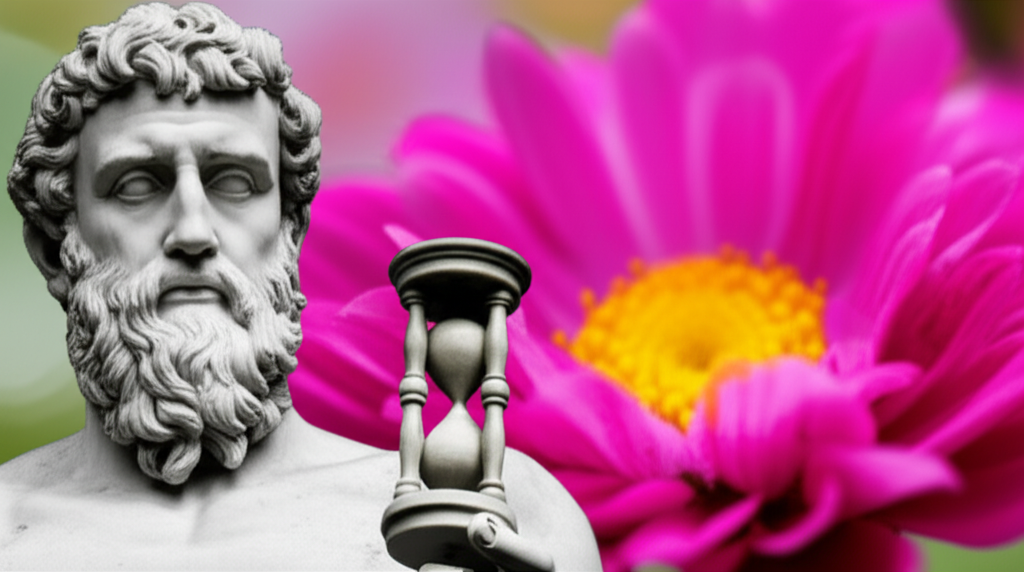
Many philosophers, from ancient Stoics to existentialists, have argued that the very finitude of Life and Death is what imbues our existence with meaning and urgency. The preciousness of time, the inevitability of an end, compels us to live more fully, to cherish moments, to strive for legacies, and to contribute to something larger than ourselves.
Echoes from the Great Books: The Soul's Journey
The "Great Books of the Western World" offer rich ground for contemplating these issues. Plato, in Phaedo, discusses the immortality of the Soul not as an endless physical life, but as an enduring spiritual essence, separate from the body, and its journey towards true knowledge. Aristotle, while focusing on the good life (eudaimonia) within a mortal span, emphasizes the development of virtue and reason, suggesting that the quality of life, not its duration, is paramount. These ancient inquiries, though not directly addressing biological Immortality as we conceive it today, provide a foundational framework for understanding the human condition, the nature of the Soul, and the pursuit of a meaningful existence, irrespective of its length.
Reconciling Desire with Ethical Reality
The pursuit of Immortality is, at its core, a profound expression of our will to live. Yet, as we stand at the precipice of potentially achieving it, the ethical dilemmas demand our rigorous attention. Is our ultimate goal simply endless existence, or is it a life lived with purpose, depth, and connection, a life where the preciousness of each moment is heightened by its impermanence? Perhaps the true lesson of contemplating Immortality is not to seek to escape Life and Death, but to better understand and appreciate the profound gift of our finite journey.
Conclusion: The Unending Ethical Debate
The ethical dilemma of Immortality is not a futuristic fantasy but a present philosophical challenge. As science advances, these questions move from the realm of speculation to urgent consideration. Understanding the complex interplay of human desire, societal impact, and the very essence of the Soul in the context of eternal life is crucial for navigating the future responsibly. The debate over Immortality forces us to confront not just how long we might live, but how we ought to live, and what truly makes a life, however long, worthwhile.
YouTube Video Suggestions:
-
📹 Related Video: ARISTOTLE ON: The Nicomachean Ethics
Video by: The School of Life
💡 Want different videos? Search YouTube for: "Philosophical debate on immortality ethics"
-
📹 Related Video: What is Philosophy?
Video by: The School of Life
💡 Want different videos? Search YouTube for: "Meaning of life without death philosophy"