

The Ethical Dilemma of Immortality: A Graceful Unraveling of Forever
The dream of eternal life, a constant whisper throughout human history, confronts us today not merely as a mythical aspiration but as a burgeoning ethical dilemma. While technological advancements bring the prospect of immortality tantalizingly closer, we must critically examine whether escaping the cycle of Life and Death is a blessing or a profound curse. This article explores the multifaceted moral quandaries presented by eternal existence, delving into resource scarcity, social stagnation, psychological burdens, and the very definition of the Soul, drawing upon the wisdom of the Great Books of the Western World to understand what might be lost in our quest for endless time.
The Siren Song of Forever: A Human Obsession
From ancient epics to modern science fiction, humanity has been captivated by the idea of overcoming death. Gilgamesh sought it, alchemists chased elixirs, and philosophers pondered the eternal nature of the Soul. This yearning for immortality speaks to our deepest fears and highest aspirations – the desire to avoid suffering, to complete all knowledge, to never part with loved ones. Yet, as with all powerful desires, its fulfillment often brings unforeseen consequences. What if the very thing we crave the most harbors a darkness that could unravel the fabric of our existence and challenge every ethical principle we hold dear?
Philosophical Foundations: The Soul and the Finite Self
Our understanding of Life and Death has long been intertwined with the concept of the Soul. Philosophers like Plato, in his Phaedo, argued for the immortality of the Soul as separate from the mortal body, suggesting that our true essence transcends physical decay. Epicurus, on the other hand, sought to alleviate the fear of death by arguing that "when we are, death is not, and when death is, we are not." These historical perspectives highlight a fundamental tension: Is our essence inherently eternal, or is our finitude a crucial component of our meaning? The modern pursuit of biological immortality forces us to confront this question with unprecedented urgency. If the body can live forever, what then becomes of the Soul? Does it remain tethered indefinitely, or does it lose its distinct purpose?
The Ethical Quandaries of an Immortal World
Should we achieve biological immortality, the implications would ripple through every facet of society, presenting a cascade of complex ethical challenges.
- Resource Scarcity and Overpopulation: Perhaps the most immediate concern. If no one dies, the global population would explode, straining Earth's finite resources to breaking point. How would we ethically allocate food, water, and living space? Would there be a universal right to immortality, or would it be a privilege for the few, creating an ultimate class divide between the "eternals" and the "mortals"?
- Social Stagnation and Loss of Innovation: Death, though grim, is a powerful engine of change. New generations bring fresh perspectives, challenge established norms, and drive innovation. Without the natural cycle of Life and Death, would societies become rigid, resistant to change, and intellectually stagnant? Imagine a world where the same individuals hold power and influence for centuries, blocking new ideas and progress.
- The Psychological Burden of Eternity: What would endless life do to the human psyche? Would boredom become an unbearable torment? Would the accumulation of millennia of memories lead to madness or an utter detachment from the present? The very concept of purpose often derives from our finite time. Would immortality strip life of its inherent meaning, turning existence into an endless, wearying repetition?
- Inequality and Access to Immortality: Assuming immortality would be a costly technology, it's highly probable that only the wealthy could afford it initially. This would create an unprecedented form of social stratification, exacerbating existing inequalities and potentially leading to a permanent underclass condemned to mortality while an elite few live forever. This raises profound questions about justice and human rights.
- Redefining Human Nature: Our current understanding of what it means to be human is deeply intertwined with our mortality. Love, loss, ambition, courage – many of these are shaped by the preciousness of our finite time. If Life and Death become optional, how do we redefine our humanity? Would compassion wane without the shared experience of vulnerability and eventual demise?
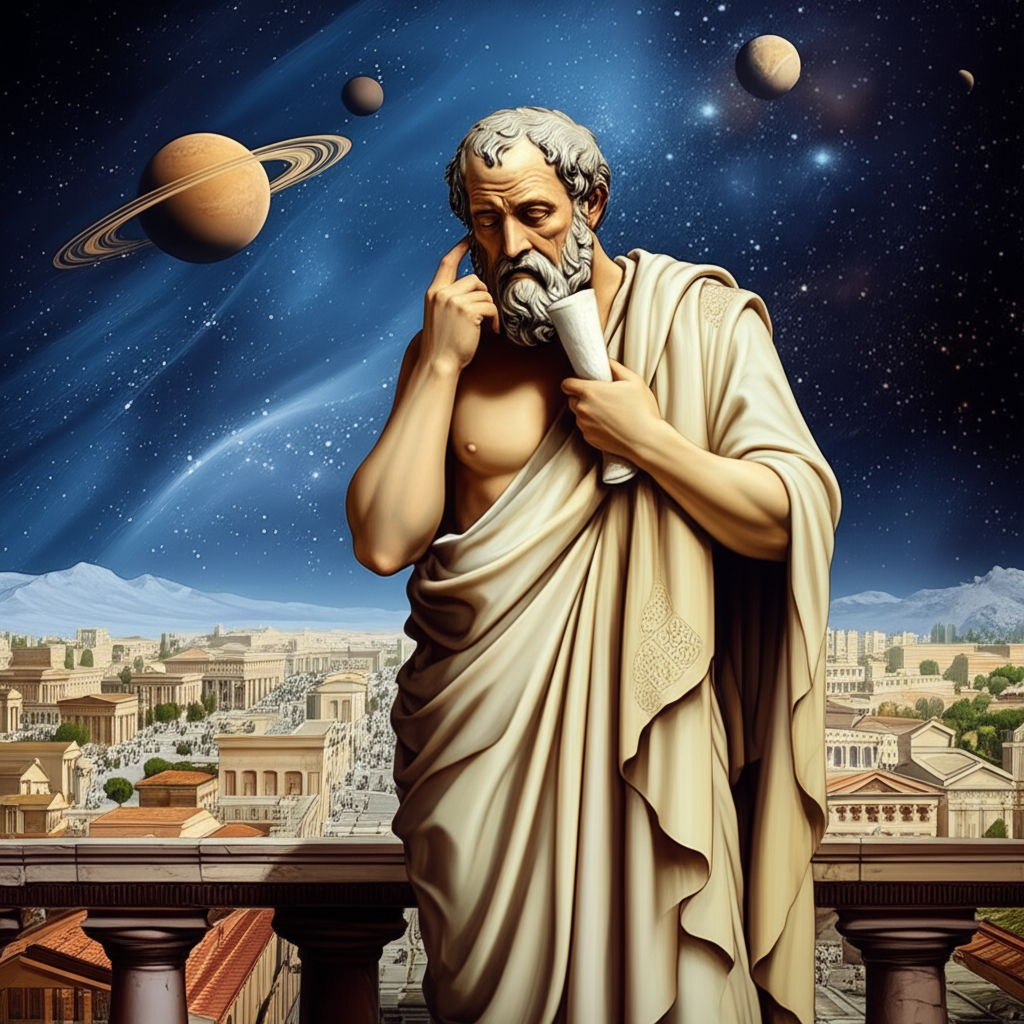
Wisdom from the Ancients: The Value of Finitude
Many thinkers from the Great Books suggest that our mortality is not a flaw but a fundamental feature that gives life its depth and urgency.
- Aristotle focused on eudaimonia, or human flourishing, which is achieved through living a virtuous life within its natural span. The good life, for Aristotle, is intrinsically tied to human limitations and the pursuit of excellence during a finite existence.
- The Stoics famously embraced memento mori (remember you must die), not as a morbid obsession, but as a practice to appreciate the present moment and live virtuously. For them, accepting death was key to living a truly free and meaningful life.
- Montaigne, in his Essays, reflected extensively on death, arguing that "to philosophize is to learn how to die." He believed that by confronting our mortality, we learn to live more fully and authentically.
These perspectives suggest that the ethical path might not be to escape Life and Death, but to embrace them, finding meaning and purpose precisely because our time is limited. The Soul, in this view, finds its fulfillment not in endless duration, but in the quality and impact of its journey.
The Soul's Enduring Legacy: A Different Kind of Immortality
Perhaps our true immortality lies not in biological endlessness, but in the legacy we leave behind. The impact of our actions, the ideas we propagate, the love we share, the art we create – these can transcend our physical Life and Death. This form of immortality is accessible to all, irrespective of wealth or technological advancement, and it enriches the collective human experience without the profound ethical pitfalls of physical eternal life. It allows the Soul to contribute to something larger than itself, echoing through generations without demanding a permanent claim on finite resources.
Conclusion: Embracing the Preciousness of the Finite
The ethical dilemma of immortality forces us to ask not just "Can we live forever?" but "Should we?" The allure of endless life is powerful, but a careful examination reveals a host of profound challenges that could undermine the very values we seek to preserve. Perhaps the greatest wisdom lies in understanding that the cycle of Life and Death is not an enemy to be conquered, but a fundamental rhythm that gives meaning, urgency, and beauty to our existence. Embracing our finitude might just be the most ethical and profound way to truly live.
📹 Related Video: ARISTOTLE ON: The Nicomachean Ethics
Video by: The School of Life
💡 Want different videos? Search YouTube for: ""Philosophical arguments against immortality""
📹 Related Video: ARISTOTLE ON: The Nicomachean Ethics
Video by: The School of Life
💡 Want different videos? Search YouTube for: ""The ethics of eternal life: a debate""