

The Cosmic Dice Roll: Embracing Chance in Astronomy
The universe, in its grand, awe-inspiring scale, often evokes images of perfect order and immutable laws. Yet, beneath this veneer of cosmic predictability lies a profound and often overlooked element: chance. Far from being a mere human construct, chance plays a fundamental, often chaotic, role in shaping the very fabric of the cosmos, from the birth of stars to the fate of galaxies. This article delves into how astronomy reveals a universe less deterministic than we might imagine, where random encounters, quantum fluctuations, and unpredictable events are not exceptions, but integral drivers of cosmic evolution, challenging our philosophical understanding of the World and the laws of physics.
Unpacking Chance: A Philosophical Lens on the Cosmos
From ancient philosophers pondering the nature of causality to modern physicists grappling with quantum indeterminacy, the concept of chance has always been a cornerstone of philosophical inquiry. The Great Books of the Western World offer rich perspectives. Aristotle, in his Physics, distinguished between events that happen "always or for the most part" and those that occur "by chance or spontaneity," suggesting an inherent unpredictability in some phenomena. Lucretius, in De Rerum Natura, posited the atomic "swerve" (clinamen) as a tiny, unpredictable deviation that allows for the formation of complex structures and the very possibility of free will, hinting at a universe where fundamental randomness is a creative force.
In astronomy, this philosophical understanding translates into observable phenomena. While the gravitational dance of planets around a star might seem a clockwork marvel, the initial conditions that led to that star's formation, the collisions that built those planets, and the eventual demise of the system are often products of cosmic happenstance.
Where Chance Intervenes: Astronomical Phenomena
The vastness of space provides ample arena for the dice of destiny to roll, influencing everything from the smallest particles to the largest structures in the universe.
- Stellar Birth and Death: Stars coalesce from nebulae, but the precise location and timing of their formation can be influenced by shockwaves from distant supernovae or random density fluctuations. A star's death, particularly a supernova, can be triggered by a critical mass accumulation or a chance interaction with another star, scattering heavy elements that are essential for future planet formation across the World.
- Planetary Formation and Evolution: The accretion of dust and gas into planets is a messy, chaotic process. Collisions are not merely formative but also destructive. The Earth's Moon, for instance, is widely believed to be the result of a colossal, chance impact between early Earth and a Mars-sized protoplanet. Such an event was not inevitable; it was a specific, monumental stroke of cosmic luck that profoundly shaped our planet's geology and habitability.
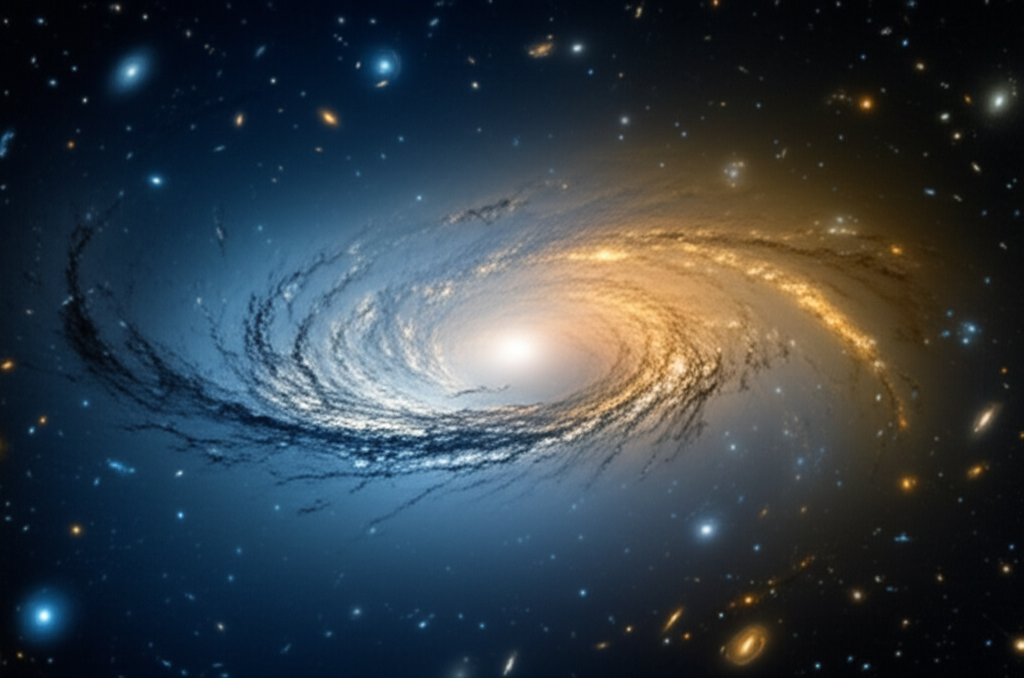
- Galactic Collisions and Mergers: Galaxies are not static islands but dynamic entities. Our own Milky Way is on a collision course with Andromeda. While gravity dictates the general trajectory, the exact angles, speeds, and outcomes of such mergers involve a complex interplay of gravitational nudges and random stellar encounters, leading to unpredictable changes in galactic morphology and star formation rates.
- The Fine-Tuning Problem and the Anthropic Principle: The seemingly "just right" physical constants that allow for life in our universe are often cited as evidence for design. However, from the perspective of chance, these constants could simply be one random draw from a multitude of possibilities in a multiverse, where we observe the universe that happens to support our existence. This doesn't negate the wonder, but it reframes the role of chance in creating the conditions for life.
Physics and the Indeterminacy of the Cosmos
Modern physics offers deeper insights into the fundamental role of chance. Quantum mechanics, the bedrock of our understanding of the very small, introduces an inherent indeterminacy into the universe. Particles do not have definite positions or momenta until measured; their behavior is described by probabilities. While these quantum effects are usually averaged out at macroscopic scales, their cumulative influence over cosmic timescales and vast distances cannot be entirely dismissed.
Consider the decay of a radioactive isotope, a process governed by quantum probability. Such decays contribute to the heat of planetary cores, influence stellar nucleosynthesis, and even seed the initial density fluctuations that grow into galaxies. Each decay event is a micro-instance of chance cascading into macro-cosmic significance.
Our Place in a Probabilistic World
Understanding the role of chance in astronomy fundamentally alters our perspective on the World and our place within it. It moves us away from a purely deterministic view of the universe, where every event is pre-ordained, towards one that acknowledges an intrinsic element of unpredictability and contingency. This doesn't diminish the scientific endeavor to understand universal laws; rather, it enriches it by adding a layer of dynamic, probabilistic reality.
The universe isn't just a machine operating on fixed gears; it's a grand, evolving narrative shaped by both immutable laws and countless cosmic dice rolls. This realization fosters a deeper appreciation for the unique conditions that allowed our existence, not as a guaranteed outcome, but as a remarkable, improbable success story in a vast, unpredictable cosmos.
YouTube Video Suggestions:
-
📹 Related Video: What is Philosophy?
Video by: The School of Life
💡 Want different videos? Search YouTube for: ""philosophy of chance cosmology quantum mechanics""
2. ## 📹 Related Video: KANT ON: What is Enlightenment?
Video by: The School of Life
💡 Want different videos? Search YouTube for: ""great books western world lucretius physics chance""