

The Cosmic Dice Roll: Unpacking Chance in Astronomy
We often gaze at the night sky, perceiving an order, a magnificent clockwork governed by immutable laws. Yet, beneath this seemingly deterministic facade, the element of chance plays a surprisingly profound and persistent role in shaping the Astronomy of our World. This article explores how random events, unpredictable encounters, and the inherent contingency of cosmic phenomena challenge our understanding of a purely deterministic universe, drawing insights from classical Physics and philosophy to illuminate the role of serendipity in the grand cosmic narrative.
The Unpredictable Universe: A Philosophical Inquiry
From the ancient atomists to modern cosmologists, the question of whether the universe is a purely deterministic machine or if it harbors genuine randomness has been a cornerstone of philosophical and scientific debate. While the laws of Physics provide the framework, the initial conditions and subsequent interactions often introduce an irreducible element of chance that guides the evolution of celestial bodies and systems. Understanding this interplay is crucial for comprehending the true nature of our universe.
Historical Lenses on Cosmic Contingency
The concept of chance in the cosmos is not a modern invention. Philosophers from the Great Books of the Western World have grappled with its implications for millennia.
- Ancient Atomism and the Clinamen: Lucretius, in De Rerum Natura (On the Nature of Things), describes the atomic "swerve" (the clinamen) as a fundamental, unpredictable deviation in the otherwise downward motion of atoms. This minute, uncaused deviation was posited to allow for atomic collisions, the formation of complex structures, and crucially, free will. Without this irreducible element of chance, Lucretius argued, all would be a rigid chain of cause and effect, an idea that resonates with the chaotic and unpredictable aspects we observe in Astronomy.
- Aristotle's Four Causes: While Aristotle emphasized teleology and purpose, his framework also acknowledged the existence of "accidental causes" or tyche (chance) and automaton (spontaneity). These were events that occurred without a specific purpose or intention, yet could have significant outcomes. In the vastness of space, many astronomical events, while governed by physical laws, might be considered "accidental" in their specific timing and location, leading to unique formations or cataclysms.
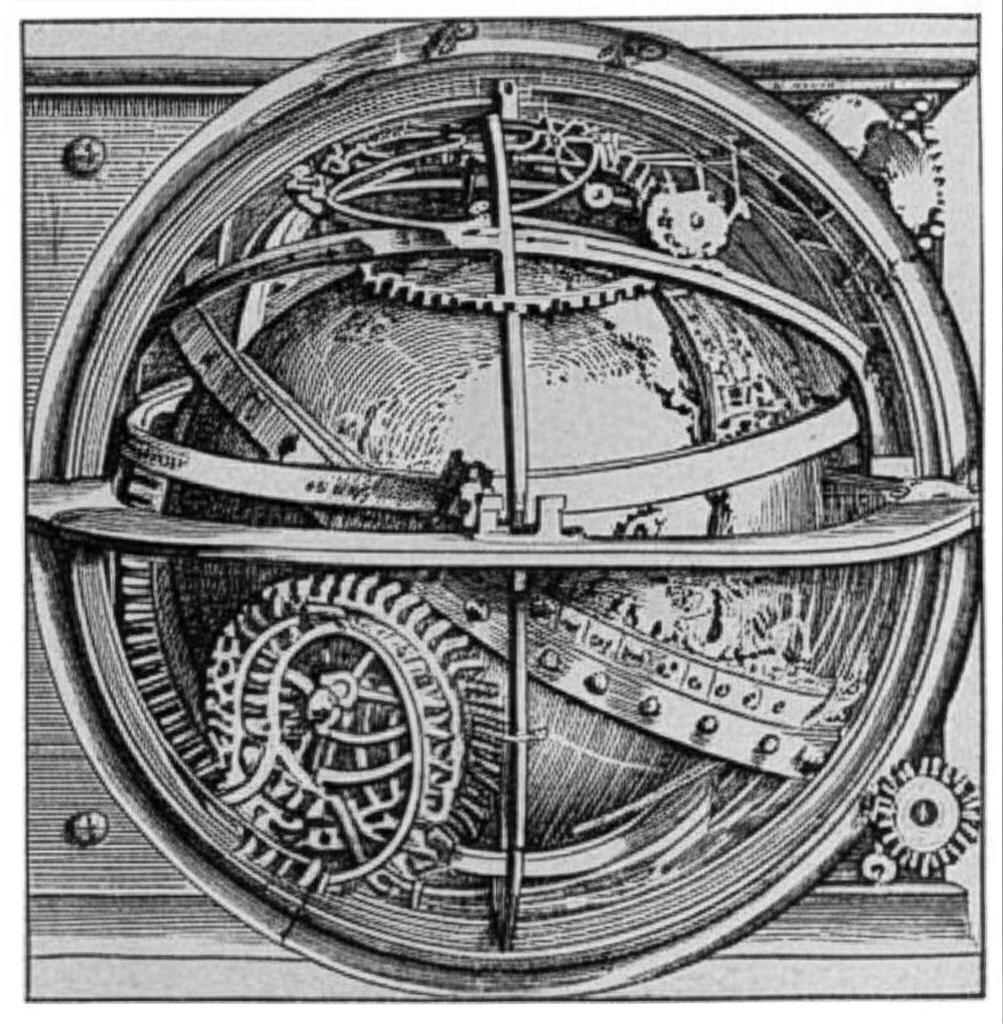
- The Newtonian Clockwork Universe: With Isaac Newton, the universe largely became understood as a grand, deterministic machine. Given perfect knowledge of initial conditions and the laws of Physics, every future state could theoretically be predicted. This view, while incredibly powerful for celestial mechanics, began to face challenges as observations revealed more complex and seemingly random phenomena.
Where Chance Intervenes: Manifestations in Astronomy
Despite the deterministic beauty of gravitational laws, the universe frequently reminds us of its capacity for the unexpected. Here are several areas where chance plays a pivotal role:
- Planetary Formation and Evolution:
- Accretion and Collisions: The formation of planets from protoplanetary disks is a violent process driven by random collisions of planetesimals. The size, composition, and orbital parameters of planets are heavily influenced by the specific history of these chaotic impacts. Our own Moon, for instance, is theorized to have formed from a massive, chance collision with a Mars-sized body.
- Orbital Stability: While gravity dictates orbits, perturbations from other celestial bodies can introduce chaotic elements. The long-term stability of many planetary systems is not guaranteed, and minor gravitational nudges over vast timescales can lead to dramatic orbital shifts or ejections.
- Stellar Demise and Rebirth:
- Supernovae Triggers: The exact timing and location of a supernova, particularly in binary star systems or dense star-forming regions, can be influenced by chance encounters and the complex interplay of stellar winds and gravitational forces. These explosions, in turn, randomly distribute heavy elements throughout the galaxy, seeding new generations of stars and planets.
- Rogue Stars and Planets: Gravitational slingshots and close encounters can eject stars and planets from their home systems, sending them hurtling through interstellar space as "rogue" bodies, their paths largely unpredictable.
- Galactic Collisions and Mergers:
- Cosmic Dance: Galaxies are not static entities; they frequently collide and merge. The specific trajectory, angle, and timing of these mergers are largely a matter of cosmic chance, dictating the resulting morphology and star formation rates of the new, larger galaxy. Our own Milky Way is on a collision course with Andromeda, an event whose precise outcome is still subject to probabilistic models.
- Asteroid and Comet Impacts:
- Existential Threats: Perhaps the most dramatic manifestation of chance for life on Earth is the random impact of asteroids and comets. These events, while rare, have fundamentally altered the course of biological evolution, as evidenced by the Chicxulub impact that contributed to the demise of the dinosaurs. The probability of such an impact is calculable, but the specific timing and target are purely a matter of cosmic lottery.
The Philosophical Weight of Cosmic Chance
The recognition of chance in Astronomy compels us to reconsider our place in the World. If the universe is not a perfectly predictable machine, but rather a dynamic arena where random events can sculpt destiny, what does this imply for concepts like cosmic purpose or the inevitability of life?
The laws of Physics certainly describe how the universe operates, but they do not always dictate what specific events will occur. The initial distribution of matter, the slight quantum fluctuations in the early universe, and the countless interactions between celestial bodies create a chaotic system where deterministic laws lead to emergent, often unpredictable, outcomes. This isn't to say the universe is lawless, but rather that its complexity allows for an extraordinary breadth of possibilities, many of which are realized through contingent events.
This philosophical tension between necessity and contingency, determinism and chance, continues to fuel inquiry. It encourages us to appreciate the delicate balance that allows for the existence of our World, recognizing that our very presence might be, in part, a magnificent cosmic accident.
📹 Related Video: What is Philosophy?
Video by: The School of Life
💡 Want different videos? Search YouTube for: ""Determinism vs Free Will Philosophy Great Books""
📹 Related Video: PLATO ON: The Allegory of the Cave
Video by: The School of Life
💡 Want different videos? Search YouTube for: ""Chaos Theory in Astrophysics Explained""