

The Fundamental Dyad: Unpacking the Element of Being and Non-Being
In the grand tapestry of philosophical inquiry, few threads are as foundational, as persistently vexing, and as utterly inescapable as the element of Being and Non-Being. This seemingly simple opposition forms the bedrock of all metaphysics, dictating not only how we conceive of existence itself, but also how we understand change, identity, and even thought. From the ancient Greeks who first grappled with its stark implications to modern phenomenologists, the interplay between what is and what is not remains the ultimate philosophical puzzle, an elemental force shaping our understanding of reality. This article delves into the historical evolution of this concept, exploring its profound implications for our understanding of the cosmos and our place within it.
The Ancient Roots: Parmenides, Heraclitus, and the Dawn of Metaphysics
The earliest, and perhaps most stark, confrontation with the element of Being and Non-Being emerges from the pre-Socratic thinkers, whose ideas, though fragmented, laid the groundwork for millennia of philosophical debate.
-
Parmenides of Elea (c. 5th Century BCE): The Absolute Nature of Being
Parmenides stands as the quintessential champion of Being. In his enduring poem "On Nature," he declares that "what is, is, and what is not, cannot be." For Parmenides, Being is eternal, unchangeable, indivisible, and complete. Non-Being, or "nothing," is utterly inconceivable and therefore non-existent. To even speak of Non-Being is a logical contradiction, a path that leads only to error. This radical monism implies that change, motion, and multiplicity are mere illusions of the senses, fundamentally incompatible with the unchanging nature of true Being. His challenge to subsequent philosophers was profound: how can change occur if Non-Being is impossible? -
Heraclitus of Ephesus (c. 6th-5th Century BCE): The Flux of Becoming
In stark opposition to Parmenides, Heraclitus famously proclaimed that "all things flow; nothing abides." For him, reality is characterized by constant change, a perpetual state of flux where everything is simultaneously being and not being. The iconic image of stepping into the same river twice (or not) encapsulates this dynamic. Heraclitus saw the unity of opposites—life and death, waking and sleeping, good and evil—as essential to the very fabric of existence. For him, the element of Being is always intertwined with a ceaseless process of becoming, implying that Non-Being (in the sense of a prior state or a future state) is inherent to existence.
The tension between Parmenides' static Being and Heraclitus' dynamic Becoming set the stage for all subsequent metaphysics. How could one reconcile these two seemingly irreconcilable truths?
Plato and Aristotle: Navigating the Labyrinth of Existence
The giants of classical Greek philosophy, Plato and Aristotle, took on this fundamental challenge, seeking to provide more nuanced accounts of how Being and Non-Being interact.
Plato's Forms and the Problem of Non-Being
Plato, deeply influenced by Parmenides' insistence on unchanging truth, posited his theory of Forms. For Plato, true Being resides in the eternal, perfect, and immutable Forms (e.g., the Form of Beauty, the Form of Justice) which exist independently of the physical world. The objects we perceive in the physical world are mere imperfect copies or participants in these Forms.
However, Plato recognized the difficulty of accounting for difference, change, and error if Non-Being is utterly impossible. In his dialogue Sophist, he grapples directly with Parmenides' prohibition. Plato introduces the concept of "relative non-being" or "difference." When we say something "is not," we might mean it "is different from" something else, rather than it "is absolutely not." For example, a chair is not a table, but this doesn't mean the chair doesn't exist; it simply means it belongs to a different category of being. This allows for the possibility of differentiation without falling into the trap of absolute nothingness.
Aristotle's Categories and the Actuality/Potentiality Distinction
Aristotle, Plato's student, offered a more empirical and systematic approach to metaphysics. He rejected Plato's separate world of Forms, arguing that Forms (or essences) are inherent in the particular objects of the world. Aristotle developed a sophisticated system of Categories to describe the different ways in which things are.
Crucially, Aristotle introduced the distinction between actuality and potentiality. This provided a powerful solution to the problem of change. A seed is not yet a tree (it is not a tree in actuality), but it has the potential to become a tree (it is a tree in potentiality). This framework allows for change and development without invoking absolute Non-Being. Change is the transition from potentiality to actuality, a process where something moves from one state of being to another. This concept allowed for a dynamic understanding of reality that honored both the stability of essential forms and the reality of transformation.
Key Aristotelian Concepts:
| Concept | Description | Relation to Being/Non-Being |
|---|---|---|
| Substance | The primary way in which things are; the fundamental subject of predication (e.g., a specific human). | The core element of individual existence. |
| Actuality | The state of being real or in existence; the fulfillment of potential. | What is fully present and realized. |
| Potentiality | The capacity to become something else; the possibility of existence. | What is not yet but can be; a form of relative Non-Being. |
| Four Causes | Material, Formal, Efficient, Final – different ways to understand why something exists and changes. | Explains the dynamic processes of being and becoming. |
The Enduring Opposition: Why it Matters Today
The element of Being and Non-Being continues to be a central concern in contemporary philosophy, influencing fields from existentialism to logic, and even quantum physics.
- Existentialism: Philosophers like Jean-Paul Sartre explored the concept of "nothingness" (Non-Being) as intrinsic to human freedom and consciousness. For Sartre, human consciousness is a "hole in Being," a capacity to negate and transcend given realities, thus creating meaning and freedom. This "nothingness" is not an absence of existence, but a fundamental characteristic of our awareness.
- Hegel's Dialectic: Georg Wilhelm Friedrich Hegel famously began his Science of Logic with the concepts of Being and Nothing. He argued that pure Being, without any determination, is indistinguishable from pure Nothing. The opposition of these two leads to their synthesis in "Becoming," a dynamic process that drives the entire dialectical unfolding of reality and thought.
- Modern Metaphysics: Contemporary metaphysics still grapples with the nature of existence, questions of universals and particulars, and the ontology of abstract objects. The very act of defining what "exists" (Being) implicitly defines what "does not exist" (Non-Being) within a given framework.
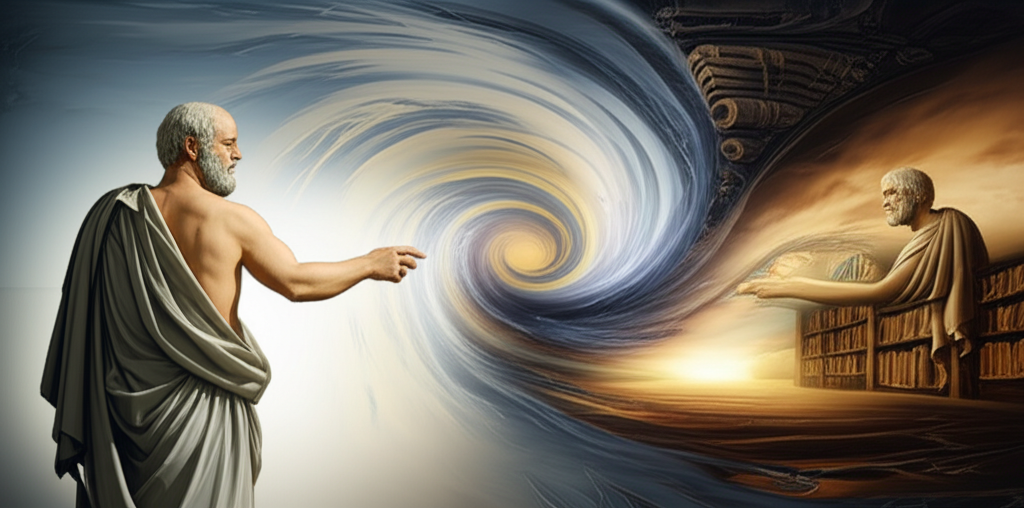
The opposition between Being and Non-Being is not merely an academic exercise; it underpins our most fundamental assumptions about reality. It shapes our understanding of identity (what is this person?), change (how can something become something else if it is not that something else?), and even truth (what is true?). To engage with this elemental dyad is to engage with the very fabric of existence itself.
Further Exploration
For those eager to delve deeper into these foundational concepts, here are some avenues for further inquiry:
- YouTube: "Parmenides vs Heraclitus: Being and Becoming"
- YouTube: "Hegel's Being, Nothing, Becoming Explained"
Understanding the element of Being and Non-Being is not about finding a single, definitive answer, but about appreciating the depth of the questions. It's about recognizing that the most profound insights often emerge from the tension between fundamental opposites, shaping the very metaphysics of our world and our thought.
📹 Related Video: What is Philosophy?
Video by: The School of Life
💡 Want different videos? Search YouTube for: "The Element of Being and Non-Being philosophy"