

The Enduring Element of Being and Non-Being: A Metaphysical Inquiry
Summary: The Unseen Foundation of All That Is
The philosophical inquiry into Being and Non-Being represents one of the most fundamental and enduring challenges in Metaphysics. Far from being a mere semantic debate, it delves into the very Element of existence, probing what it means for something to be and how we can even conceive of its Opposition – nothingness. This article explores the historical trajectory of this profound question, from the ancient Greeks' radical assertions to later sophisticated attempts to reconcile the two, revealing how this elemental tension shapes our understanding of reality, change, and identity. We will see that the interplay between Being and Non-Being is not just an abstract concept, but the very crucible in which our understanding of the cosmos is forged.
Introduction: The Fundamental Riddle of Existence
From the earliest stirrings of human thought, the stark reality of existence has compelled us to ponder its origins and nature. Why is there something rather than nothing? This seemingly simple question opens a chasm of philosophical inquiry, leading directly to the Element of Being and its enigmatic counterpart, Non-Being. For centuries, thinkers have grappled with this profound Opposition, recognizing it as the bedrock upon which all other Metaphysics is built. The Great Books of the Western World serve as a testament to this persistent struggle, chronicling humanity's attempts to articulate the most basic conditions of reality. Is Non-Being merely the absence of Being, or does it possess a paradoxical status of its own? The answer, or rather the journey to seek it, defines much of Western philosophy.
Parmenides and the Unchanging Oneness of Being
The Pre-Socratic philosopher Parmenides of Elea delivered one of the most radical and influential assertions regarding Being. For Parmenides, Being is, and Non-Being absolutely is not. His argument, presented in his poem On Nature, posited that one cannot even think of Non-Being, for to think of something is to grant it a form of existence.
- Parmenides' Core Tenets:
- Being is uncreated and indestructible.
- Being is eternal and unchangeable.
- Being is indivisible and uniform.
- Non-Being is utterly inconceivable and therefore impossible.
This stark declaration had profound implications: if only Being exists, then change, motion, multiplicity, and difference are mere illusions of the senses. Reality, in its true form, is an undifferentiated, static, singular Being. This presented a significant challenge to subsequent philosophers: how to account for the dynamic, diverse world we experience without falling into the logical trap of invoking Non-Being?
Plato's Dialectical Solution: Not-Being as Difference
Plato, deeply influenced by Parmenides, recognized the logical force of his arguments but found his conclusions about the illusory nature of change untenable. In dialogues like The Sophist, Plato sought to reconcile the Eleatic challenge with the reality of a world in flux. His solution involved introducing a more nuanced understanding of Non-Being, distinguishing it from absolute non-existence.
Plato argued that Non-Being is not the complete absence of Being, but rather otherness or difference. When we say something "is not" something else, we are not denying its existence entirely, but rather stating that it "is not that particular thing." For example, a chair "is not" a table. This does not mean the chair does not exist; it simply means it differs from a table.
- Plato's Refinement of Non-Being:
- Absolute Non-Being (Parmenidean nothingness) remains inconceivable.
- Relative Non-Being or Not-Being is understood as difference or otherness.
- Forms "participate" in other Forms, allowing for relations and distinctions.
- This intermingling of Forms creates the possibility of a coherent, yet diverse, reality.
Through this elegant move, Plato allowed for the Opposition of concepts and the reality of change without violating the fundamental principle that Being must exist.
Aristotle: Potentiality and Actuality as the Dynamic Element
Aristotle, Plato's most famous student, offered a different, more empirically grounded approach to the problem of Being and Non-Being. Rather than focusing on abstract Forms, Aristotle grounded his Metaphysics in the observable world of substances. For Aristotle, Being manifests in various categories, but central to understanding change is his distinction between potentiality (δύναμις, dynamis) and actuality (ἐνέργεια, energeia).
The Aristotelian Framework:
| Concept | Description | Relation to Being/Non-Being |
|---|---|---|
| Actuality | The state of being complete, fully realized, or in action. What something is right now. | This is Being in its most robust sense – the substance as it exists. |
| Potentiality | The capacity or power for something to become something else; a state of not-yet-being, but with the inherent possibility of becoming. | This is Aristotle's answer to Non-Being in the context of change. When a seed is not a tree, it is not absolutely non-existent; it is a tree potentially. This bridges the gap between Being and Non-Being. |
| Substance | The primary mode of Being; an individual, particular thing that can exist independently. | The ultimate subject of Being, underlying all change. |
Aristotle's system allows for generation and corruption – things coming into Being and passing out of it – without invoking absolute Non-Being as a creative force. Instead, Non-Being in the context of change is understood as the potential for something to become, or the lack of a particular form in a given matter. This dynamic Element of potentiality and actuality provides a powerful framework for understanding the world as we experience it.
Hegel and the Dialectical Dance of Being and Nothing
Centuries later, G.W.F. Hegel, in his Science of Logic, presented perhaps the most audacious and comprehensive attempt to integrate Being and Non-Being not as static Oppositions, but as dynamic, interpenetrating Elements of thought and reality. For Hegel, the very first and most abstract concept is pure Being. However, pure Being, without any determination or content, is indistinguishable from pure Nothing.
- Hegel's Dialectic of Being and Nothing:
- Being: The immediate, indeterminate, pure concept. It lacks all specific qualities.
- Nothing: As pure Being is utterly indeterminate, it is identical with Nothing. It is the absence of all determination.
- Becoming: The truth of Being and Nothing is their unity, their ceaseless transition into one another. Being passes over into Nothing, and Nothing passes over into Being. This process is Becoming.
For Hegel, the Opposition between Being and Nothing is not a contradiction to be avoided, but the very engine of development. This dialectical movement, where thesis (Being) meets antithesis (Nothing) to produce synthesis (Becoming), is the fundamental Element of all reality and thought. It is through this dynamic struggle that concepts, and indeed reality itself, achieve determination and concrete existence.
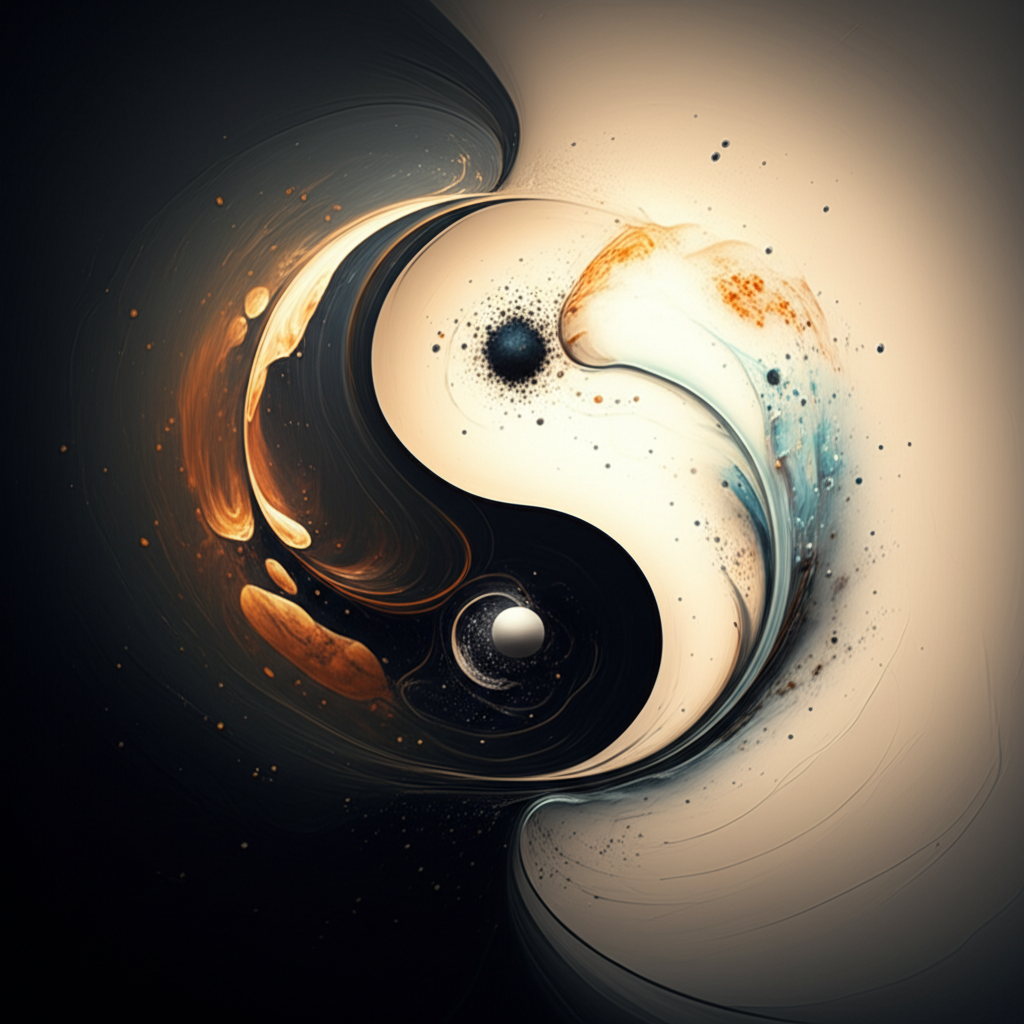 and shadow (representing Non-Being), perhaps with subtle arrows indicating movement and interpenetration, against a backdrop of swirling cosmic dust.)
The Enduring Element of Opposition in Metaphysics
The journey through Parmenides, Plato, Aristotle, and Hegel reveals that the Element of Being and Non-Being is not a problem that gets "solved" and discarded, but a foundational tension that continues to animate Metaphysics. Each philosopher, while offering a unique perspective, acknowledges the inescapable Opposition at the heart of existence.
- Key Manifestations of the Being/Non-Being Opposition:
- Existence vs. Non-existence: The most direct and fundamental contrast.
- Identity vs. Difference: How one thing is itself by not being another.
- Actuality vs. Potentiality: The Being of what is, and the Non-Being of what could be.
- Form vs. Matter: The structured Being versus the indeterminate Non-Being (or potentiality) that receives form.
- Unity vs. Multiplicity: The one Being versus the many ways things are not the same.
- Stasis vs. Change: The unchanging Being versus the dynamic process of Becoming (moving between Being and Non-Being).
This elemental Opposition is not merely an intellectual puzzle; it is the very framework through which we perceive and categorize reality, understand time, and even contemplate our own mortality.
Conclusion: The Unresolved Symphony of Existence
The Element of Being and Non-Being remains a vibrant and essential field of inquiry within Metaphysics. From the radical monism of Parmenides to the dynamic dialectic of Hegel, philosophers have ceaselessly grappled with this profound Opposition. It challenges us to look beyond immediate appearances and ponder the very conditions that make anything, including ourselves, possible. While no single, definitive answer has ever fully resolved the tension, the ongoing exploration of Being and Non-Being continues to enrich our understanding of existence, change, identity, and the intricate fabric of reality itself. It is a testament to the enduring power of philosophical thought to confront the most fundamental mysteries of the cosmos.
📹 Related Video: KANT ON: What is Enlightenment?
Video by: The School of Life
💡 Want different videos? Search YouTube for: ""Parmenides Being and Non-Being Explained""
📹 Related Video: KANT ON: What is Enlightenment?
Video by: The School of Life
💡 Want different videos? Search YouTube for: ""Hegel's Logic of Being and Nothing Explained""