

The Unseen Hand: How Emotion Shapes Human Judgment
From the grand pronouncements of ancient philosophers to the quiet deliberations of the everyday man, the profound influence of emotion on judgment has been a perennial subject of inquiry. Far from being mere subjective feelings, our passions, desires, and fears act as powerful, often unseen, forces that steer the course of our decisions, subtly or overtly shaping the very fabric of our rational mind. This article delves into how these internal states can either illuminate or obscure our path to sound judgment, drawing upon the timeless wisdom preserved within the Great Books of the Western World.
The Ancient Struggle: Reason vs. Passion
For millennia, philosophers have grappled with the intricate dance between reason and emotion, recognizing it as a fundamental tension within the human mind. This internal conflict, central to the human experience, forms a cornerstone of ethical and epistemological thought. The question was not if emotions affected judgment, but how deeply, and whether their influence could be tamed or directed.
Plato's Chariot Analogy: A Guiding Metaphor
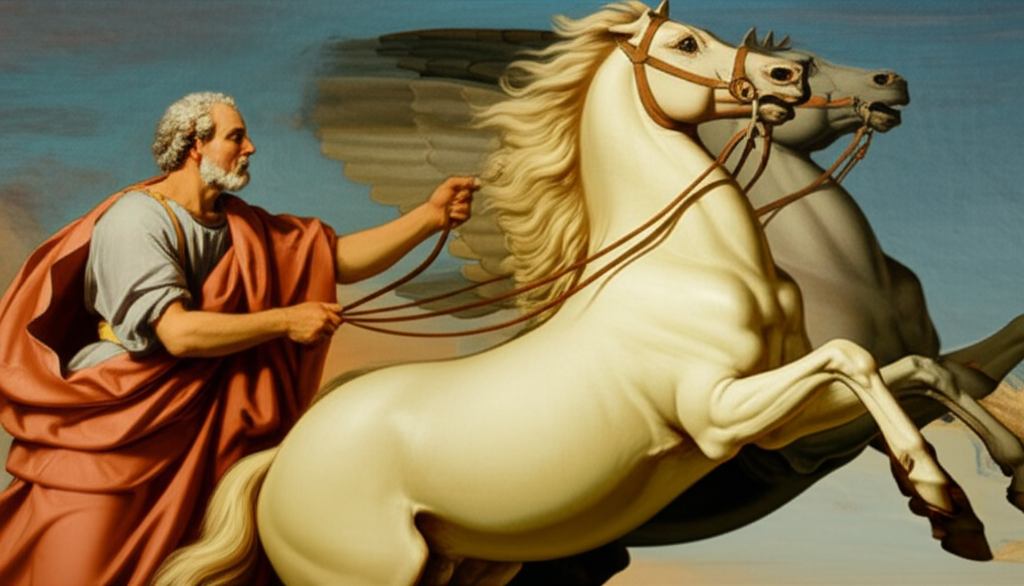
One of the most enduring and illustrative models of this internal dynamic comes from Plato's Phaedrus. Here, the soul is likened to a charioteer (representing reason) guiding two winged horses: one noble and well-behaved (representing spiritedness or noble ambition), and the other unruly and prone to vice (representing appetite or base desires).
- The Charioteer (Reason): Strives for wisdom, truth, and the good. It is the faculty capable of rational thought and sound judgment.
- The Noble Horse (Spirit): Can be an ally to reason, providing courage, indignation, and the will to pursue higher ideals.
- The Unruly Horse (Appetite): Driven by immediate gratification, sensual desires, and base urges. If unchecked, it can lead the chariot (and thus the man) astray, clouding judgment with impulsive emotion.
Plato understood that true wisdom and effective judgment depended on the charioteer's ability to exert control over both horses, especially the unruly one. Without this mastery, the mind is swayed by raw emotion, leading to misguided decisions and a life far from the pursuit of truth.
Aristotle and the Golden Mean: Managing Emotional Influence
Aristotle, in his Nicomachean Ethics, offers a more nuanced view. He does not dismiss emotion as inherently negative but rather views it as an integral part of human nature. For Aristotle, the key lies not in suppressing emotions entirely, but in feeling them at the right time, towards the right objects, for the right reasons, and in the right manner – what he termed the "golden mean."
- Virtue as a Balance: Courage, for instance, is the mean between recklessness (excessive emotion) and cowardice (deficient emotion).
- Practical Wisdom (Phronesis): This crucial intellectual virtue involves the ability to deliberate well about what is good and advantageous for oneself, not in some particular respect, but for living well generally. It is impossible to possess phronesis without also possessing moral virtues, which involve the proper regulation of emotion.
Aristotle argues that appropriate emotion is necessary for good judgment. A judge who feels no indignation at injustice, for example, might lack the moral compass necessary to render a truly just verdict. The challenge for man is to cultivate the habits and character that allow emotion to serve, rather than subvert, reason.
The Modern Perspective: Emotion as Information
While the Great Books primarily focus on classical and medieval thought, their insights into the human condition resonate through the ages. Later philosophers, from Hume to Kant, continued this debate, with Hume famously stating that "reason is, and ought only to be the slave of the passions." While perhaps an extreme view, it highlights the undeniable power of emotion. In a contemporary light, we can appreciate that emotions, even in their capacity to disrupt, also carry vital information that can, when properly interpreted by the mind, contribute to sound judgment.
Cognitive Biases and Emotional Shortcuts
However, the raw, unfiltered force of emotion often leads to cognitive biases – systematic errors in thinking that affect the decisions and judgments that man makes. These biases are often shortcuts our mind takes, influenced heavily by our emotional state.
Consider these common examples:
- Fear and Risk Aversion: Intense fear can lead to an overestimation of risk and an unwillingness to take necessary, calculated chances. Conversely, a lack of fear (or overconfidence) can lead to reckless judgment.
- Anger and Rash Decisions: Anger can narrow our focus, making us less likely to consider alternatives or long-term consequences, leading to impulsive and often regrettable judgment.
- Joy and Overoptimism: Excessive joy or excitement can lead to an overly optimistic assessment of situations, causing us to overlook potential pitfalls or make unrealistic plans.
- Disgust and Moral Judgments: Disgust, often an evolutionary response to contamination, can be inappropriately extended to social or moral issues, leading to prejudiced or unfair judgment.
Cultivating Prudent Judgment: A Lifelong Endeavor
The journey towards sound judgment is not about eradicating emotion but about understanding its mechanisms and learning to navigate its powerful currents. For man, this requires a continuous effort in self-awareness and critical reflection, training the mind to integrate emotional signals without succumbing to their unbridled influence.
Here are strategies inspired by philosophical wisdom:
- Self-Awareness: Recognize your current emotional state before making significant decisions. Ask yourself: "How might my current feelings be influencing my perspective?"
- Emotional Detachment (Temporary): Practice stepping back from immediate emotional reactions to gain a broader perspective. This doesn't mean ignoring feelings but giving reason space to operate.
- Seek Diverse Perspectives: Consult with others whose emotional states or biases might be different from your own. This can help to counteract personal emotional leanings.
- Deliberation and Reflection: As Aristotle suggested, good judgment requires careful thought. Take time to analyze the situation, weigh pros and cons, and consider potential consequences before acting.
- Cultivate Virtues: Develop virtues like patience, temperance, and justice. These character traits inherently involve the proper regulation and expression of emotion, leading to more consistent and ethical judgment.
| Emotional State | Potential Impact on Judgment | Strategy for Mitigation |
|---|---|---|
| Anger | Hasty, aggressive, punitive | Pause, deep breathing, seek alternative explanations |
| Fear/Anxiety | Overly cautious, avoidance, paralysis | Analyze actual risks, seek evidence, focus on controllable factors |
| Euphoria | Overoptimism, impulsivity, blind spots | Reality check, consider downsides, consult skeptics |
| Disgust | Moral condemnation, irrational aversion | Examine underlying reasons, challenge assumptions, empathy |
The intricate relationship between emotion and judgment is a fundamental aspect of the human condition, a truth echoed through the corridors of philosophical thought. From Plato's charioteer to Aristotle's golden mean, the Great Books of the Western World consistently remind us that the wise man is not one devoid of emotion, but one whose mind has learned to understand, manage, and channel these powerful forces towards the pursuit of truth and the making of sound, ethical judgment. Understanding this dynamic is not merely an academic exercise; it is essential for living a thoughtful, deliberate, and flourishing life.
📹 Related Video: PLATO ON: The Allegory of the Cave
Video by: The School of Life
💡 Want different videos? Search YouTube for: "Plato's Chariot Analogy explained"
📹 Related Video: ARISTOTLE ON: The Nicomachean Ethics
Video by: The School of Life
💡 Want different videos? Search YouTube for: "Aristotle on Emotion and Reason in Ethics"