

The Unveiling of Truth: How Emotion Shapes Judgment
- Summary: From the ancient Greeks to the Enlightenment's grand thinkers, the profound influence of emotion on human judgment has been a perennial subject of philosophical inquiry. This article delves into the rich tapestry of Western thought, exploring how the Mind of Man grapples with the interplay of passion and reason, revealing that our feelings are not merely distractions but integral forces in the formation of our understanding and decisions.
The Enduring Dance of Reason and Passion
For millennia, philosophers have grappled with the intricate relationship between our inner emotional world and our capacity for rational judgment. Is emotion a disruptive force, a fog obscuring the clear light of reason, or is it an indispensable component, an intuitive guide without which true wisdom remains elusive? This fundamental question lies at the heart of understanding the human Mind and the very nature of Man.
The Great Books of the Western World offer a profound journey through these debates, revealing a spectrum of perspectives that continue to resonate in our contemporary understanding of ourselves. To truly comprehend how emotion affects judgment, we must first journey through the minds of those who charted these complex internal landscapes.
Ancient Voices: The Charioteer and the Virtuous Soul
The earliest explorations into the nature of emotion and its impact on judgment found their footing in ancient Greece.
Plato's Tripartite Soul: A Struggle for Control
In Plato’s Republic, we encounter the famous analogy of the charioteer, representing reason, guiding two winged horses: one noble (spirit/thumos, associated with courage and honor) and one ignoble (appetite/epithymia, desires for food, sex, comfort).
- Reason (Charioteer): The rational part, aiming for wisdom and truth.
- Spirit (Noble Horse): Emotion like courage, anger, ambition, which can be aligned with reason.
- Appetite (Ignoble Horse): Base desires and cravings, often pulling away from rational control.
For Plato, true judgment and a well-ordered Mind depended on reason's firm hand, keeping the spirited and appetitive parts in check. Unchecked emotion leads to imbalance, clouding one's ability to perceive truth and make sound decisions. The Man who succumbs to his appetites or unbridled spirit cannot achieve justice, either in himself or in the polis.
Aristotle's Measured Passions: Emotions as Information
Aristotle, while acknowledging the potential for emotion to sway judgment, offered a more nuanced view. In his Nicomachean Ethics, he argues that emotions are not inherently irrational or detrimental. Instead, they are motions of the soul that can be appropriate or inappropriate depending on the context.
- Emotions (Pathos): Anger, fear, pity, joy – they are often accompanied by pleasure or pain.
- Judgment (Phronesis): Practical wisdom, the ability to deliberate well about what is good for Man.
Aristotle believed that for a virtuous Man, emotions must be felt at the right time, on the right occasion, towards the right people, for the right purpose, and in the right manner. This moderation (the Golden Mean) is crucial. A person incapable of anger when injustice occurs, for instance, lacks a necessary moral emotion. Thus, emotion, when properly cultivated and guided by practical reason, can inform and even enhance judgment.
The Enlightenment's Rational Gaze and its Challenges
The Age of Reason brought renewed scrutiny to the role of emotion, often seeking to elevate pure rationality above all else, yet also sparking profound counter-arguments.
Descartes' Dualism: Mind Over Body
René Descartes, in works like Meditations on First Philosophy and The Passions of the Soul, posited a radical separation between the thinking Mind (res cogitans) and the extended body (res extensa). For Descartes, emotions (passions) were primarily disturbances of the soul caused by movements in the body.
- Mind: The seat of reason, capable of clear and distinct ideas.
- Body: The source of passions, which can mislead the Mind.
While acknowledging that passions serve a purpose (e.g., self-preservation), Descartes emphasized the need for the rational Mind to master these bodily influences to achieve sound judgment. The ideal Man was one whose reason held sway over his passions.
Spinoza's Geometric Ethics: Understanding for Freedom
Baruch Spinoza, in his Ethics, offered a deterministic view where emotions are not external forces but modes of thought, arising from our ideas. He believed that by understanding the causes of our passions, we could transform passive suffering into active understanding, thereby achieving a form of freedom.
- Emotions: Affections of the body and mind, increasing or diminishing our power of action.
- Judgment: Improved by clear and adequate ideas, which allow us to understand and manage our emotions rather than be enslaved by them.
For Spinoza, the Mind of Man is not separate from emotion; rather, it is through the intellect's grasp of emotion that true liberation and better judgment are attained.
Hume's Radical Empiricism: Reason's Servitude
David Hume, perhaps most famously in A Treatise of Human Nature, delivered a provocative challenge to the supremacy of reason, declaring: "Reason is, and ought only to be the slave of the passions, and can never pretend to any other office than to serve and obey them."
- Reason: Limited to discovering truths of fact or relations of ideas; it cannot motivate action on its own.
- Passions (Emotions): The true motivators of human action and, by extension, the ultimate arbiters of value.
For Hume, our moral judgments are not derived from reason but from sentiment – from our feelings of approval or disapproval. The Mind of Man, in this view, is fundamentally driven by its emotions, with reason merely a tool for achieving their ends.
Kant's Moral Imperative: Duty Over Inclination
Immanuel Kant, in his Groundwork of the Metaphysics of Morals, staunchly argued for the primacy of reason in moral judgment. For Kant, truly moral actions stem from duty, from adhering to universal moral laws (the Categorical Imperative), rather than from inclinations or emotions.
- Duty: Actions performed out of respect for the moral law, derived from reason.
- Inclination (Emotion): Feelings, desires, and personal leanings, which can contaminate moral purity.
While Kant acknowledged that emotion often accompanies moral action, he insisted that the moral worth of an action lay in its rational motivation, not its emotional one. The Mind of a truly moral Man acts according to principles, transcending the shifting sands of feeling.
Synthesizing Perspectives: The Integrated Man
The journey through these philosophical giants reveals that the relationship between emotion and judgment is anything but simple.
| Philosopher | View on Emotion's Role in Judgment | Key Concept |
|---|---|---|
| Plato | Emotions must be controlled by reason; unchecked emotion clouds judgment. | Charioteer Analogy: Reason guides spirit and appetite. |
| Aristotle | Emotions are natural and can be virtuous if felt appropriately; practical reason guides their measure. | Golden Mean: Virtuous action involves feeling emotions at the right time, in the right way. |
| Descartes | Emotions are bodily passions that can mislead the mind; reason must master them. | Mind-Body Dualism: Clear, distinct ideas from the mind lead to sound judgment, distinct from bodily passions. |
| Spinoza | Emotions are modes of thought; understanding their causes leads to freedom and better judgment. | Adequate Ideas: Transforming passive emotions into active understanding. |
| Hume | Reason serves the passions; moral judgments are ultimately based on sentiment, not pure reason. | Reason as Slave of Passions: Emotions are the primary motivators; reason helps achieve their ends. |
| Kant | Moral judgment must be based on rational duty, not emotional inclination, to be truly ethical. | Categorical Imperative: Act according to universalizable maxims, irrespective of personal feelings. |
Today, many contemporary thinkers recognize that emotion is not merely an obstacle to rational thought but an integral part of human cognition and moral judgment. Emotions provide valuable information about our environment, our values, and our relationships. They can signal danger, foster empathy, and motivate us to act. A Mind devoid of emotion might be logically precise but utterly incapable of understanding the nuanced complexities of human experience or making truly meaningful judgments.
The truly wise Man is perhaps not one who suppresses his emotions, but one who understands them, integrates them with reason, and allows them to inform his judgment without overwhelming it. The ongoing philosophical quest is not to eradicate emotion, but to cultivate a balanced Mind where reason and passion can coexist in a productive, harmonious relationship.
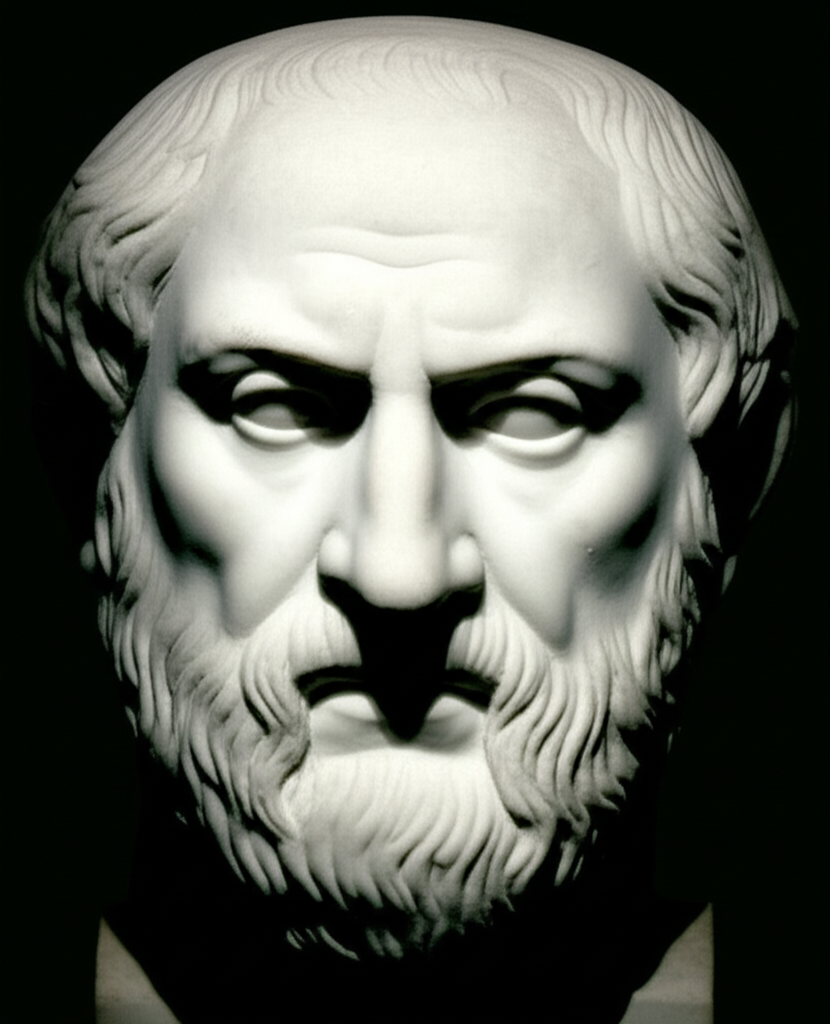
📹 Related Video: PLATO ON: The Allegory of the Cave
Video by: The School of Life
💡 Want different videos? Search YouTube for: ""Plato's Chariot Allegory Explained""
📹 Related Video: PLATO ON: The Allegory of the Cave
Video by: The School of Life
💡 Want different videos? Search YouTube for: ""Hume on Reason and Passion""