

The Indelible Mark: How Emotion Shapes Human Judgment
The intricate dance between our emotions and our capacity for judgment stands as one of philosophy's most enduring and perplexing questions. Far from being mere distractions, emotions are powerful forces that deeply influence, and often fundamentally alter, the way the human mind perceives, interprets, and decides. From the ancient Greeks who sought to tame the passions to modern thinkers grappling with cognitive biases, the effect of emotion on judgment reveals the complex, often contradictory, nature of Man and his Mind.
The Perennial Philosophical Inquiry: Emotion vs. Reason
For centuries, philosophers have wrestled with the nature of emotion and its role in rational thought. Is emotion a hindrance to sound judgment, leading us astray from objective truth, or is it an indispensable component, providing necessary context and motivation? The Great Books of the Western World bear witness to this ongoing debate, presenting a rich tapestry of perspectives that illuminate the profound impact of our inner world on our deliberate actions.
Ancient Greece: The Charioteer and the Practical Man
The earliest Western philosophical traditions often posited a hierarchical relationship between reason and emotion, though with nuanced differences.
- Plato's Tripartite Soul: In works like the Republic and Phaedrus, Plato famously describes the soul as having three parts: the rational (λογιστικόν), the spirited (θυμοειδές), and the appetitive (ἐπιθυμητικόν). Judgment, for Plato, ideally arises when the rational part, like a charioteer, skillfully guides the spirited and appetitive horses. When emotions—the spirited horse of honor and the appetitive horse of desires—run wild, they can derail the chariot, leading to flawed decisions and an unjust life. The goal was not eradication, but harmonious governance by reason.
- Aristotle's Virtue Ethics: Aristotle, in his Nicomachean Ethics, offers a more integrated view. While acknowledging that excessive passions can cloud judgment, he doesn't advocate for their suppression. Instead, he sees emotions as the raw material for moral virtue. Right emotion—feeling the right amount, at the right time, towards the right object—is crucial for phronesis, or practical wisdom. A person lacking appropriate anger or compassion might be as morally deficient as one overwhelmed by them. Here, emotions are not antithetical to judgment but are integral to its ethical formation.
Table 1: Ancient Perspectives on Emotion and Judgment
| Philosopher | View on Emotion's Role | Ideal State of Judgment | Key Concept |
|---|---|---|---|
| Plato | Potential for disruption; needs rational control. | Reason-governed, harmonious soul. | Tripartite Soul, Charioteer |
| Aristotle | Raw material for virtue; needs proper regulation. | Practically wise, balanced emotions. | Phronesis, Golden Mean |
The Rise of Modern Thought: Passions and Perception
The Enlightenment brought new ways of understanding the Mind, often emphasizing individual experience and the mechanics of thought.
- Descartes and the Passions of the Soul: René Descartes, in The Passions of the Soul, explored the physiological and psychological aspects of emotions. He viewed passions as perceptions, sensations, or commotions of the soul referred to the body, and acknowledged their utility in motivating us towards what is good and away from what is harmful. However, he also stressed the importance of reason to discern their true nature and prevent them from overwhelming our will, ensuring sound judgment.
- Hume's Radical Challenge: David Hume, in A Treatise of Human Nature, famously declared, "Reason is, and ought only to be the slave of the passions, and can never pretend to any other office than to serve and obey them." This provocative statement fundamentally shifts the locus of influence. For Hume, reason is primarily an instrument for achieving goals set by our desires and emotions. Our moral judgments, he argued, are not derived from reason but from sentiment—a feeling of approbation or disapprobation. This perspective forces us to reconsider the very foundation of our rational capacities.
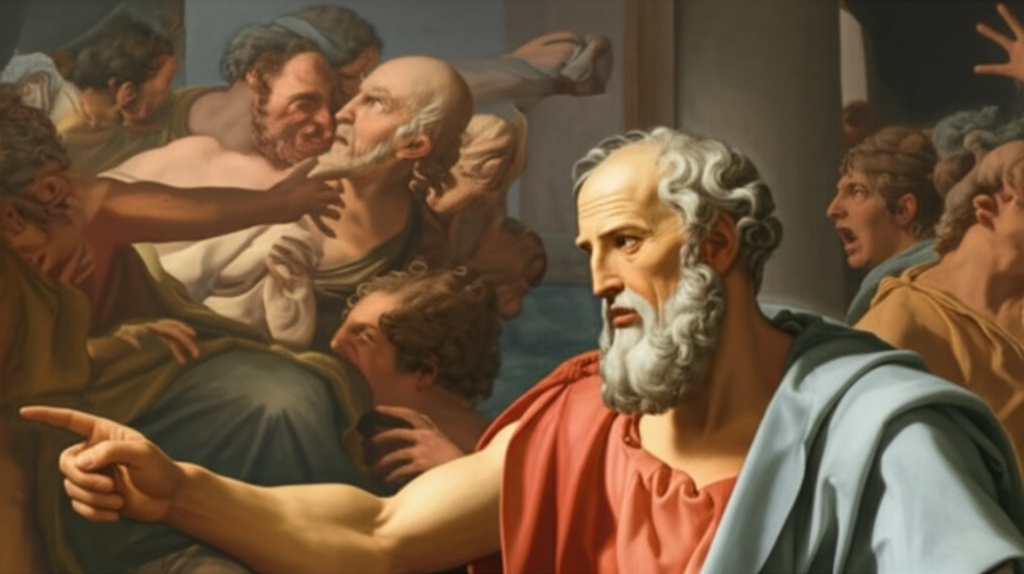 . A ray of light from above illuminates the philosopher's head, suggesting reason, while the emotional scene below is depicted with dynamic, swirling brushstrokes.)
The Complex Interplay: How Emotion Distorts and Directs
The impact of emotion on judgment is rarely simple. It can manifest in several ways:
- Cognitive Biases: Emotions can trigger and amplify cognitive biases. Fear, for instance, can lead to risk aversion, causing us to overestimate threats and underestimate opportunities. Anger can narrow our focus, making us less likely to consider alternative viewpoints or compromise. Joy, conversely, might lead to overconfidence or an underestimation of risks.
- Moral Intuitions: As Hume suggested, many of our moral judgments stem from immediate emotional responses rather than cold, rational calculation. We feel empathy, disgust, or outrage, and these feelings often precede and shape our ethical conclusions.
- Motivation and Action: Emotions provide the motivational fuel for action. Without the desire for justice, the fear of consequences, or the love of truth, our rational judgments might remain inert. Emotion can thus be a necessary catalyst for translating thought into deed.
- Memory and Perception: Our emotional state influences what we remember and how we perceive new information. We tend to recall events congruent with our current mood, and emotions can prime us to notice specific details while overlooking others, thereby shaping the very inputs to our judgment.
The Man and His Mind: A Path Towards Integrated Judgment
Understanding the profound effect of emotion on judgment is not about seeking to eradicate emotions, which is neither possible nor desirable. Instead, it is about cultivating a conscious awareness of their influence. The philosophical journey, from Plato's charioteer to Hume's slave of the passions, offers a continuous lesson in self-knowledge.
For the modern Man, the task remains to integrate the emotional and rational aspects of his Mind. This involves:
- Emotional Intelligence: Recognizing and understanding one's own emotions and those of others.
- Critical Self-Reflection: Actively questioning the origins of our judgments and considering how our emotional state might be coloring them.
- Cultivating Virtues: As Aristotle suggested, developing virtues that allow for the appropriate experience and expression of emotions, leading to balanced and ethically sound judgment.
Ultimately, the goal is not to eliminate emotion from judgment, but to achieve a form of wisdom where our feelings inform, rather than overpower, our rational capacities, allowing for a more complete and authentically human decision-making process.
📹 Related Video: PLATO ON: The Allegory of the Cave
Video by: The School of Life
💡 Want different videos? Search YouTube for: ""Plato's Republic: Charioteer Allegory Explained""
📹 Related Video: What is Philosophy?
Video by: The School of Life
💡 Want different videos? Search YouTube for: ""Hume's Philosophy of Emotion and Reason""