

The Effect of Emotion on Judgment: A Philosophical Inquiry
Summary: The interplay between emotion and judgment has captivated philosophers for millennia. From ancient Greek admonitions to control the passions to Enlightenment reason's quest for objectivity, and even modern reconsiderations of emotion's vital role, the question remains: how does our emotional landscape shape, distort, or even enable our capacity for sound judgment? This article delves into the rich tapestry of Western philosophical thought, exploring how thinkers from Plato to Nietzsche have grappled with the profound influence of emotion on the mind of man, revealing a complex relationship far beyond simple opposition.
The Perennial Challenge: Navigating the Inner Landscape
The human experience is inextricably linked to both thought and feeling. We are creatures of reason, capable of intricate logical deduction, abstract theorizing, and moral deliberation. Yet, we are equally beings of profound emotion – joy, sorrow, anger, fear, love, and disdain color our perceptions and often drive our actions. It is within this dynamic tension that the philosophical problem of judgment arises: Can we render impartial, objective, or even truly rational judgments when our inner world is awash with feeling? Or, conversely, is emotional engagement a necessary, perhaps even indispensable, component of meaningful decision-making and moral discernment?
The Great Books of the Western World offer an unparalleled chronicle of humanity's enduring struggle with this fundamental question. Across centuries, philosophers have sought to define the proper relationship between our passions and our intellect, shaping our understanding of the mind and the very nature of man.
The Ancient Divide: Reason's Supremacy and the Taming of Passion
For many foundational thinkers, the path to sound judgment lay in the disciplined control, if not outright suppression, of emotion. The ideal man was often depicted as one whose reason held sway over his turbulent inner life.
Plato's Chariot: Reason as the Guiding Hand
Plato, in works like the Republic and Phaedrus, famously presented the soul as a charioteer (reason) guiding two winged horses: one noble and spirited (courage, honor), the other unruly and appetitive (desire, lust). For justice and harmony to prevail, both within the individual and the state, the charioteer – reason – must maintain firm control. Unchecked emotion, particularly the appetitive, leads to imbalance, delusion, and ultimately, flawed judgment. The philosopher, therefore, trains his mind to transcend the distractions of the senses and passions, seeking truth through pure intellect.
Aristotle's Golden Mean: The Cultivation of Virtuous Emotion
Aristotle, while acknowledging the potential for emotion to distort judgment, offered a more nuanced perspective in his Nicomachean Ethics. He understood that emotions are not inherently bad; rather, they are natural parts of the human constitution. The key lies in their proper expression and moderation. For Aristotle, virtue is a mean between extremes, and this applies to emotions as well. Courage, for instance, is the mean between recklessness and cowardice, both of which are emotional excesses or deficiencies.
- Aristotelian Virtues and Emotions:
- Courage: Proper response to fear and confidence.
- Temperance: Proper response to pleasures and pains.
- Generosity: Proper response to giving and receiving wealth.
Practical wisdom (phronesis) is the intellectual virtue that enables a man to discern the appropriate action in a given situation, integrating reason with rightly felt emotion. A truly wise judgment is not devoid of feeling, but rather informed by emotion that is aligned with reason and virtue.
The Stoic Ideal: Apathy and Unperturbed Reason
The Stoics, building on earlier Hellenistic philosophy, took the control of emotion to its extreme. For figures like Epictetus (Discourses) and Marcus Aurelius (Meditations), the ideal mind achieved apatheia, not apathy in the modern sense of indifference, but a state of being free from irrational passions (pathê). These passions—fear, grief, excessive pleasure—were seen as disturbances to reason, leading to errors in judgment and unhappiness.
The Stoic man strives to distinguish between what is within his control (his thoughts, judgments, and reactions) and what is not (external events). By focusing solely on the former, he cultivates inner tranquility and ensures that his judgments are based on objective reason, unclouded by the transient nature of emotion. This disciplined approach to the mind aimed at a life of virtue, resilience, and unshakeable inner peace.
The Enlightenment's Rational Man: Reason's Ascendancy and Hume's Challenge
The Enlightenment, with its profound emphasis on reason, scientific inquiry, and individual autonomy, further championed the ideal of the rational man. Yet, even as reason seemed to reach its zenith, powerful voices began to question its absolute sovereignty over emotion.
Descartes' Dualism: The Mind's Command Over the Passions
René Descartes, in his Meditations on First Philosophy and Passions of the Soul, established a fundamental dualism between the thinking substance (res cogitans – the mind) and the extended substance (res extensa – the body). For Descartes, emotions or "passions of the soul" were primarily movements of the animal spirits, affecting the body and, through it, the mind. While acknowledging their utility (e.g., fear alerting us to danger), he believed that the rational mind must exert control over these passions. Sound judgment arose from clear and distinct ideas, not from the confused promptings of the body's affections. The Cartesian project was, in many ways, an attempt to secure the independence of reason from the body's emotional disturbances.
Spinoza's Determinism: Understanding Emotions for Freedom
Baruch Spinoza, in his monumental Ethics, offered a radical reinterpretation. Rejecting Cartesian dualism, Spinoza viewed emotion (or "affect") not as an external force acting on the mind, but as an intrinsic modification of the man's being, arising from the interaction of mind and body within a deterministic universe. Passions, for Spinoza, are those affects where we are acted upon, driven by external causes. True freedom and good judgment come not from suppressing emotion, but from understanding its causes and nature. By comprehending emotions as necessary effects within the causal chain of reality, the mind can transform passive passions into active affects, thereby gaining a greater degree of self-mastery and clarity of judgment.
Hume's Skepticism: Reason as the Slave of the Passions
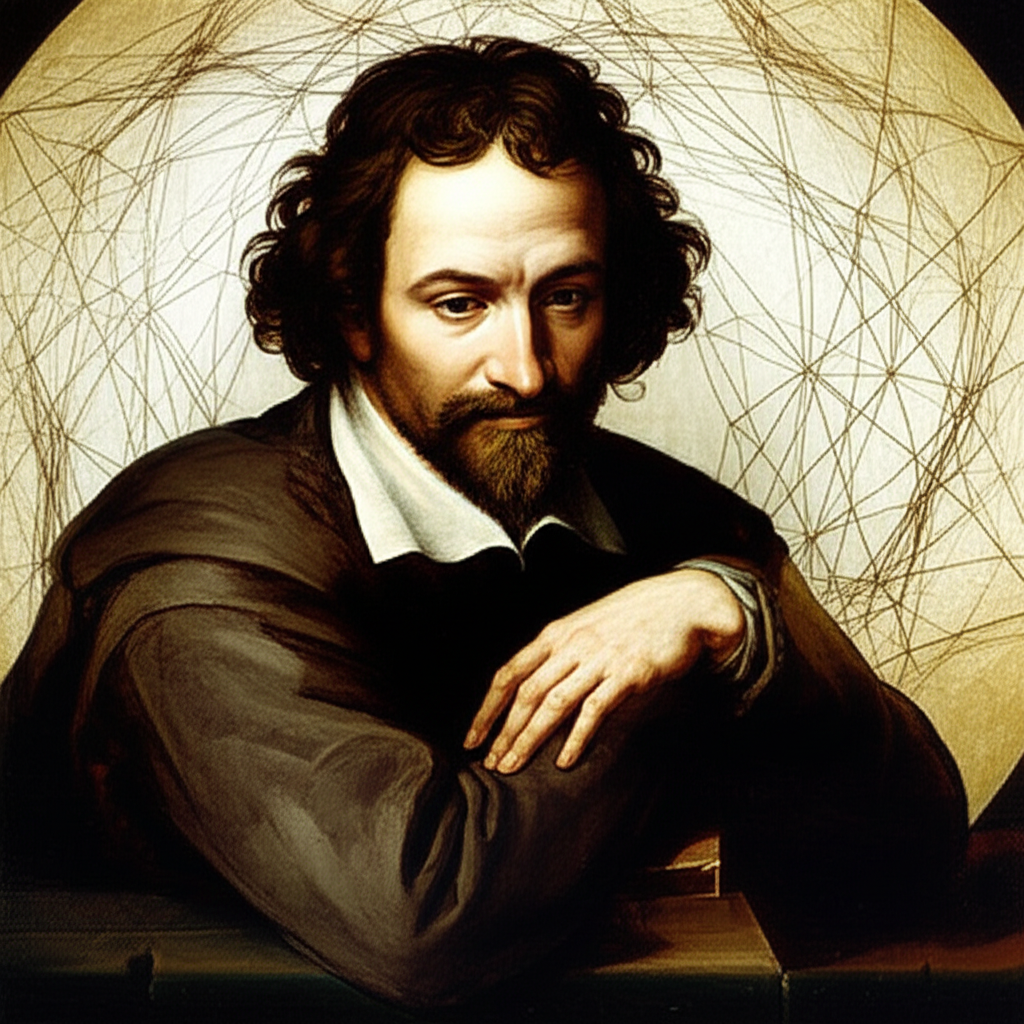
Perhaps the most potent challenge to reason's supremacy came from David Hume. In A Treatise of Human Nature, Hume famously declared: "Reason is, and ought only to be the slave of the passions, and can never pretend to any other office than to serve and obey them." This provocative statement upended centuries of philosophical tradition. Hume argued that reason alone cannot motivate action or establish ultimate ends; it can only help us find the most efficient means to achieve goals that are themselves set by our desires and emotions. Moral judgments, for Hume, are not derived from reason but from sentiment – our feelings of approval or disapproval. When we condemn an act, we are not appealing to some objective rational principle, but expressing a deeply felt emotion.
Hume's analysis suggested that what we often attribute to pure reason is, in fact, a sophisticated rationalization of our underlying emotions. This profoundly shifted the philosophical landscape, forcing a re-evaluation of man's capacity for truly objective judgment.
Kant and the Moral Imperative: Duty Over Inclination
Immanuel Kant, deeply influenced by Hume's skepticism but determined to salvage objective morality, posited a different solution. In his Groundwork of the Metaphysics of Morals, Kant argued that true moral judgment must be entirely independent of emotion (or "inclination"). Actions performed out of sympathy, love, or personal desire, while perhaps laudable, lack true moral worth. For an action to be morally good, it must be done from duty – motivated solely by respect for the moral law, which is derived from pure practical reason.
- Kant's Distinction:
- Actions from duty: Morally worthy, based on rational principles.
- Actions in accordance with duty but from inclination: Not morally worthy, driven by emotion or self-interest.
For Kant, the mind of man possesses the capacity for rational autonomy, allowing him to legislate the moral law for himself. Emotional influences, being heteronomous (originating outside of pure reason), contaminate the purity of moral judgment. The ideal man acts according to the Categorical Imperative, a universal moral command that applies regardless of personal feelings or consequences.
The Modern Mind: Reintegrating Emotion and the Will
The 19th and 20th centuries saw further challenges to the Enlightenment's emphasis on pure reason, with thinkers increasingly exploring the profound, often unconscious, role of emotion and will in shaping human judgment and values.
Nietzsche's Revaluation of Values: Emotion as a Manifestation of Will to Power
Friedrich Nietzsche, a profound critic of traditional morality and rationality, argued that what we deem "rational" or "moral" is often a sublimation or expression of deeper, more fundamental drives and emotions, particularly the "will to power." In works like Beyond Good and Evil and On the Genealogy of Morality, Nietzsche contended that even concepts like truth and objectivity are often rooted in psychological needs and perspectives, rather than pure, dispassionate reason.
For Nietzsche, emotion is not merely a disruptive force but a vital expression of life itself. The man who denies his passions, or seeks to suppress them in the name of a sterile rationality, diminishes his own vitality. Good judgment, for Nietzsche, is not about conformity to external moral codes or abstract reason, but about the courageous affirmation of life, the creation of one's own values, and the honest engagement with one's deepest drives. His philosophy invites us to critically re-evaluate the emotions that underpin our judgments and cultural values.
The Nuance of Human Judgment: Beyond Simple Opposition
Looking back through the Great Books, it becomes clear that the relationship between emotion and judgment is rarely simple. While some traditions advocate for reason's dominion, others highlight the indispensable, albeit sometimes perilous, role of feeling.
- The Problem of Bias: Unchecked emotion (e.g., anger, fear, prejudice) can undeniably warp our perceptions, lead to hasty conclusions, and prevent us from considering evidence fairly. This is the classical concern that runs from Plato to Kant.
- The Necessity of Motivation: As Hume pointed out, reason alone often lacks the motivational force to translate judgment into action. Emotion—whether compassion, conviction, or even righteous indignation—can be the engine that drives moral and practical choices.
- Emotion as Information: Modern philosophy and psychology (though beyond the scope of "Great Books," it reflects a shift in thinking) increasingly recognize that emotions provide valuable information about our environment and our values. They can signal danger, highlight injustice, or reveal what we truly care about, thereby informing our judgment rather than merely distorting it. Aristotle's emphasis on virtuous emotion anticipates this idea.
- The Mind of Man as an Integrated System: The ongoing philosophical quest is to understand the mind not as a battleground between warring faculties, but as an integrated system where emotion and reason, when properly understood and cultivated, can work in concert to achieve more profound and humanly rich judgment. The challenge for man is to cultivate an intelligent emotional life, where feelings are acknowledged, understood, and integrated into a comprehensive framework for decision-making.
Conclusion: The Enduring Dialectic
The journey through the Great Books of the Western World reveals a profound and enduring philosophical dialectic concerning the effect of emotion on judgment. From the ancient Greek ideal of rational control to Hume's radical re-centering of passion, and Kant's unwavering defense of duty, down to Nietzsche's celebration of vital drives, the tension between feeling and thought remains a central pillar of inquiry into the nature of the mind and the human condition.
There is no single, easy answer. Instead, we are presented with a spectrum of understanding: emotion as a dangerous impediment, a necessary evil, an informative signal, or even the very wellspring of our values. The profound insight gleaned from these philosophical giants is that the man who seeks to render sound judgment must first understand the intricate workings of his own mind, acknowledging the powerful, often subtle, ways in which his emotions shape his perception of reality and his choices within it. The ongoing task for each of us, therefore, is to cultivate a self-awareness that allows for both the critical assessment of our passions and the wise integration of their insights, in pursuit of a truly human and well-considered judgment.
Further Exploration
- YouTube: Plato's Chariot Allegory Explained
- YouTube: David Hume: Reason and the Passions
📹 Related Video: What is Philosophy?
Video by: The School of Life
💡 Want different videos? Search YouTube for: "The Effect of Emotion on Judgment philosophy"