

The Unseen Hand: How Emotion Shapes Human Judgment
The intricate dance between our feelings and our decisions has long captivated the greatest thinkers, revealing a profound truth about the human condition. At its core, the question of "The Effect of Emotion on Judgment" probes the very architecture of the Mind, challenging the notion of Man as a purely rational being. This article explores the historical philosophical perspectives on this fundamental tension, from ancient Greek insights to Enlightenment debates, ultimately seeking to understand how our passions, both noble and base, invariably steer the course of our Judgment. We will delve into how emotions can illuminate our path or obscure our vision, and how the pursuit of wisdom often begins with an honest reckoning of our inner emotional landscape.
The Perennial Conflict: Reason vs. Passion
From the earliest philosophical inquiries, the human Mind has been depicted as a battleground where the forces of reason contend with the powerful currents of Emotion. This internal struggle is not merely a psychological phenomenon but a foundational problem for ethics, politics, and the very definition of a well-lived life.
Ancient Greek philosophy, particularly through the works of Plato and Aristotle, provides a rich tapestry for understanding this dynamic.
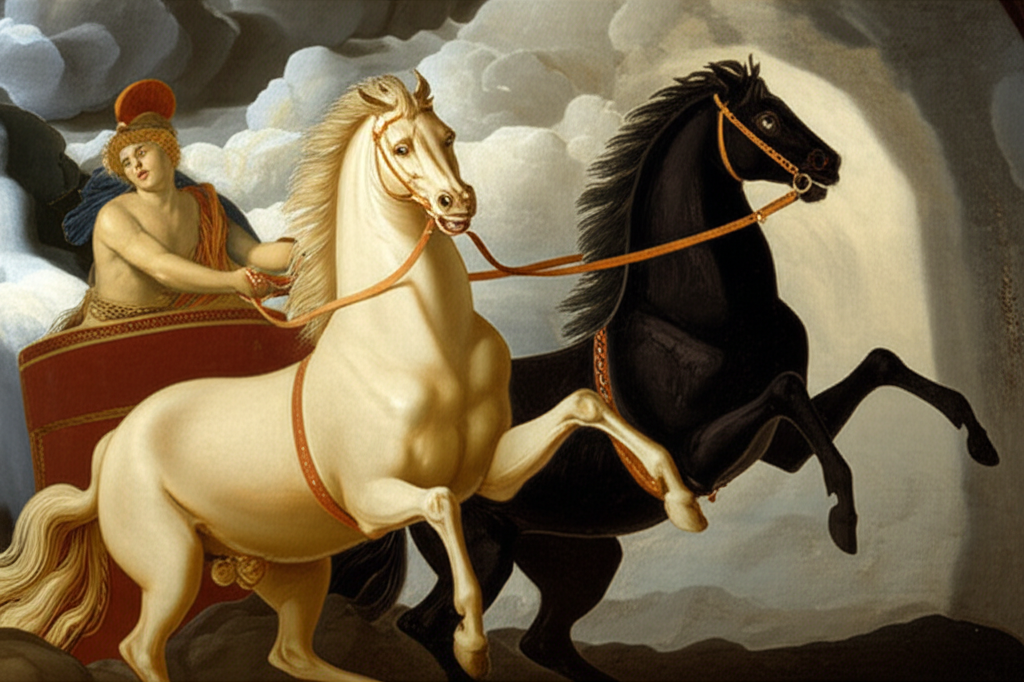
- Plato's Chariot Allegory: In the Phaedrus, Plato famously describes the soul as a charioteer (reason) guiding two winged horses: one noble and well-behaved (representing spiritedness or noble Emotion like courage), and the other unruly and impetuous (representing appetitive desires or base passions). The charioteer's task is to control and direct these horses, ensuring they work in harmony towards a higher good. Without the charioteer's skilled hand, the horses would pull in different directions, leading to chaos and poor Judgment. This allegory vividly illustrates the idea that while emotions possess immense power, they require the guidance of reason to achieve proper direction and purpose.
- Aristotle's Practical Wisdom (Phronesis): Aristotle, in his Nicomachean Ethics, offers a more integrated view. He argues that true virtue, and thus sound moral Judgment, is not the mere suppression of Emotion, but rather its appropriate expression. Man must learn to feel the right emotions, at the right time, towards the right objects, and to the right degree. This requires phronesis, or practical wisdom, which is an intellectual virtue that informs our actions and feelings. For Aristotle, a person who feels anger appropriately, for example, demonstrates a balanced Mind and exercises good Judgment. The virtuous individual is not emotionless, but rather emotionally intelligent.
The Philosophical Landscape of Emotion's Influence
The philosophical discourse surrounding Emotion and Judgment has evolved, yet its core questions remain strikingly consistent. Different eras have offered distinct frameworks for understanding this complex relationship.
Ancient Insights: The Stoic Path to Serenity
The Stoics, a school of philosophy flourishing in ancient Greece and Rome, offered a rigorous approach to the problem of Emotion. For them, many emotions (pathē) were considered irrational and disruptive forces that clouded the Mind and led to faulty Judgment. Their ideal was apatheia, not apathy, but freedom from disturbing passions.
- Controlling the Inner World: Stoic philosophers like Epictetus and Marcus Aurelius emphasized that while we cannot control external events, we can control our reactions to them. By training the Mind to distinguish between what is within our control and what is not, Man can cultivate a state of tranquility, allowing reason to guide Judgment unimpeded by destructive emotions like fear, anger, or excessive desire. They taught that these emotions arise from false beliefs and that by correcting these beliefs, one could achieve a clear and rational perspective.
The Enlightenment's Rational Turn and its Critics
The Enlightenment era brought a renewed emphasis on reason as the primary tool for understanding the world and making decisions.
- Descartes's Dualism: René Descartes, a pivotal figure, posited a clear distinction between the thinking Mind (res cogitans) and the extended body (res extensa). While he acknowledged the role of passions, he largely saw them as bodily disturbances that could interfere with the clarity of rational thought and Judgment. For Descartes, the path to true knowledge and sound decision-making lay in the disciplined application of reason.
- Hume's Radical Challenge: David Hume, however, famously challenged this rationalist supremacy. In his Treatise of Human Nature, he provocatively declared, "Reason is, and ought only to be the slave of the passions, and can never pretend to any other office than to serve and obey them." Hume argued that reason alone cannot motivate action; it can only help us find the best means to achieve ends that are ultimately dictated by our desires and emotions. For Hume, moral Judgment itself is rooted in sentiment rather than pure reason. This perspective dramatically shifted the focus, suggesting that Emotion is not merely an impediment but a fundamental driver of human behavior and moral evaluation.
- The Kantian Imperative: Immanuel Kant sought to rescue morality from the perceived relativism of Hume's emotivism. For Kant, true moral Judgment must be derived from pure practical reason, independent of any inclinations or emotions. Actions are truly moral only when performed out of a sense of duty, dictated by the categorical imperative, not from feelings of sympathy or compassion. While acknowledging the presence of emotions, Kant argued that they should not be the basis for universal moral laws.
Mechanisms of Emotional Influence on Judgment
The interplay between Emotion and Judgment is not always a straightforward opposition. Emotions can both hinder and facilitate effective decision-making, influencing various cognitive processes.
How Emotions Can Distort Judgment
Emotions, particularly when intense or unexamined, can introduce significant biases into our Judgment.
| Emotional State | Potential Effect on Judgment | Example of Bias |
|---|---|---|
| Fear/Anxiety | Leads to risk aversion, overestimation of threats, paralysis. | Availability Heuristic: Overestimating the likelihood of rare, negative events. |
| Anger/Frustration | Increases impulsivity, reduces empathy, narrows focus. | Hostile Attribution Bias: Interpreting ambiguous actions as aggressive. |
| Joy/Excitement | Leads to overconfidence, risk-seeking, underestimation of flaws. | Optimism Bias: Believing one is less likely to experience negative events. |
| Sadness/Grief | Can lead to inaction, rumination, pessimistic outlook. | Status Quo Bias: Reluctance to change, even when beneficial. |
| Disgust | Promotes avoidance, moral condemnation, purity concerns. | Contamination Effect: Irrationally avoiding something due to perceived impurity. |
These examples illustrate how our feelings can act as powerful filters, shaping how we perceive information, evaluate options, and ultimately arrive at a Judgment.
How Emotions Can Inform Judgment
Conversely, emotions are not solely detrimental. They can also serve as vital signals, providing intuitive information that reason alone might miss.
- Intuition and Gut Feelings: Often, what we call a "gut feeling" is a rapid, subconscious processing of information, informed by past experiences and emotional associations. This can be particularly valuable in complex situations where pure logical analysis is overwhelming or time-consuming.
- Moral Compass: Many philosophers, even those who advocate for reason, acknowledge the role of empathy, compassion, and a sense of justice (all emotionally charged concepts) in guiding moral Judgment. Without these, our understanding of right and wrong might be purely abstract, lacking the human resonance necessary for ethical action.
- Motivation and Drive: Emotions provide the impetus for action. Hope, ambition, love, and even righteous anger can drive Man to achieve great feats, overcome obstacles, and fight for justice. Without the emotional fuel, even the most rational plan might languish unimplemented.
Navigating the Inner World: Cultivating Sound Judgment
Given the pervasive influence of Emotion on Judgment, the question for Man becomes not how to eradicate feelings, but how to integrate them wisely. Cultivating sound Judgment involves a conscious effort to understand and manage our inner world.
Practical Strategies for the Integrated Mind:
- Self-Awareness: The first step is to recognize and name our emotions. Introspection, a practice lauded by many philosophical traditions, allows us to observe our feelings without immediately acting on them. Understanding why we feel a certain way can provide crucial context for our Judgment.
- Emotional Regulation: This involves developing strategies to manage intense emotional responses. Techniques such as mindful breathing, cognitive reframing (reinterpreting a situation to change one's emotional response), or simply taking a pause before reacting, can create the necessary space for reason to engage.
- The Role of Reflection: Deliberate thought is crucial. Before making significant decisions, especially under emotional duress, it is vital to step back and reflect.
- Consider alternative perspectives: How might someone else view this situation?
- Weigh the long-term consequences: Will this Judgment serve my higher values?
- Seek counsel: Discussing the situation with trusted, objective individuals can provide valuable external perspective.
- Cultivating Empathy: By actively trying to understand the emotional states of others, Man can broaden his own perspective, leading to more nuanced and compassionate Judgment.
Conclusion: The Integrated Self
The journey through the philosophical landscape of Emotion and Judgment reveals a recurring theme: Man is a creature of both reason and passion, and neither can be entirely dismissed without diminishing the richness of human experience. The ideal is not a cold, calculating machine devoid of feeling, nor a tempestuous being swayed by every whim. Rather, it is the integrated self, where the Mind learns to harness the power of Emotion, allowing it to inform, rather than dictate, sound Judgment.
From Plato's charioteer striving for harmony to Aristotle's pursuit of practical wisdom, and even to Hume's recognition of passion's fundamental role, the greatest thinkers of the Western world have grappled with this profound duality. To achieve robust Judgment is to embark on a lifelong endeavor of self-awareness, emotional intelligence, and continuous reflection, forging a path where reason and Emotion can, at last, walk hand-in-hand.
📹 Related Video: PLATO ON: The Allegory of the Cave
Video by: The School of Life
💡 Want different videos? Search YouTube for: ""Plato's Chariot Allegory explained," "Stoicism and emotional control""