

The Indispensable Foundation: The Education of the Citizenry
The enduring health and stability of any State hinge not merely on its laws or its leaders, but fundamentally on the character and intellect of its Citizenry. From the foundational texts of the Great Books of the Western World, a consistent and profound truth emerges: the deliberate Education of individuals is not a luxury, but an absolute Duty—both of the governing body and, indeed, of the individual themselves—to foster a populace capable of self-governance, critical thought, and virtuous action. This article explores the philosophical imperative behind civic education, tracing its evolution from ancient Greek paideia to Enlightenment ideals, arguing that the cultivation of the Citizen remains the paramount task for any society aspiring to justice and longevity.
The Foundational Imperative of Civic Education
For millennia, philosophers have grappled with the question of the ideal State and the role of its inhabitants. What becomes clear from a survey of Western thought is that the quality of governance and the flourishing of society are inextricably linked to the upbringing and ongoing intellectual development of its members. The very fabric of a functioning republic, or any just political order, relies upon an educated populace, capable of discerning truth, upholding virtue, and participating meaningfully in the collective life. Without this bedrock, the most meticulously crafted constitutions are but parchment, vulnerable to the whims of ignorance and passion.
The Athenian Ideal: Cultivating Virtue and Reason
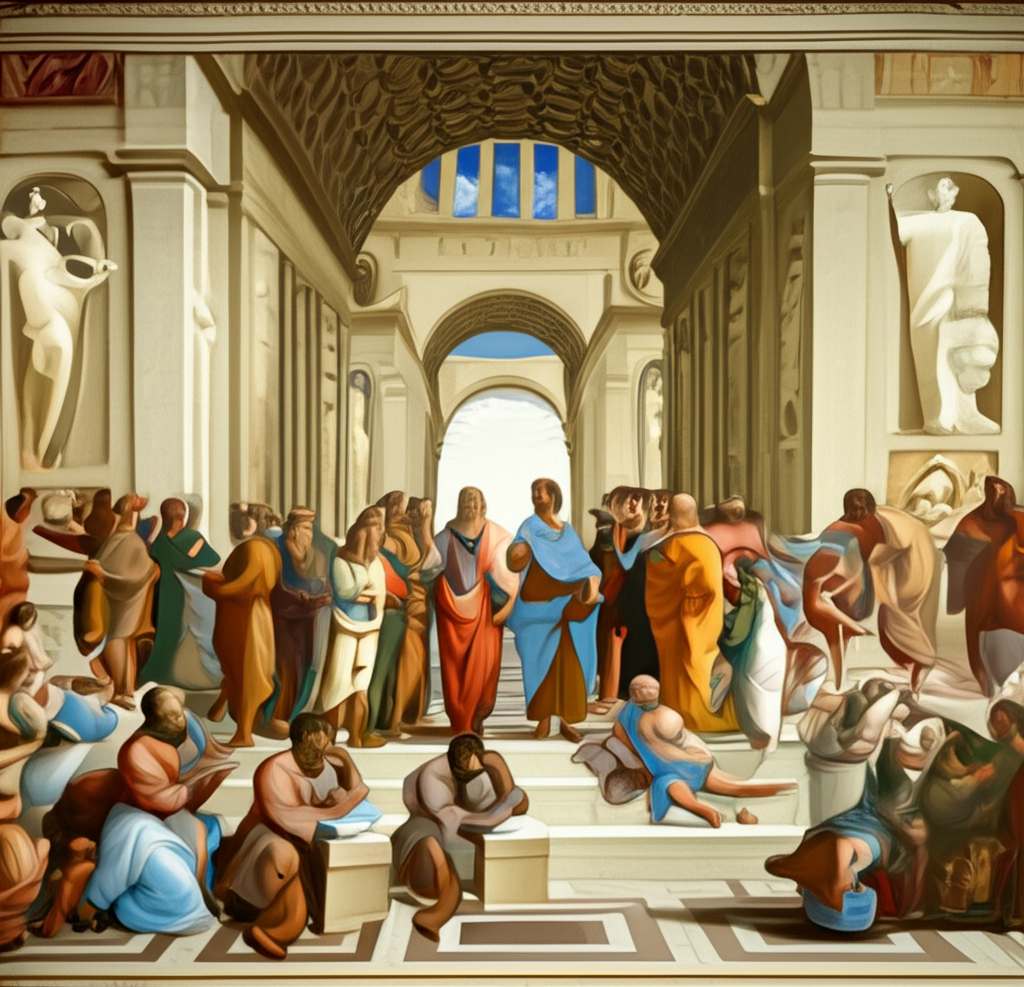
The ancient Greeks, particularly Plato and Aristotle, laid the groundwork for our understanding of civic Education. For them, paideia was a holistic process, encompassing moral, intellectual, and physical training, designed to produce citizens fit for the polis.
Plato's Republic: Guardians of the State
In Plato's Republic, the rigorous Education of the Citizen is paramount, particularly for the philosopher-kings and guardians. He posits a system where individuals are educated according to their nature and potential, with the ultimate goal of achieving justice within the individual soul and, by extension, within the State. This education is not merely vocational but aims at the apprehension of the Good, the True, and the Beautiful. The guardians undergo extensive training in music, gymnastics, mathematics, and dialectic, not just to acquire knowledge, but to cultivate wisdom, courage, temperance, and justice—the very virtues essential for leadership and the maintenance of the ideal State. Their Duty is to serve the collective good, a duty instilled through a lifetime of disciplined learning.
Aristotle's Politics: The Active Citizen
Aristotle, in his Politics, likewise emphasizes the critical role of Education in shaping the Citizen and the State. He argues that the form of government should dictate the nature of education, asserting that "the citizen should be molded to suit the form of government under which he lives." For Aristotle, the Citizen is one who participates in the administration of justice and in holding office. Such participation requires not only moral virtue but also practical wisdom (phronesis), which is developed through proper instruction and habituation. The State has a fundamental Duty to provide this Education, ensuring that individuals learn to live virtuously and contribute actively to the common good.
The Roman Model: Gravitas and Pietas
While less theoretically explicit than the Greeks, the Roman emphasis on civic virtue, epitomized by concepts like gravitas (seriousness, dignity) and pietas (duty, devotion to gods, family, and State), also underscored a profound belief in character formation through Education. Roman Citizens were expected to embody these virtues, learned through family, public life, and military service, all contributing to the strength and longevity of the Republic and later the Empire. Their Duty was to the res publica, the public thing, a commitment fostered from youth.
The Enlightenment's Vision: Reason and Rights
The Enlightenment era brought a renewed focus on individual reason and rights, shifting the perspective on the Education of the Citizen but not diminishing its importance. Thinkers like John Locke and Jean-Jacques Rousseau explored how education could foster rational individuals capable of participating in a social contract.
Locke's Empiricism and Moral Instruction
John Locke, in his Some Thoughts Concerning Education, advocated for a practical Education that emphasized reason, virtue, and self-control. Drawing from his empiricist philosophy, Locke believed that the mind was a tabula rasa and that character was largely shaped by experience and instruction. For him, the Education of a gentleman—a model Citizen—involved not only academic subjects but also extensive moral training to develop prudence, civility, and a strong sense of Duty. This approach aimed to produce individuals capable of rational thought and responsible participation in society, crucial for a stable constitutional State.
Rousseau's General Will and Civic Virtue
Jean-Jacques Rousseau, in Emile, or On Education and The Social Contract, presented a more radical view. He argued for an Education that would preserve the child's natural goodness, shielding them from the corrupting influence of society, before introducing them to the Duties of a Citizen. For Rousseau, true freedom lay in obedience to a law one prescribes for oneself, aligning with the "general will" of the State. The Education of the Citizen was therefore about forming individuals who could transcend private interests for the common good, embodying a profound civic virtue essential for a legitimate republic.
The Modern Predicament: Education in a Complex State
In our contemporary world, the challenges to the Education of the Citizenry are perhaps more complex than ever. Global interconnectedness, rapid technological change, and the proliferation of information (and misinformation) demand an ever more sophisticated approach to civic instruction. The core philosophical questions, however, remain: How do we cultivate critical thinking? How do we instill a sense of Duty and responsibility towards the State and fellow Citizens? How do we prepare individuals not just for employment, but for active, ethical participation in democratic life? The answers, as the Great Books suggest, lie in a continuous commitment to holistic Education that prioritizes both intellectual rigor and moral formation.
📹 Related Video: PLATO ON: The Allegory of the Cave
Video by: The School of Life
💡 Want different videos? Search YouTube for: ""Plato's Philosophy of Education for the Ideal State""
📹 Related Video: ARISTOTLE ON: The Nicomachean Ethics
Video by: The School of Life
💡 Want different videos? Search YouTube for: ""Aristotle on Civic Virtue and the Purpose of the Polis""
Conclusion: The Enduring Duty of the State and the Individual
The journey through the philosophical discourse on the Education of the Citizenry reveals a timeless truth: the flourishing of any State is inextricably linked to the intellectual and moral development of its Citizens. From Plato's guardians to Rousseau's virtuous republicans, the call for deliberate, comprehensive Education echoes across the centuries. It is the profound Duty of the State to provide the framework for such learning, and equally, the Duty of each individual Citizen to engage with it, to cultivate reason, virtue, and a profound sense of civic responsibility. Only through this continuous, mutual commitment can societies hope to achieve justice, stability, and genuine human flourishing. The wisdom of the ancients, preserved in the Great Books, remains our most vital guide in this perpetual endeavor.