

The Education of the Citizenry: A Philosophical Imperative
A Summary of Civic Enlightenment
The flourishing of any State hinges upon the enlightened Education of its Citizenry. From the ancient polis to modern republics, philosophers have consistently underscored the profound Duty of society to cultivate virtuous, rational, and engaged individuals. This article explores the classical philosophical arguments that posit Education not merely as a means to personal advancement, but as the foundational pillar for a stable, just, and thriving State, where the Citizen understands and embraces their essential Duty to the collective good.
The Imperative of Enlightened Governance
For millennia, the greatest minds of Western thought have grappled with the question of how best to structure society. One truth, perhaps more enduring than any other, is that the health of the State is inextricably linked to the quality of its citizens. It is not enough to merely exist within the bounds of a nation; a true Citizen must be formed, shaped, and guided toward an understanding of their role, their rights, and their responsibilities. This process, by definition, is Education.
The "Great Books of the Western World" are replete with discourses on this very subject. From Plato's ideal republic to Locke's vision of rational individuals, the consensus emerges: the Education of the Citizenry is not an optional amenity but a fundamental Duty – both of the State to its people and of the people to themselves and their community.
Foundational Philosophies of Civic Instruction
The concept of civic Education finds its deepest roots in classical antiquity, evolving through the Enlightenment and continuing to challenge contemporary society.
Ancient Ideals: Shaping the Polis
-
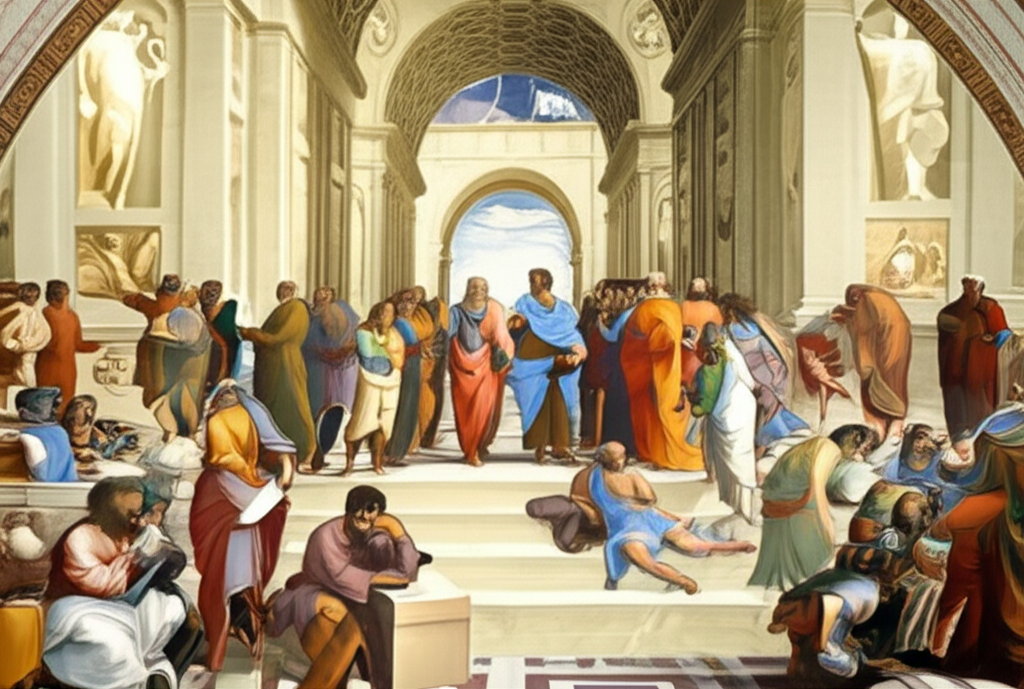
Plato's Vision of the Philosopher-King: In his Republic, Plato argues for a rigorous, lifelong Education system designed to identify and cultivate the most rational souls, culminating in the philosopher-kings. For Plato, the State is an extension of the individual soul, and thus, its justice and harmony depend entirely on the Education that shapes its citizens. The famous Allegory of the Cave illustrates the transformative power of Education in leading individuals from shadows to truth, enabling them to govern wisely. The Duty of the State is to provide this Education, and the Duty of the individual is to embrace it for the sake of the polis.
-
Aristotle and the Virtuous Citizen: Aristotle, in Politics and Nicomachean Ethics, emphasizes Education for virtue and practical wisdom (phronesis). He defines the Citizen not merely by residence, but by participation in the deliberative and judicial functions of the State. Such participation requires proper Education to discern good from bad, just from unjust. The State, therefore, has a Duty to prescribe a common Education for all its citizens, ensuring they are habituated to virtue and capable of contributing meaningfully to collective governance.
- “The citizen should be moulded to suit the form of government under which he lives.” – Aristotle, Politics
Enlightenment Visions: Reason, Liberty, and the Social Contract
The Enlightenment era brought new perspectives, shifting the focus from the collective polis to the rights and reason of the individual, yet still emphasizing the critical role of Education in forming the Citizen.
-
Locke's Rational Individual: John Locke, particularly in Some Thoughts Concerning Education and his Two Treatises of Government, champions Education that cultivates reason, self-control, and an understanding of natural rights and Duty. His ideal Citizen is a rational individual capable of self-governance and responsible participation in a civil State. Education is crucial for individuals to understand their liberty and the social contract that binds them.
-
Rousseau's Civic Virtue: Jean-Jacques Rousseau, in Emile, or On Education and The Social Contract, argues for an Education that fosters both natural freedom and civic virtue. He believed that Education should prepare individuals to be autonomous while also instilling a deep loyalty to the general will of the State. The Citizen's Duty is to conform their private will to the general will, a conformity best achieved through proper moral and civic Education.
The Citizen's Duty and the State's Mandate
The philosophical trajectory from Plato to Rousseau reveals a consistent thread: a well-ordered State is not a natural occurrence but a deliberate construction, built upon the bedrock of an educated populace. The Duty of the State is to provide an Education that transcends mere vocational training, aiming instead for the holistic development of the Citizen. This includes:
- Moral and Ethical Development: Instilling virtues such as justice, temperance, courage, and prudence.
- Critical Thinking and Reason: Equipping individuals to discern truth, evaluate arguments, and participate intelligently in public discourse.
- Civic Engagement: Fostering an understanding of political structures, laws, rights, and the responsibilities inherent in self-governance.
- Cultural Literacy: Connecting citizens to their shared heritage, values, and the intellectual traditions that define their society.
Key Thinkers on Civic Education
| Philosopher | Era | Primary Focus in Civic Education (or even to a simple list, if the context permits).
The reciprocal nature of this social Duty.
The reciprocal nature of this social Duty is clear. The State has a Duty to provide an Education that fosters the development of its citizens, and the Citizen has a reciprocal Duty to pursue that Education and apply its lessons for the benefit of the State. This is not a passive transaction but an active, ongoing engagement.
Contemporary Challenges and Enduring Principles
In our complex modern world, the principles laid down by these philosophical giants remain profoundly relevant. The challenges to civic Education are numerous: the proliferation of misinformation, the polarization of public discourse, and the ever-present temptation to prioritize individual gain over common good. Yet, the core Duty remains: to ensure that every Citizen is equipped with the critical faculties and moral compass necessary to navigate these complexities and uphold the integrity of the State.
The Education of the Citizenry is thus not a historical curiosity but a perpetual philosophical and practical imperative. It is the very engine of progress, the guardian of liberty, and the enduring promise of a just society.
Further Exploration
📹 Related Video: PLATO ON: The Allegory of the Cave
Video by: The School of Life
💡 Want different videos? Search YouTube for: "Plato's Republic Philosophy Explained"
📹 Related Video: ARISTOTLE ON: The Nicomachean Ethics
Video by: The School of Life
💡 Want different videos? Search YouTube for: "Aristotle Politics and Ethics Civic Virtue"