

The Education of the Citizenry: Foundations of a Flourishing State
The vitality of any political community, indeed its very capacity for self-governance, hinges fundamentally on the Education of its Citizens. This article posits that a robust system of civic and moral Education is not merely a desirable amenity but a foundational Duty of the State, essential for cultivating individuals capable of upholding justice, fostering common good, and ensuring the enduring health of the body politic. Without a citizenry rigorously prepared for the demands of self-rule and collective responsibility, the noblest aspirations for freedom and order remain elusive.
The Imperative of Cultivation: Shaping the Soul of the Citizen
From the earliest inquiries into political philosophy, thinkers have understood that the character of the Citizen directly determines the character of the State. It is a reciprocal relationship: the State provides the framework for individual flourishing, but that flourishing, in turn, strengthens the State. This profound interdependence necessitates a deliberate and comprehensive approach to Education, one that transcends mere vocational training to encompass moral, intellectual, and civic formation.
The purpose of this Education is not simply to impart knowledge, but to cultivate virtue. As articulated in the foundational texts of the Western tradition, a well-ordered society requires individuals who are not only skilled but also wise, just, and temperate. These virtues, when widely distributed among the populace, form the bedrock upon which stable and prosperous societies are built.
Philosophical Pillars of Civic Education
The concept of educating the Citizenry has been a recurring theme throughout the Great Books of the Western World, evolving with each epoch but maintaining a core focus on the relationship between individual development and the common good.
Plato's Vision: The Architectonic Role of Education
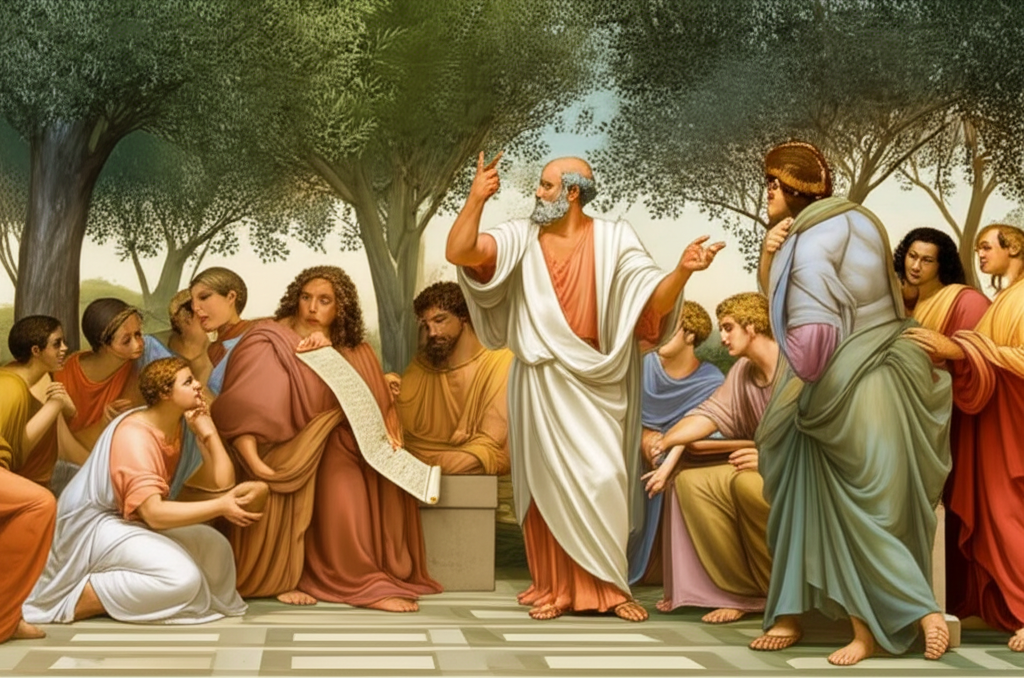
In Plato's Republic, Education is the primary instrument for shaping the ideal State. His elaborate curriculum, from early childhood to philosophical maturity, is designed to identify and train individuals for their specific roles, particularly the philosopher-kings who bear the heaviest Duty of governance. For Plato, Education is a process of turning the soul towards truth, an ascent from shadows to light. It is through this rigorous intellectual and moral training that individuals come to understand the Good and are thus equipped to serve the State with wisdom and justice. The Citizen's Duty is not merely obedience, but a cultivated understanding of their place and function within the harmonious whole.
Aristotle's Pragmatism: Virtue in the Polis
Aristotle, in his Politics and Nicomachean Ethics, emphasizes Education as crucial for developing virtuous Citizens capable of participating effectively in the polis. He argues that the Education of the Citizen should be a public concern, not left to individual families, because the State has a vested interest in producing good men and women. For Aristotle, virtue is practical; it is learned through habit and experience. The State's Duty is to provide an Education that fosters both intellectual and moral virtues, enabling Citizens to deliberate wisely, act justly, and contribute to the collective well-being. The Citizen's Duty is to develop these virtues for the sake of both personal happiness and the flourishing of the community.
Enlightenment Perspectives: Reason, Rights, and Republican Virtue
Later thinkers, such as Locke and Rousseau, shifted the emphasis towards individual rights and the social contract, yet still recognized the indispensable role of Education. Locke, though focused on reason and natural rights, implicitly understood the need for an Education that would enable individuals to exercise their freedom responsibly. Rousseau, in his Social Contract, argued for a public Education that would instill civic virtue and a commitment to the general will, transforming individuals into devoted Citizens whose private interests align with the public good. The State's Duty is to ensure Education that enlightens Citizens about their rights and responsibilities, fostering a collective identity and purpose.
The Pillars of a Comprehensive Citizen Education
To effectively cultivate a responsible and engaged Citizenry, an educational system must address several key areas:
- Moral and Ethical Instruction: Imparting a strong sense of right and wrong, empathy, and respect for others. This includes understanding the principles of justice, fairness, and the common good.
- Civic Knowledge and Participation: Teaching the structure and function of government, the rights and Duties of Citizens, and the mechanisms for political participation. This moves beyond rote memorization to foster active, informed engagement.
- Critical Thinking and Rational Discourse: Equipping Citizens with the ability to analyze information, evaluate arguments, and engage in constructive debate. This is crucial for resisting demagoguery and making sound collective decisions.
- Cultural and Historical Literacy: Providing an understanding of the shared heritage, traditions, and struggles that define a community and a nation. This fosters a sense of belonging and continuity.
- Personal Responsibility and Self-Governance: Encouraging self-discipline, accountability, and the capacity for independent thought and action, which are prerequisites for collective self-governance.
The Reciprocal Duty: Citizen and State
The relationship between Education and the State is one of mutual Duty. The State has an undeniable Duty to provide accessible, high-quality Education that prepares its Citizens for their roles in society. This is not charity, but an investment in its own future and stability. Conversely, the Citizen has a Duty to engage with this Education, to cultivate their intellect and character, and to apply their learning for the benefit of the community.
This reciprocal Duty ensures that Education is not a passive reception of facts, but an active process of becoming. It fosters a sense of ownership over the political process and encourages the continuous pursuit of wisdom, which is vital for adapting to new challenges and maintaining a dynamic, healthy State.
Conclusion: A Continuous Endeavor for the Body Politic
The Education of the Citizenry is an unending project, a constant refinement of the means by which individuals are prepared to live together justly and productively. It is the very engine of civic life, ensuring that each generation is equipped to inherit, sustain, and improve the State it receives. From the Socratic method of questioning to the enlightenment ideals of rational discourse, the Western tradition consistently underscores that a truly free and self-governing people is, at its core, an educated people. This ongoing commitment to Education is not merely a philosophical ideal; it is the practical necessity for the survival and flourishing of any human community.
📹 Related Video: PLATO ON: The Allegory of the Cave
Video by: The School of Life
💡 Want different videos? Search YouTube for: ""Plato's Republic Education" or "Aristotle Politics Citizenship""