

The Inescapable Dance: Change and Opposition in the Fabric of Nature
Nature, in its profound and intricate complexity, is not a static tableau but a ceaseless drama of transformation. This article explores how change and opposition are not mere features of the natural world, but its very essence, driving all phenomena from the cosmic to the subatomic. Drawing insights from classical philosophy and the foundational principles of physics, we argue that understanding this dynamic interplay is crucial to comprehending the fundamental structure and evolution of reality itself. From the ancient Greek recognition of constant flux to the modern scientific description of forces, opposition fuels change, shaping the nature of everything we observe.
The Ever-Flowing River: Heraclitus's Flux and the Quest for Stability
The concept of change has captivated philosophers since antiquity. Heraclitus of Ephesus famously declared that "one cannot step into the same river twice," encapsulating the idea that everything is in a state of perpetual becoming. This profound insight challenged the notion of a fixed, unchanging reality, suggesting instead that change is the only constant. Yet, alongside this recognition of flux, there has always been a human and philosophical yearning for stability, for an underlying permanence.
- Heraclitean Perspective: Emphasis on constant motion, the unity of opposites, and the idea that strife (opposition) is the father of all things.
- Parmenidean Counterpoint: The argument that true being must be unchanging and eternal, and that change is an illusion.
The tension between these two poles – the apparent dynamism of nature and the conceptual desire for an immutable foundation – forms a cornerstone of Western thought, profoundly influencing how we perceive the dynamics of change and opposition.
Opposition as the Engine of Natural Transformation
It is not merely that things change, but that change is often precipitated, sustained, and even defined by opposition. Consider the fundamental forces described by physics: gravity pulls, electromagnetic forces attract and repel, strong and weak nuclear forces bind and decay. These are not isolated actions but interactions, often between opposing tendencies.
Key Aspects of Opposition in Nature:
- Dialectical Process: From the ancient recognition of hot and cold, wet and dry, to the Hegelian synthesis of thesis and antithesis, opposition often leads to a new state or understanding.
- Balance and Imbalance: Natural systems often exist in a state of dynamic equilibrium, where opposing forces balance each other. A disruption of this balance initiates change until a new equilibrium is reached.
- Creative Destruction: The life cycle of stars, the erosion of mountains, the processes of natural selection – all involve a form of destruction that paves the way for new forms and structures.
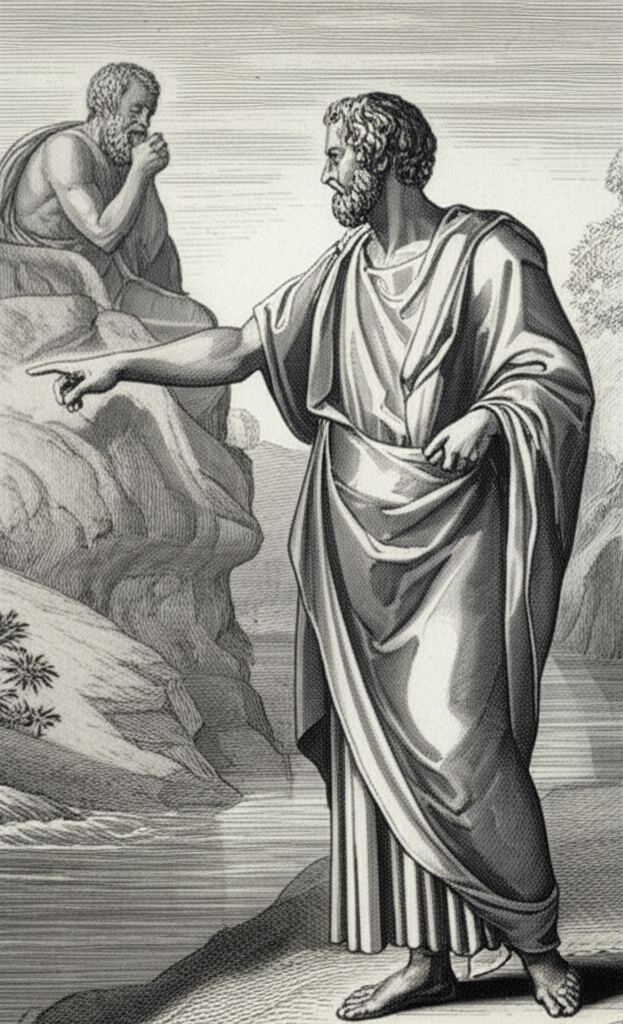 gazes at a solid, unchanging monument, representing the philosophical tension between flux and permanence.)
From Microcosm to Macrocosm: Universal Dynamics
The principles of change and opposition manifest across all scales of nature.
- Atomic Level: Particles possess opposing charges, leading to interactions that form molecules and matter. Energy states shift, causing particles to move and transform.
- Biological Systems: Life itself is a testament to change and opposition. Organisms adapt to environmental pressures (opposition), leading to evolution (change). The struggle for survival, the predator-prey relationship – these are fundamental oppositions driving biological change.
- Geological Processes: Tectonic plates collide (opposition), causing earthquakes and mountain formation (change). Erosion wears down landforms, while volcanic activity builds them up.
- Cosmic Scale: Stars are born from the gravitational collapse of gas clouds (opposition to outward pressure), burn through nuclear fusion (change of elements), and eventually die, often in spectacular explosions that seed new generations of stars and planets.
These examples underscore that opposition is not an anomaly but a pervasive mechanism through which change unfolds throughout the universe.
The Role of Physics in Quantifying Change and Opposition
Modern physics provides the framework for understanding and quantifying these dynamics. Newton's Third Law, for instance, states that "for every action, there is an equal and opposite reaction." This simple principle encapsulates the very essence of opposition as a driver of change. Forces are always paired, always interacting in opposition, leading to shifts in momentum, energy, and state.
- Energy Transformations: Energy is never created or destroyed, but it constantly changes form, often through processes involving opposition (e.g., potential energy converting to kinetic energy).
- Entropy: The second law of thermodynamics describes the tendency of systems to move towards increased disorder, a form of change driven by the inherent opposition to maintaining perfect order.
- Quantum Mechanics: At the subatomic level, particles exhibit wave-particle duality, a profound opposition in their nature, and their interactions are governed by probabilities of change.
The rigorous language of physics allows us to describe, predict, and manipulate these natural processes, revealing the intricate dance of forces that define reality.
📹 Related Video: What is Philosophy?
Video by: The School of Life
💡 Want different videos? Search YouTube for: ""Heraclitus constant change philosophy explained""
📹 Related Video: PLATO ON: The Allegory of the Cave
Video by: The School of Life
💡 Want different videos? Search YouTube for: ""Newton's Laws of Motion explained action reaction""
Conclusion: Embracing the Dynamic Core of Reality
To truly understand nature is to embrace its dynamic core, recognizing that change is ceaseless and opposition is its fundamental catalyst. From the philosophical insights of the Great Books that illuminated the inherent tension in existence to the precise equations of modern physics that describe every interaction, the interplay of these two forces shapes every aspect of our reality. Far from being chaotic, this constant interplay reveals a profound order, a universe forever in motion, perpetually evolving through the creative tension of opposing forces. It is in this dynamic relationship that the true beauty and complexity of the natural world are found.