

In exploring Plato’s philosophical work, we find recurring themes that bridge the mortal and the divine, particularly regarding human creativity and wisdom. Plato’s reflections aren’t mere abstract musings but real attempts to capture the felt experience of human connection to the divine. For Plato, creativity and the pursuit of truth are not just rational endeavors; they’re also deeply intertwined with the divine spark that transcends reason. This idea forces us to reconsider what it means to be inspired. Are our most profound insights merely products of our cognitive faculties, or do they point to something greater, perhaps even transcendent?
Consider Plato’s depiction of poets and artists in Ion. These figures, he suggests, are not merely talented individuals but vessels for divine messages. Plato introduces the idea of “divine madness” (theia mania), a concept that challenges our modern understanding of creativity as purely internal or self-generated. Instead, he proposes that moments of profound insight or artistic brilliance might be gifts from the divine, a theme that remains relevant today as we strive to balance rationality with inspiration.
For readers passionate about bridging ancient wisdom with modern reflections, planksip.org provides a community space where these ideas can be explored further. Here, we aim to personify Plato as an ideal worth imagining—a philosopher in search of higher truths through divine connections. How do you relate to these ideas in your own creative or intellectual pursuits?
From the Archives of Ancient Greece: Featuring Dr. Michael Sugrue
Dr. Michael Sugrue offers a compelling perspective on Plato’s Ion and Phaedrus, where divine inspiration takes center stage. Sugrue’s commentary emphasizes Plato’s notion of poets and orators as mouthpieces of the gods, who receive their insights not from personal intellect but through divine influence. He points out how Plato elevates the artist to a medium through which the divine can communicate, suggesting a partnership between mortal and divine forces in the creative act.
For example, Sugrue reflects on Socrates’ dialogue with Ion, where Ion’s inability to articulate why he excels at reciting Homer hints at a source of inspiration beyond human understanding. Socrates playfully suggests that Ion’s talent is not from his own skill but because the gods have chosen him as a conduit for the epic poems. This divine-human partnership sheds light on Plato’s broader philosophical project, which often seeks to reconcile human frailty with the pursuit of higher truths.
Such reflections prompt us to consider where our inspirations come from. Are they the products of training, discipline, and rational effort alone, or do they arise in moments of divine encounter? The ongoing dialogue in the community at planksip.org tackles these questions head-on, inviting members to engage with these ancient insights in a modern context.
Insights from the Dialogues: Quoting Plato
Plato’s dialogue Ion (533d-534e) provides a vivid description of divine inspiration as something akin to a magnetic chain, linking the gods, poets, and their audience. According to Socrates, the muse first inspires the poet, and through him, the rhapsode, and finally the audience, creating a chain of divine influence. This analogy invites us to think of creativity not as an isolated act but as part of a greater flow of inspiration—a powerful chain where each link connects the divine to the human.
In Phaedrus, Plato expands this idea through his concept of divine madness (theia mania), which he categorizes into four kinds: prophetic, ritual, poetic, and erotic madness. Each form represents a kind of divine intervention in human life, showing how the divine acts as a catalyst for wisdom, revelation, and creative expression. These ideas challenge the modern perspective of genius as individual talent and instead offer a communal or even cosmic vision of knowledge.
Reflect on a moment when you felt a sudden, inexplicable flash of insight or creativity. Was it purely a rational occurrence, or did it feel like something greater—something almost otherworldly? At planksip.org, we encourage such reflections, connecting ancient philosophy with everyday experiences.
Chance and Fate: Exploring Ancient Games
In ancient Greece, games like knucklebones (astragali) were not only pastimes but also a means of seeking the favor of the gods or divining one’s fate. These games symbolized the unpredictable nature of life and the influence of divine forces. Just as the throw of a die could alter one’s fortune, Plato’s portrayal of divine inspiration in his dialogues suggests that moments of brilliance and insight are often outside our control, subject to the whims of a higher power.
Consider how in Ion, Socrates describes the poet’s connection to the divine as similar to the magnetic attraction between iron rings. This metaphor parallels the idea of chance in games, where fate determines outcomes beyond one’s deliberate choices. The game of knucklebones, with its reliance on luck and divine favor, mirrors this relationship between the divine and the creative individual, highlighting the mystery at the core of both play and philosophy.
Explore the Mystical World of Astraguli: Ancient Games of Chance with Cultural Significance.
These ancient games were more than just entertainment—they were symbolic acts that captured the tension between human agency and divine will. At planksip.org, we explore these themes further, inviting members to ponder the role of chance in their own lives and how divine inspiration continues to shape their paths.
Virtues Revisited: Practical Lessons for Today
In our modern context, divine inspiration often feels distant or foreign. Yet, the virtue of Sophrosyne—or self-restraint—remains relevant in balancing our rational and emotional responses to inspiration. Plato saw Sophrosyne as essential in preventing the excesses of divine madness from leading us astray. In Phaedrus, the dialogue on divine madness also carries a lesson about temperance: to welcome inspiration while maintaining a disciplined and discerning mind.
How can we practice this balance today? Perhaps it begins with humility—acknowledging that not every idea or insight originates from our own efforts. Instead, inspiration may emerge from our openness to something beyond ourselves, whether we name it the divine, nature, or the subconscious. At planksip.org, we encourage members to share how they cultivate this balance in their own lives.
Engage with Us: Reader’s Corner
Do you believe in the idea of divine inspiration, or do you think creativity and insight are purely products of human intellect? We invite you to join the discussion on planksip.org, where readers can explore this theme through dialogues and personal reflections. What experiences have led you to question the origins of your own creative insights? Share your thoughts, and we may feature them in next week’s edition!
Closing Reflection: Socrates’ Enduring Legacy
In examining Plato’s treatment of divine inspiration, we are reminded that the pursuit of truth requires more than rational effort; it demands a willingness to open ourselves to forces beyond our comprehension. Whether through artistic inspiration, philosophical insight, or the acceptance of fate, Plato challenges us to embrace the mystery at the heart of knowledge. At planksip.org, we strive to embody this ideal, creating a space for those who seek wisdom by welcoming both reason and inspiration. Join us as we continue to reimagine Plato’s enduring legacy in a world still yearning for truth.
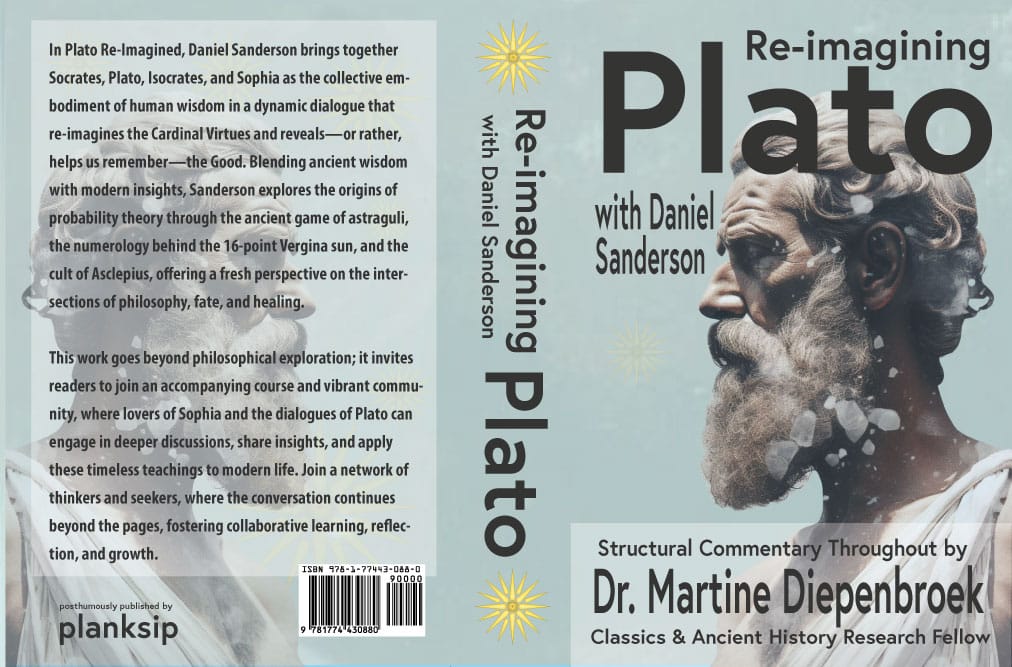
Plato Re-Imagined
This course offers 32 comprehensive lectures exploring most of Plato's dialogues. These lectures guide students toward a consilient understanding of the divine—a concept that harmonizes knowledge across disciplines and resonates with secular and religious leaders. As a bonus, Lecture #33 focuses on consilience, demonstrating how different fields of knowledge can converge to form a unified understanding.


