

The Profound Rift: Unpacking the Distinction Between Wisdom and Knowledge
Summary: In the vast landscape of philosophy, the terms wisdom and knowledge are often used interchangeably, yet they represent fundamentally distinct concepts. While knowledge refers to the acquisition of facts, information, and understanding through study and experience, wisdom transcends mere data. It embodies the ability to apply knowledge with good judgment, understand ultimate causes and purposes, and navigate life with a profound sense of insight and ethical clarity. This crucial distinction is not merely semantic; it underpins how we approach learning, decision-making, and the very meaning of a well-lived life, echoing through the foundational texts of the Great Books of the Western World.
Unpacking the Age-Old Conundrum
From the earliest Greek thinkers to the scholastic philosophers of the Middle Ages and beyond, the pursuit of understanding has always been at the heart of human endeavor. But what exactly are we pursuing? Is it the accumulation of facts, or something deeper, more profound? The distinction between wisdom and knowledge stands as one of philosophy's most enduring and vital inquiries, urging us to look beyond the surface of information to the very essence of understanding.
Knowledge: The Accumulation of Facts and Understanding
At its core, knowledge (from the Greek episteme or Latin scientia) is about knowing that. It is the verifiable information, the learned skills, and the theoretical understanding we acquire. Think of it as the building blocks of thought, gathered through observation, experimentation, study, and logical deduction.
- Characteristics of Knowledge:
- Acquisition: Gained through learning, experience, and reason.
- Scope: Specific, propositional, often quantifiable.
- Nature: Factual, descriptive, explanatory.
- Goal: To understand how things work or what is true.
Consider Aristotle's meticulous biological classifications or Euclid's geometric proofs – these are pinnacles of knowledge. They provide systematic understanding of specific domains. A historian possesses knowledge of past events; a scientist, knowledge of natural laws. It is the mastery of a subject, the grasp of its principles, and the ability to articulate its truths.
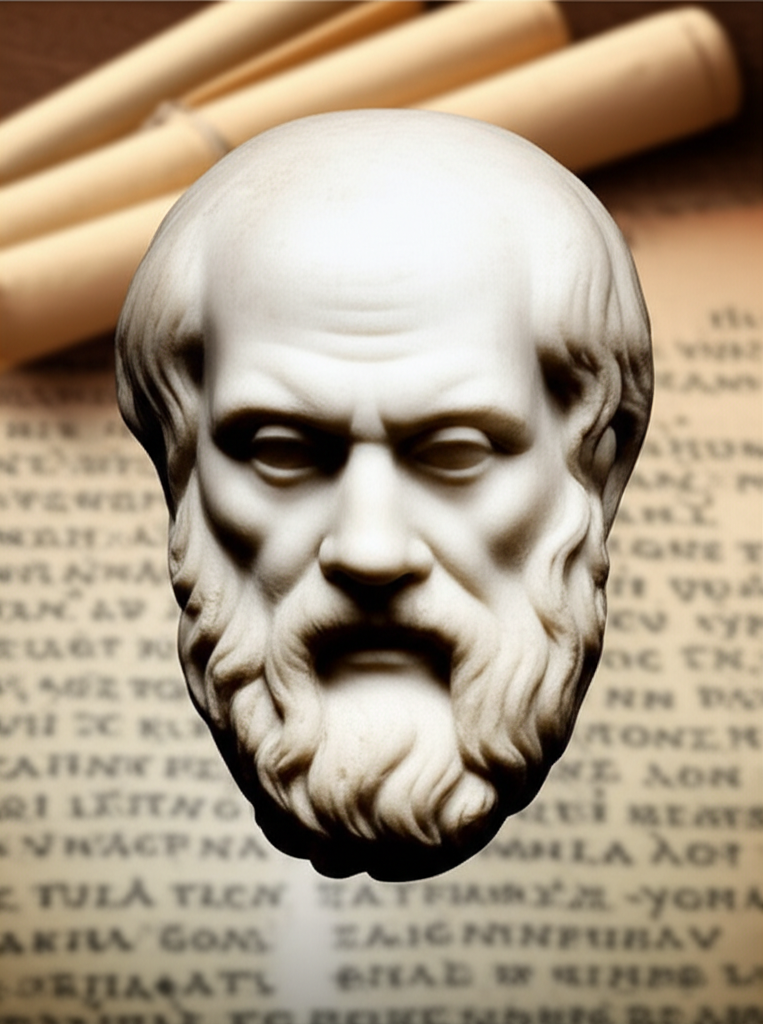
Wisdom: Beyond Mere Information
Wisdom (from the Greek sophia or Latin sapientia), by contrast, is not merely about knowing that, but knowing why and knowing how to live well. It transcends the factual and moves into the realm of insight, judgment, and perspective. It's the ability to apply knowledge effectively, to discern what truly matters, and to make sound decisions in the face of life's complexities.
- Characteristics of Wisdom:
- Application: Involves good judgment, ethical insight, and practical decision-making.
- Scope: Holistic, universal, concerned with ultimate values and purposes.
- Nature: Prescriptive, evaluative, often qualitative.
- Goal: To understand why things are, what is good, and how to live a meaningful life.
Socrates, famously claiming to know nothing, exemplified wisdom not through encyclopedic knowledge, but through his profound understanding of human limitations and his relentless pursuit of virtue. Aristotle's concept of phronesis, or practical wisdom, highlights the ability to deliberate well about what is good and advantageous for oneself and for humanity. It's the capacity to see the bigger picture, to understand the implications of actions, and to live in accordance with profound ethical principles.
The Crucial Distinction: A Comparative View
To further clarify the fundamental distinction, let's examine their core attributes side-by-side:
| Feature | Knowledge | Wisdom |
|---|---|---|
| Primary Focus | Facts, information, data, theories | Understanding, insight, judgment, values, purpose |
| Nature | Descriptive, objective, verifiable | Evaluative, subjective (in application), profound |
| Acquisition | Study, experience, observation, memorization | Reflection, life experience, ethical deliberation |
| Outcome | Understanding what and how | Understanding why and how to live |
| Scope | Specific domains, individual subjects | Holistic, universal, life-encompassing |
| Relationship | A prerequisite for wisdom (often) | Transcends and utilizes knowledge |
The Interplay: Can One Exist Without the Other?
It's entirely possible, and indeed common, to be highly knowledgeable without being particularly wise. A brilliant scientist might possess encyclopedic knowledge of physics but struggle with making ethical life decisions or understanding human nature. Conversely, one might possess a deep, intuitive wisdom about life, perhaps gained through hardship and reflection, without having formal academic knowledge in many subjects.
However, the deepest wisdom often builds upon a foundation of knowledge. To understand the "why" often requires understanding the "what." A truly wise leader, for example, would not only possess an ethical compass but also a strong knowledge of history, economics, and human psychology to make informed decisions. The ideal, perhaps, is a harmonious integration, where knowledge informs wisdom, and wisdom guides the application of knowledge.
Philosophical Perspectives from the Great Books
The distinction between wisdom and knowledge is a recurring theme throughout the Great Books of the Western World:
- Plato: In works like The Republic, Plato elevates the philosopher-king, not just for their knowledge of the Forms, but for their wisdom – their ability to discern the Good and apply it to the governance of the state. True wisdom for Plato is the apprehension of eternal truths, leading to a just and harmonious life.
- Aristotle: In Nicomachean Ethics, Aristotle meticulously distinguishes between sophia (theoretical wisdom, concerned with universal truths, like metaphysics or mathematics) and phronesis (practical wisdom, concerned with human action and ethical choices in specific situations). Both are forms of wisdom, but they operate in different spheres, illustrating the multifaceted nature of the concept.
- Socrates: His famous declaration, "The only true wisdom is in knowing you know nothing," is not a rejection of knowledge but an affirmation of intellectual humility. It suggests that true wisdom begins with an awareness of one's limitations, paving the way for genuine inquiry and self-improvement.
- Thomas Aquinas: Drawing on Aristotle, Aquinas explored divine wisdom as the ultimate source of all truth and order. Human knowledge could ascend towards this divine wisdom through both reason and faith, with wisdom being the highest perfection of reason, integrating all knowledge into a coherent understanding of ultimate reality.
Why This Distinction Matters Today
In our information-saturated age, the distinction between wisdom and knowledge is more critical than ever. We have unprecedented access to knowledge, yet a perceived deficit of wisdom. Education often prioritizes the accumulation of facts and skills, but true education, in a philosophical sense, should also cultivate the capacity for critical thinking, ethical reasoning, and sound judgment – the hallmarks of wisdom.
Understanding this distinction encourages us to:
- Seek Depth, Not Just Breadth: To not just gather information, but to reflect on its meaning and implications.
- Cultivate Judgment: To develop the capacity to make discerning choices, especially in complex ethical dilemmas.
- Embrace Lifelong Learning: Recognizing that both knowledge and wisdom are ongoing journeys, requiring continuous engagement with the world and with one's inner self.
Conclusion: A Journey, Not a Destination
The distinction between wisdom and knowledge remains a cornerstone of philosophy, a guiding principle for anyone seeking a richer, more meaningful existence. While knowledge equips us with the tools to understand the world, wisdom provides the compass to navigate it with purpose and grace. To truly flourish, we must strive not only to be informed but also to be insightful, not merely to know many things, but to understand what truly matters. It is a journey of continuous learning, reflection, and ethical growth, echoing the timeless inquiries of the greatest minds in history.
YouTube Video Suggestions:
- "Plato Aristotle Wisdom Knowledge Distinction"
- "Socrates Ignorance Wisdom Philosophy"
📹 Related Video: What is Philosophy?
Video by: The School of Life
💡 Want different videos? Search YouTube for: "The Distinction Between Wisdom and Knowledge philosophy"