

The Profound Distinction: Navigating Wisdom and Knowledge in Philosophy
In the vast landscape of philosophical inquiry, few concepts are as frequently conflated, yet as fundamentally distinct, as wisdom and knowledge. While often used interchangeably in everyday parlance, philosophy compels us to uncover the crucial distinction between these two pillars of understanding. At its core, knowledge is the accumulation of facts, information, and skills acquired through experience or education; it's about knowing what. Wisdom, on the other hand, is the profound ability to apply that knowledge, to understand its deeper implications, to exercise good judgment, and to live well; it's about knowing how and knowing why. This article delves into this essential difference, drawing upon the rich traditions found within the Great Books of the Western World to illuminate their unique characteristics and vital interplay.
Unpacking Knowledge: The Foundation of Understanding
Knowledge is the bedrock upon which all deeper understanding is built. It encompasses the verifiable truths, the empirical data, the logical deductions, and the learned skills that we acquire throughout our lives.
- Definition: The acquaintance with facts, truths, or principles, as from study or investigation. It is often propositional, meaning it can be stated as "knowing that X is true."
- Acquisition: Through education, observation, experimentation, reading, and direct experience. Think of a scientist accumulating data, a student memorizing historical dates, or a craftsman mastering a technique.
- Nature:
- Factual: Specific pieces of information (e.g., "The Earth revolves around the Sun").
- Theoretical: Understanding of concepts and principles (e.g., the laws of physics).
- Practical: Skills and abilities (e.g., knowing how to play an instrument).
Consider the rigorous pursuit of scientific knowledge championed by figures whose works populate the Great Books, from Euclid's geometry to Newton's physics. This form of understanding is precise, measurable, and often verifiable. Without this foundational knowledge, our understanding of the world would remain fragmented and superficial.
Delving into Wisdom: The Art of Living Well
While knowledge provides the bricks, wisdom is the architectural blueprint and the skill to construct a sound and meaningful edifice of life. It transcends mere information, delving into the realms of insight, judgment, and the ethical application of what one knows.
- Definition: The quality of having experience, knowledge, and good judgment; the quality of being wise. It involves understanding the deeper meaning and purpose, often concerning life, ethics, and human nature.
- Acquisition: Not merely through accumulation, but through reflection, synthesis, experience, self-awareness, and often, facing and overcoming life's challenges. It is less about what you know, and more about how you use it.
- Nature:
- Integrative: Connecting disparate pieces of knowledge into a coherent worldview.
- Evaluative: Making sound judgments, especially in complex or ambiguous situations.
- Ethical: Guiding one's actions toward the good, the just, and the virtuous.
- Existential: Understanding human limitations, the nature of suffering, and the pursuit of meaning.
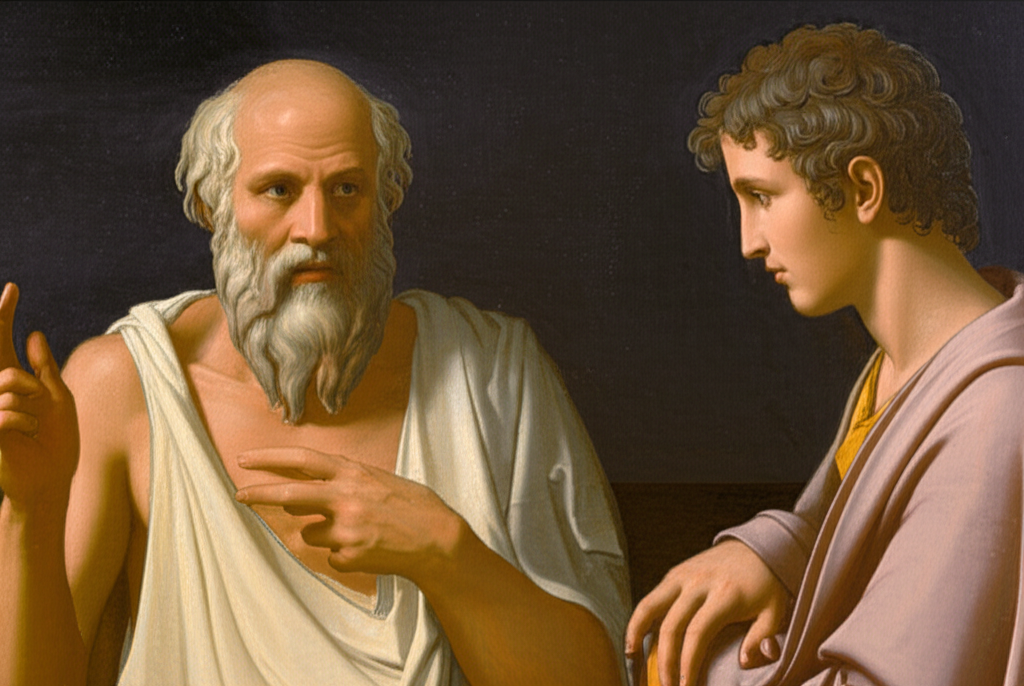
The Socratic tradition, a cornerstone of Western philosophy found in Plato's dialogues, exemplifies the pursuit of wisdom. Socrates famously claimed to know only that he knew nothing, yet he was considered the wisest man in Athens because he understood the limits of human knowledge and relentlessly pursued deeper truths about virtue and the good life. Aristotle, in his Nicomachean Ethics, distinguishes between sophia (theoretical wisdom, akin to philosophical contemplation) and phronesis (practical wisdom, the ability to deliberate well about what is good for oneself and others). This phronesis is precisely the applied wisdom that guides moral action.
The Crucial Differences: A Comparative Look
To further clarify the distinction, let's examine their key differences:
| Feature | Knowledge | Wisdom |
|---|---|---|
| Nature | Factual, descriptive, propositional | Insightful, prescriptive, evaluative |
| Focus | What is true, how things work | What is good, how to live, why things matter |
| Acquisition | Learning, study, experience, data | Reflection, experience, judgment, self-awareness, synthesis |
| Output | Information, skills, data points | Sound judgment, ethical action, understanding, perspective |
| Relationship | Accumulative | Transformative, integrative |
| Limitation | Can be vast but devoid of meaning or purpose | Requires knowledge as a prerequisite, but transcends it |
| Example | Knowing the chemical formula for water (H₂O) | Understanding the vital role of water for life and its ethical distribution |
The Interplay: Knowledge as a Path to Wisdom
It is critical to recognize that knowledge and wisdom are not mutually exclusive; rather, they exist in a symbiotic relationship. One cannot truly be wise without a foundation of knowledge. A person with extensive knowledge of history, science, or human psychology has more material to draw upon for reflection and judgment. However, possessing vast knowledge does not automatically confer wisdom. An academic might know every detail of ethical theories but lack the practical wisdom to navigate a complex moral dilemma in their own life.
Conversely, true wisdom often illuminates the path for the acquisition and application of knowledge. A wise individual understands which knowledge is most valuable to pursue, how to interpret it critically, and how to integrate it into a coherent worldview that serves the greater good. This dynamic interplay is at the heart of the philosophical journey, urging us to seek not just more information, but deeper understanding and more profound ways of living.
Conclusion: Embracing the Philosophical Journey
The distinction between wisdom and knowledge is not merely an academic exercise; it is a fundamental insight that shapes our approach to learning, decision-making, and indeed, life itself. From the ancient Greeks pondering the nature of virtue to the Enlightenment thinkers seeking to understand the human condition, the Great Books of the Western World consistently highlight this vital difference. While knowledge empowers us with facts and skills, it is wisdom that grants us the perspective, judgment, and ethical compass to navigate the complexities of existence meaningfully. To truly engage with philosophy is to embark on a lifelong quest for both, recognizing that the accumulation of facts is only the beginning of a far grander journey toward living a thoughtful and purposeful life.
📹 Related Video: PLATO ON: The Allegory of the Cave
Video by: The School of Life
💡 Want different videos? Search YouTube for: ""Plato's Allegory of the Cave explained""
📹 Related Video: ARISTOTLE ON: The Nicomachean Ethics
Video by: The School of Life
💡 Want different videos? Search YouTube for: ""Aristotle Nicomachean Ethics summary""